





 Portuguese
  English
  Spanish
  4 min of reading
  0 comments



Understand how the technology developed during World War II gave rise to the robotic voices that today dominate global music.
A technology created during World War II to protect military communications ended up becoming the basis for one of the most striking effects in contemporary music. Developed in the United States in the 1940s, the system transformed the human voice into coded signals to prevent Nazi espionage.
Used by Allied leaders in strategic conversations, the resource was created to ensure security in a war scenario. Decades later, the same technical logic would give rise to the robotic voices that today dominate musical productions worldwide.
This movement, which connects technology, historical conflict, and pop culture, reveals how innovations developed under pressure can surpass their original purpose. As it migrated from the military field to studios, the tool underwent adaptations and redefined the sound language of different generations.
-
If you look at the sky this Wednesday, you will see the Pink Moon shining at its peak at 10:11 PM, but before you get disappointed, know that the name has nothing to do with the color and instead refers to flowers that bloom at this time in the United States.

-
Discovery at USP reveals how Brazilian arnica can revolutionize the production of silver nanoparticles with less environmental impact.

-
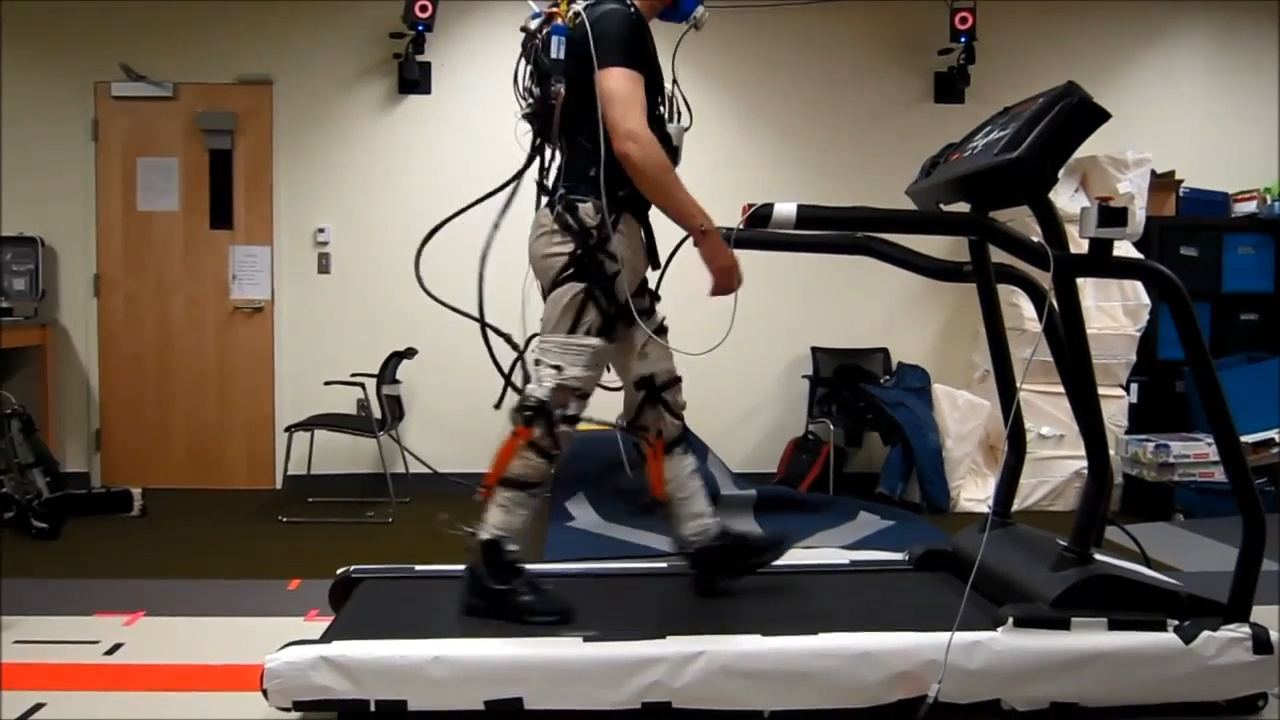
Harvard scientists have created a tissue exoskeleton that does not look like an exoskeleton, with no rigid parts and reduced weight, using flexible cables and miniaturized motors to assist the ankle and hip, reducing the effort of walking by up to 23% in controlled tests.
-
The Caspian Sea intrigues scientists as it is neither officially a sea nor a lake: the largest lake on the planet holds a hybrid crust, submerged cities, mud volcanoes, and billions of barrels of oil hidden at the bottom.


Technology in World War II: the urgency that drove innovation
During World War II, the exchange of information between allied countries was constantly threatened. Radio transmissions could be intercepted relatively easily, putting strategic operations at risk.
In this scenario, engineers at Bell Labs developed SIGSALY, a system considered pioneering in digital voice encryption. The technology converted speech into a set of scrambled signals, making it incomprehensible to any interceptor.
At the same time, at the receiving point, another device performed the reverse process. This allowed authorities such as heads of state to maintain secure conversations, even over long distances.
More than an emergency solution, SIGSALY established foundations that would later be reused in other areas of technology.

From military strategy to sound experimentation
With the end of the conflict, the original system became obsolete for practical use. However, the principle of breaking down and reconstructing the human voice continued to attract scientific interest.
Throughout the 1950s and 1960s, technical advances allowed for a reduction in the size and complexity of these devices. It was in this context that the Vocoder emerged, an adapted version for civilian applications.
Initially, the technology had no artistic purpose. Still, researchers and technicians recognized its potential for sound manipulation.
Gradually, the Vocoder began to be incorporated into recording studios, paving the way for new creative possibilities.
Technology and World War II influencing musical aesthetics
The definitive transformation occurred when musicians began to use the Vocoder as a creative instrument. Instead of hiding messages, the resource began to produce unprecedented sound effects.
Unlike traditional recording technologies, the system allows the voice to control an electronic sound. This creates the impression that machines are capable of speaking or singing.
In Europe, artists linked to experimental music were the first to explore this aesthetic. The metallic and futuristic sound quickly became a symbol of innovation.
In this context, the indirect influence of World War II began to manifest in musical culture, connecting technology and artistic expression.
Global expansion and consolidation in the music industry
From the 1970s onwards, the use of the Vocoder expanded significantly. The effect ceased to be a technical curiosity and began to integrate into commercial productions.
In the United States, genres such as funk and hip-hop incorporated the technology in a more dynamic way. What was once associated with a cold sound gained rhythm and popular appeal.
Furthermore, the advancement of digital technology in the following decades made the resource more accessible. Complex equipment was replaced by software, broadening the reach of the tool.
As a result, processed voices became part of the global sound repertoire, transcending styles and generations.
How does the technology behind robotic voices work?
The operation of the Vocoder is based on a process known as signal analysis and synthesis. Although technical, the concept can be understood objectively.
First, the human voice is captured and divided into different frequency bands. Then, this information is applied to a sound generated by an electronic instrument.
This process allows the final sound to maintain the articulation of speech, but with mechanical characteristics. Thus, an illusion of a hybrid voice, between human and machine, is created.
In this way, the technology does not directly alter the pitch but rather the structure of the sound, which defines its characteristic effect.
Technology and World War II: a legacy that crosses decades
Today, the presence of this technology is practically ubiquitous in music. From pop to electronic, passing through rap and trap, synthesized voices have consolidated as an aesthetic resource.
Moreover, more recent tools, such as vocal correction software, have been influenced by this initial development. This demonstrates the continuity of technological evolution that began during World War II.
Finally, the journey of this innovation highlights how extreme historical contexts can generate lasting impacts. What emerged as a response to a military need transformed into a central element of contemporary culture.
With information from CNN Brasil







Seja o primeiro a reagir!