





 Portuguese
  English
  Spanish
  3 min of reading


According to information from the new 5G bid, in addition to Brasília, other capitals could also be the first to experience the technology
On Wednesday, the 6th, a new technology arrived in Brasília, the so-called 5G. The federal capital was the first city in Brazil to receive full 5G technology, which is the complete experience of this signal. According to information from Moisés Moreira, a councilor of Anatel (National Telecommunications Agency), the capitals, besides Brasília, that will receive new 5G technology will be Belo Horizonte, Porto Alegre, and São Paulo. The plan is to implement 5G in all capitals, besides Brasília, by September 29.
Currently, numerous cities in Brazil, including the federal capital, Brasília, use the Dynamic Spectrum Sharing (DSS) standard, which, while offering better quality, uses a frequency that already exists from 4G, which happens in most countries, according to the company responsible for analyzing internet access performance metrics worldwide, Ookla. The countries that fully utilize the most advanced 5G technology are few.
Today, the country that utilizes 5G speed the most is South Korea, which has an average download speed of 406 megabits per second. The average speed of 4G technology is 17.1 megabits per second.
-
The CEO of Honor in Spain says that smartphones will change with AI, foldables, and even robot phones; the component crisis is making cheap models more expensive in 2026 and shifting the focus to premium.
-
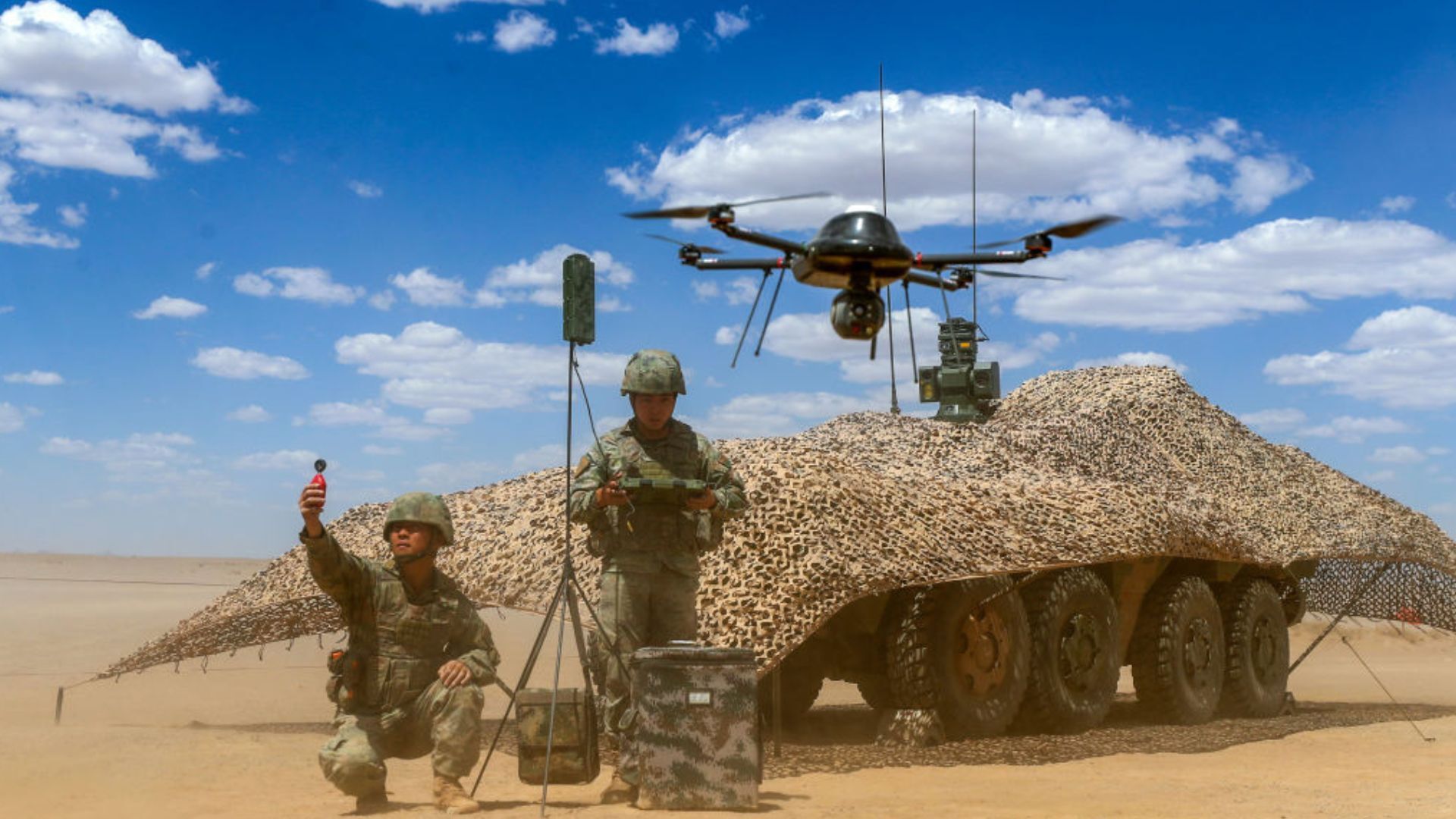
China’s artificial intelligence surpasses human commanders with 90% accuracy in military assault simulation tests.
-
The invisible system that keeps supermarkets cold in Brazil can account for up to 65% of the store’s energy; new pressure for efficiency targets freezers and refrigerated counters.

-
German reactor of 16 meters with twisted magnetic fields reaches a historic milestone in nuclear fusion by generating high-energy helium ions that simulate alpha particles from the Sun; progress in Wendelstein 7-X could unlock plasma control and explain phenomena observed in our star.
The 5G Technology
The 5G technology, which recently emerged in Brasília, is a new data transport technology in networks involving mobile devices. It is the fifth generation alongside previous generations, 4G, 3G, 2G, and 1G. While 1G had a speed of 2 kbits and 4G had 1 Gbit, 5G will guarantee a speed for downloading information of up to 100 Gbits. The capacity of 5G to connect devices can accommodate around 1 million electronic devices per square kilometer.
Among the parameters that the new technology, which has already debuted in Brasília, will offer is the ability to allow more electronic devices to be connected at the same time, an increasingly necessary advancement given the growth of communication technology, which is becoming more integrated among technological devices. Thus, navigation speed will also increase with 5G, making it simpler to consume more complex services, such as file transfers, real-time communications, streaming consumption, or electronic gaming.
According to MCTIC, the Ministry of Science, Technology, Innovations, and Communications, 5G is more than just an improvement over previous generations.
As described in the document discussing Brazil’s strategy for technology, which is already present in Brasília, “5G mobile networks will provide advanced mobile broadband services, with higher data rates, lower latency, and greater capacity, enabling enormous potential for new wireless value-added services.”
Changes with the New Technology
The new 5G technology that emerged in Brasília on Wednesday, the 6th, will support numerous types of beneficial applications. These applications range from payment systems to enabling driverless cars, as well as other internet products that involve sensors and monitoring in factories or public services.
According to MCTIC, 5G will also contribute to production. “5G will be an important component for increasing seamless data exchange between machines, facilities, humans, and robots, which will allow for the development of intelligent logistics, connected production of cyber-physical systems, and machine-to-machine communication. The combination of these and other digital technologies in the secondary sector enables the industrial advancement known as ‘Industry 4.0,’” emphasizes MCTIC in the public consultation document on the 5G strategy conducted last year.







Seja o primeiro a reagir!