Portuguese
  Spanish


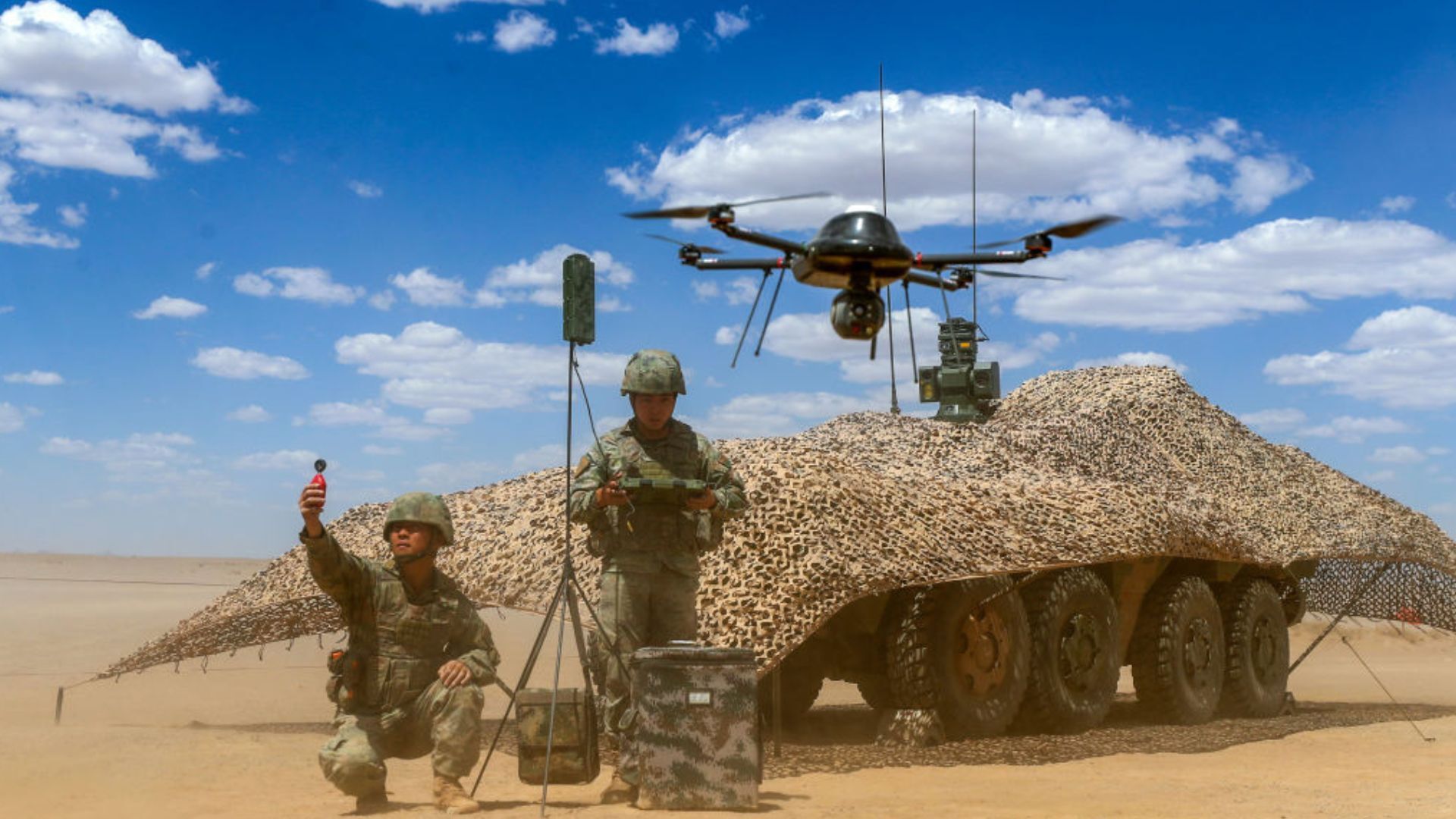


Chinese military technology demonstrates superior real-time decision-making and data processing capabilities during large-scale combat exercises.
Military scientists in China have achieved a technological milestone by demonstrating that an artificial intelligence system surpassed human commanders in complex combat simulations.
During large-scale assault tests, the technology recorded a recall accuracy rate of 90%, highlighting its superior ability to process data and make tactical decisions in real time.
The experiment compared the machine’s performance with that of experienced officers in scenarios that required rapid coordination and analysis of multiple variables.
-
In China, Six-Armed Humanoid Robot Revolutionizes Washing Machine Factory, Boosting Efficiency by 30%

-
Engineers Uncover Rain’s Role in Airflow Mystery at Brazilian Underground Facility

-
Brazilian Engineers Lead $200 Million Project to Bring Water from São Francisco River to Transform Supply in Northeastern Cities

-
Brazilian University Tests Recycled Plastic Component for Homes, Aiming for More Sustainable Single-Family Housing Construction


Superior performance in assault simulations
The core of the experiment involved simulating an assault operation where the artificial intelligence of China was to identify threats and coordinate attacks autonomously. While human commanders faced difficulties with information overload and the speed of events, the AI maintained a constant analytical view of the battlefield.
The 90% accuracy achieved by the machine refers to its ability to correctly identify and react to enemy targets and maneuvers without critical perception failures.
The technology was trained using vast datasets from real military exercises and historical simulations, allowing it to develop highly effective response patterns. In high-pressure scenarios, the AI demonstrated an emotional neutrality that avoided common errors caused by human stress or fatigue.
This analytical processing capability allows the system to project outcomes of different tactics in fractions of a second, choosing the path with the highest probability of success.
Integration of Chinese artificial intelligence in command
The success of this test signals a potential shift in the command structure of the armed forces, where AI may take on advisory or even executive roles in future operations. Researchers highlighted that the artificial intelligence of China not only detected targets more quickly but also demonstrated superior logistical coordination for the deployment of reinforcements and supplies.
The integration of these systems aims to create a more agile combat force that is less susceptible to the biological limitations of human operators.
Despite the impressive results, the study points out that the technology still performs better in controlled digital simulation environments. The next challenge for developers is to ensure that this 90% accuracy is maintained in real field conditions, where weather unpredictability and electronic interference are constant. The transition from simulation to real combat requires a robust communication infrastructure and high-fidelity sensors spread throughout the theater of operations.
Strategic implications and military autonomy
The application of Chinese artificial intelligence at command levels raises questions about the autonomy of machines in armed conflicts and the speed of modern warfare. With AI surpassing humans with 90% accuracy in recall tests, the response time between detecting a threat and neutralizing it could be reduced to almost instantaneous levels.
This technological advancement seeks to ensure a decisive strategic advantage, allowing armed forces to operate at a pace that human adversaries cannot keep up with.
The ongoing development of these command algorithms now focuses on improving the transparency of the decisions made by the machine. Scientists are working to ensure that human officers can understand the logic behind each order issued by the AI, facilitating the necessary oversight in critical operations. The evolution of this tool promises to transform the traditional battlefield into a highly automated and data-driven system of high precision.
Click here to access the study.