





 Portuguese
  English
  Spanish
  3 min of reading
  0 comments


Know All About AMOLED Technology and Its Influence on the Evolution of Electronic Devices
Currently, device screens are undergoing constant advancements, and AMOLED technology has played a key role in this change. With more vibrant colors, greater energy efficiency, and deeper blacks, this innovation has become a popular choice for various types of devices. In this article, you will understand what AMOLED technology is, how it works, and what its main benefits and applications are.
What Is AMOLED Technology and How Does It Work?
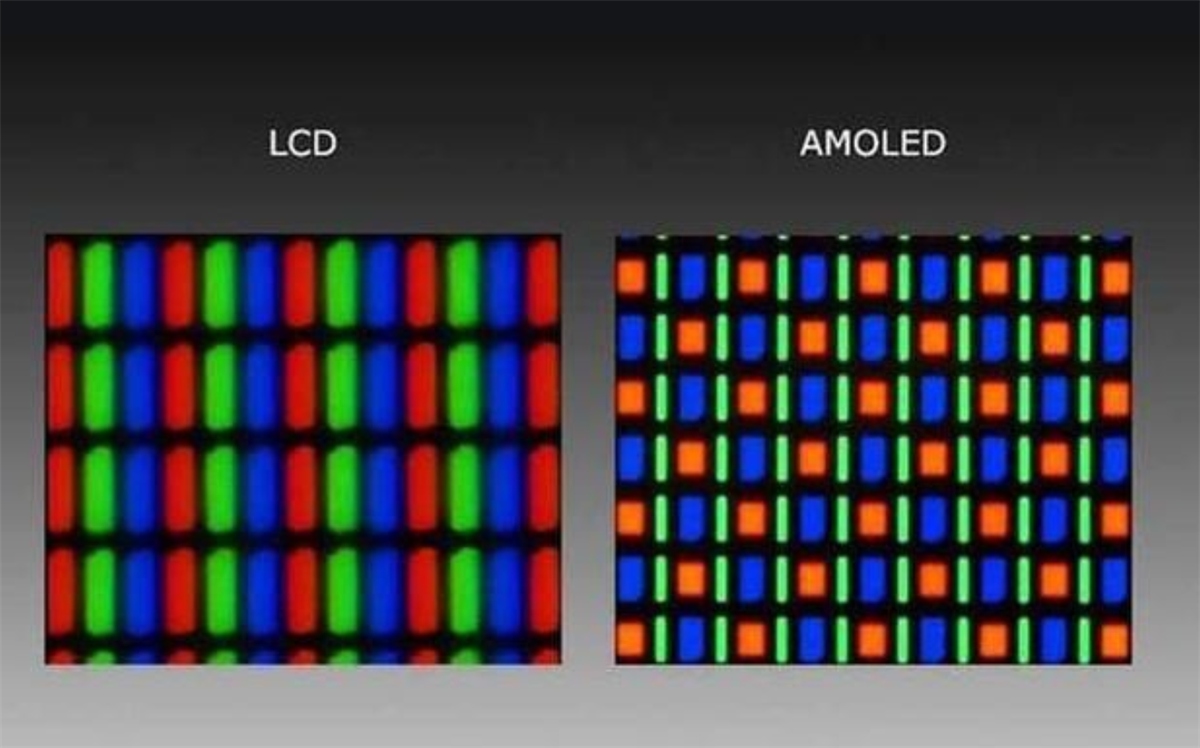
The acronym AMOLED stands for Active Matrix Organic Light Emitting Diode, meaning active matrix of organic light-emitting diodes. Unlike traditional LCD screens, this technology does not require a backlight, as each pixel emits its own light. This makes the operation of the screen more efficient and allows for more precise images.
This technology was developed in the late 1990s by companies such as Kodak and Sony, but it began to gain popularity only in 2007, when Samsung introduced the first commercially viable AMOLED display. Since then, its adoption has grown, being widely used in smartphones, televisions, and other electronic devices.
-
How the terraforming of Mars can transform the planet: artificial aerosols can increase the temperature by up to 35°C in 15 years, creating conditions for liquid water.

-
Scientists drilled nearly 8,000 meters into the ocean floor above the fault that caused the 2011 tsunami in Japan and discovered that a layer of clay 130 million years old was responsible for making the wave much worse than any model had predicted.

-
Thousands of years after causing the largest eruption of the Holocene, one of the world’s largest supervolcanoes is rebuilding itself beneath the sea south of Japan, receiving new magma and alarming scientists with its transformation.

-
China has activated a magnet 700,000 times more powerful than the Earth’s magnetic field that operates for over 200 consecutive hours while consuming little energy, and now the world wants to know what Beijing plans to do with this technology in 2026.


Furthermore, when a pixel needs to display the color black, it is turned off, resulting in deeper contrast and lower energy consumption. As each pixel lights up independently, the image quality is enhanced, ensuring more vibrant colors and greater accuracy in details.
Main Advantages of AMOLED Technology
AMOLED technology offers several advantages that explain its growth in the market. Among the main ones, we highlight:
- More Vivid Colors and Intense Brightness: The wide color gamut provides sharper and more vibrant images, enhancing the user’s visual experience.
- High Contrast: Since pixels can be turned off individually, the difference between light and dark areas is greater, resulting in more detailed images.
- Energy Efficiency: Compared to LCD screens, AMOLED displays consume less energy, especially in predominantly dark scenes, which can contribute to longer battery life for devices.
- Thinner and More Flexible Screens: Since they do not require extra layers of lighting, devices can be more compact and flexible, enabling innovative designs.
- Better Viewing Angle: Image quality remains stable even when viewed from different angles, improving device usability.
Applications of AMOLED Technology in the Market
AMOLED technology has been widely applied in various sectors. Here are some examples:
1. Smartphones and Tablets
Mobile devices are the ones that most utilize AMOLED screens. The first smartphone to adopt this technology was the Samsung Wave, launched in 2010. Since then, advanced models, such as those in the Galaxy and iPhone Pro lines, have begun to use this type of display to offer high-quality images.
2. Smartwatches and Wearables
Smartwatches require efficient screens, with good energy performance and visibility under different lighting conditions. Since 2015, with the launch of the Apple Watch, AMOLED screens have been widely used in these devices.
3. Televisions and Monitors
The experience of watching movies and series significantly improves with the contrasts and colors offered by AMOLED displays. The first commercial OLED TV was launched by Sony in 2007, and since then, companies like Samsung and LG have dominated this segment with high-quality models.
4. Foldable Devices
The flexibility of AMOLED screens has allowed for the creation of foldable smartphones, such as the Samsung Galaxy Z Fold and Huawei Mate X. In this regard, Samsung unveiled the first foldable screen prototype in 2013 and later launched the first commercial devices in 2019. Thus, this innovation opens the door to new formats for mobile devices.
AMOLED technology, in turn, has been driving the evolution of electronic displays, as it provides sharper images, greater energy efficiency, and allows for innovative designs. Since the early 2000s, more and more people have continuously adopted this technology; furthermore, companies such as Samsung, LG, and Apple have been driving this advancement.
If you seek an enhanced visual experience, then considering a device with an AMOLED screen may be an excellent option. Furthermore, the trend is for this technology to continue evolving, thus bringing continuous improvements to consumers.










Seja o primeiro a reagir!