





 Portuguese
  English
  Spanish
  4 min of reading
  0 comments


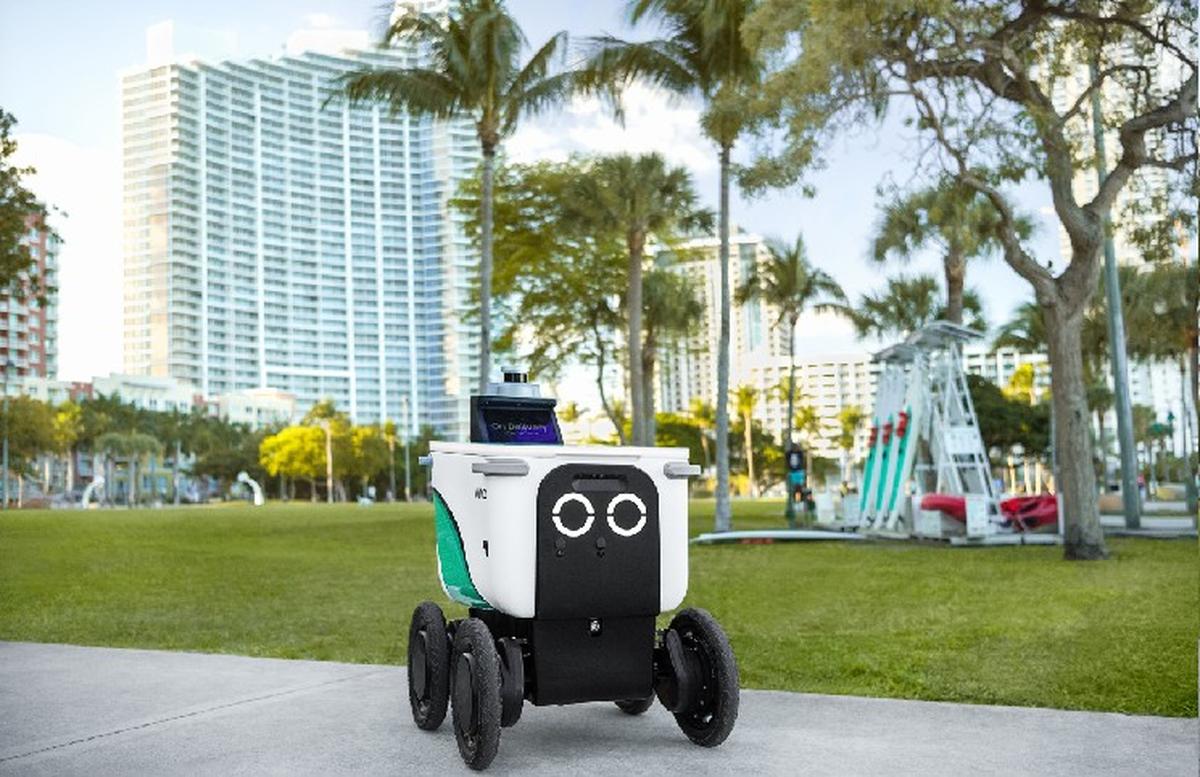
The Advancement Of Autonomous Mobility Transforms Miami Into A Global Showcase Of Technological Innovation, Urban Logistics, And Smart Transportation
A silent technological transformation is happening on the streets of Miami, Florida, and it is starting to redefine how people, food, and goods circulate in urban areas.
The city has become a true laboratory for autonomous technologies, bringing together self-driving electric vehicles, delivery robots, and logistical drones operating daily.
This movement, besides attracting global attention, generates billions of dollars in investments and places Miami at the center of a new economy based on automated mobility.
-
With a cost per shot close to zero, the DragonFire laser could change naval warfare in 2027 and provide British ships with nearly unlimited defense against drones.

-
A British startup creates tires that generate electricity in electric vehicles when passing over potholes, speed bumps, and cracks.

-
Scientists have created robots made with living cells that have their own nervous system, swim on their own, explore the environment, and self-organize without any genetic engineering, and now they want to do the same with human cells.

-
Students create a solar-powered ambulance that operates without a plug, without fuel, and still keeps medical equipment running in remote areas.

As tourists capture curious videos on the streets, technology companies observe the city as a strategic stage to demonstrate solutions they intend to scale globally.
Autonomous Technology Becomes Integrated Into Urban Daily Life
Those walking through the central regions of Miami already encounter delivery robots circulating on the sidewalks transporting meals and small orders.
At the same time, autonomous electric vehicles can stop automatically to allow safe crossing for pedestrians.
Additionally, drones are beginning to appear in the city’s skies delivering quick purchases made at supermarkets.
This increasing presence demonstrates that autonomous technology has ceased to be just an experiment and has begun to integrate into urban routines.
Industry experts point out that cities like Miami are strategically chosen because they offer global visibility, intense tourism, and a favorable environment to test new technological solutions.
Waymo Expands Presence With Electric Robotaxis
Among the most recent projects is the arrival of Waymo, a company created within Google and belonging to the Alphabet group.
The company began operations in the city in January 2026 with its autonomous passenger transport service.
Initially, the electric robotaxis started operating in an area of approximately 155 square kilometers.
The service covers central and high-traffic areas, including Design District, Brickell, and Coral Gables.
The company reported that it intends to expand the service to Miami International Airport to primarily serve tourists.
In the first days of operation, around 10,000 people downloaded the Waymo app to use the autonomous vehicles.
In February 2026, the company announced a funding round of US$ 16 billion, raising its valuation to US$ 126 billion.
Among the investors are Dragoneer Investment Group, DST Global, Sequoia Capital, Andreessen Horowitz, Mubadala Capital, Bessemer Venture Partners, Silver Lake, Tiger Global, and T. Rowe Price.
According to the company, currently, about 400,000 trips are made weekly considering Miami and other cities where the service already operates.
Since the start of operations, over 20 million autonomous trips have already been recorded.
Delivery Robots Enter A Billion-Dollar Battle
While robotaxis gain ground, another technological battle is taking place on the sidewalks of Miami.
Delivery robots began appearing in the city back in 2021 and, since then, the number of operations has rapidly increased.
Today, these devices serve orders mainly from apps like UberEats and DoorDash.
Among the companies that compete in this market are Coco Robotics, Tiny Mile, and Serve Robotics.
The Canadian company Tiny Mile used Miami for technology testing in 2024.
Subsequently, in 2025, Serve Robotics expanded its presence and started operating more intensively in the city.
According to projections released by Serve Robotics based on the Ark Invest Big Ideas 2025 report, the global market for autonomous deliveries by robots and drones could generate US$ 450 billion by 2030.
In December 2025, the company reported it had reached 2,000 delivery robots in operation.
This growth represented a 20-fold expansion of the fleet in just one year.

Drones Expand Urban Aerial Logistics
In addition to the sidewalks, autonomous deliveries have also begun to occupy aerial space.
In 2021, Walmart began testing drone delivery in partnership with Wing, a service from Google.
With the advancement of technology, the service that initially operated in just two cities expanded to 120 locations across the United States by 2025.
During the annual meeting of the National Retail Federation held in January 2026, Walmart’s CEO announced new expansion plans.
According to the company, an additional 150 cities are expected to receive the service by 2027, including Miami and Los Angeles.
This will allow the system to reach a total of 270 serviced cities.
The drones transport small packages over short distances and make deliveries within 30 minutes.
According to the retailer, half of the deliveries occur in less than 20 minutes.
Robots In The Streets Generate Curiosity And Debate
Despite technological advancements, the increasing presence of robots also leads to unexpected situations.
Some videos have gone viral on social media showing delivery robots causing traffic jams or maneuvering around people on the sidewalks.
One widely discussed episode involved a robot from Coco Robotics that entered a railway line and was hit by a train.
Experts are also discussing risks related to the circulation of these devices in areas with drawbridges over the city’s canals.
While part of the population appreciates the modernity and sustainability of these solutions, another segment expresses concern over the replacement of human workers and potential accidents.
New Autonomous Experiences Expand Technological Tourism
Other technological initiatives are also beginning to appear in the city.
In October 2025, the first autonomous police car in the United States was introduced in Miami.
The local zoo also uses an autonomous electric bus to transport visitors within the park.
Additionally, several restaurants have begun using robot waiters for service.
These solutions enhance the technological experience of the city and reinforce Miami’s image as one of the leading global centers for urban experimentation.
Will the cities of the future be dominated by robots, autonomous vehicles, and drones operating side by side with people on the streets?








-

Uma pessoa reagiu a isso.