





 Portuguese
  English
  Spanish
  3 min of reading
  0 comments


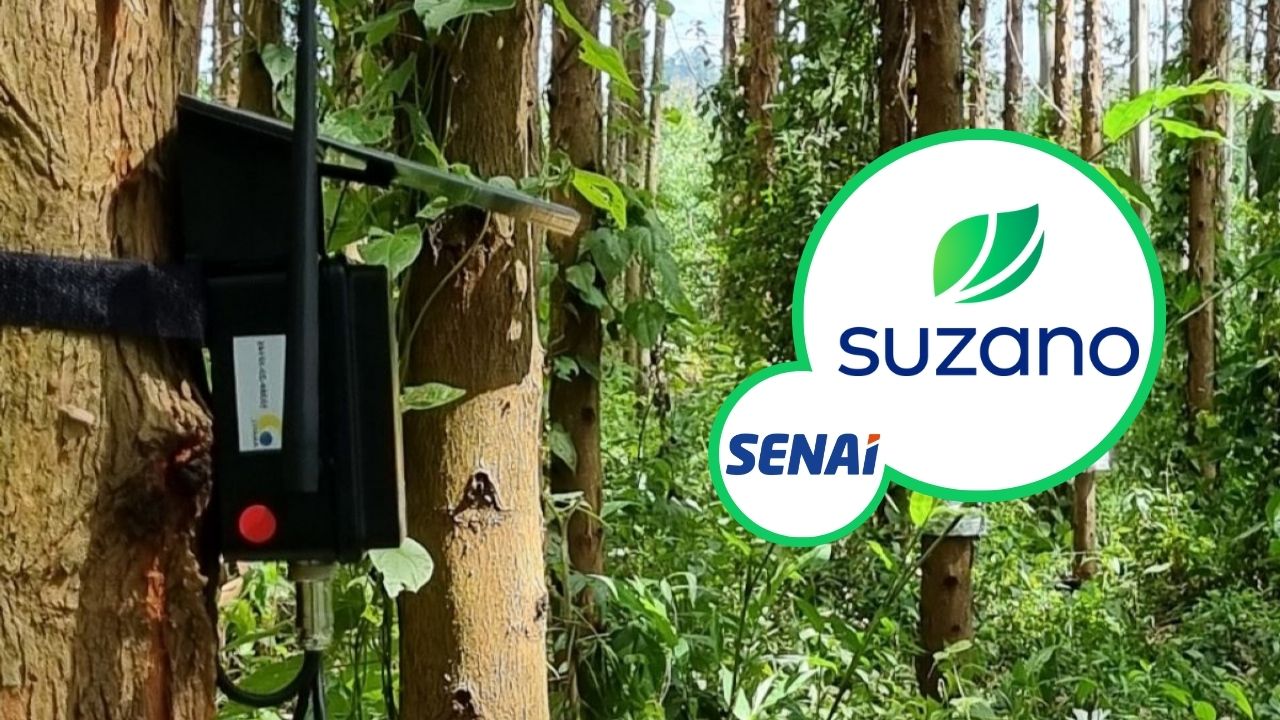
IoTree, Brazilian Technology from Suzano, Allows Remote Monitoring of Water and Forest Growth with Smart Sensors, Reducing Costs, Optimizing Resources, and Supporting Sustainable Management.
An innovative Brazilian technology now enables remote monitoring of water use and forest growth, with precision and in real-time. It was developed by Suzano, with support from the SENAI Institute of Innovation in Microelectronics and the startup Agroambiência, and began to be applied from the end of 2024.
The system operates on farms and forests across the country, using sensors attached to trees that transmit data via a wireless network.
The Innovation of Brazilian Technology That Combines Sensors and Water in the Field
Named IoTree, the system combines hardware and software to provide continuous and remote monitoring.
-
Surrounded by the sea, the airport will have a system to prevent airplanes from falling into the water; technology will be installed in Ilhéus (BA), with an investment of R$ 70 million.

-
With a cost per shot close to zero, the DragonFire laser could change naval warfare in 2027 and provide British ships with nearly unlimited defense against drones.

-
A British startup creates tires that generate electricity in electric vehicles when passing over potholes, speed bumps, and cracks.

-
Scientists have created robots made with living cells that have their own nervous system, swim on their own, explore the environment, and self-organize without any genetic engineering, and now they want to do the same with human cells.


Dendrometry sensors (growth measurement) and sap flow sensors are installed on the trees.
These devices transmit data via a LoRa network to a concentrator, which sends it to a digital visualization platform.
The energy used in the sensors is generated by solar panels or batteries, ensuring autonomy even in remote locations.
How Water and Forest Monitoring Works
Each sensor measures small variations in tree growth and sap flow.
With this data, it is possible to infer water consumption and relate it to growth.
The cloud-based platform gathers these measurements, processes them, and generates reports for forest managers.
Satellite images and machine learning techniques are also integrated to predict future consequences.
Partnerships and Project Application
The IoTree project was selected in the Industrial Mission (Bio)solutions call for proposals in 2023, promoted by SENAI and Suzano.
It is the result of collaboration between Suzano (forest management), SENAI (microelectronics), and Agroambiência (agroforestry engineering).
The system was tested on farms in the interior of São Paulo and experimental areas of Suzano.
The expectation is that the final prototype will be delivered in 2026.
Advantages That Brazilian Technology Offers
Greater Precision and Lower Costs
Remote monitoring reduces the need for constant physical visits to the field.
As a result, it decreases spending on transportation, labor, and time.
Sustainability and Efficient Use of Water
By understanding the consumption pattern, it is possible to apply water only when truly necessary.
This promotes healthier forests and saves water resources.
Data-Driven Decision Making
Reports and forecasts help managers plan management, fertilization, and interventions.
Decisions are made based on real and continuous data.
Scalable Monitoring
Small sensors and connectivity facilitate coverage of large areas.
The technology allows for expansion to new planting and conservation locations.
Challenges and Limitations of Brazilian Technology
Connectivity is one of the obstacles, especially in remote areas without infrastructure.
Even with solar power, extended rainy periods can affect functionality.
Correctly interpreting the data requires specialists with forest and technological knowledge.
Parallel Examples and Complementary Technologies
The company Treevia (Brazil) works with sensors that “hug” trees and capture diameter and growth.
It uses sensors within the forest and combines its data with satellite images.
These solutions also aim to monitor water, pests, and forest growth.
Additionally, technologies such as satellite remote sensing, drones, and Lidar sensors contribute to large-scale monitoring.
With Brazilian technology solidified, it is expected that large planted and natural forests will be monitored more rigorously.
This may strengthen carbon credit markets, as the data helps demonstrate carbon sequestration.
Source: AgroEstadão






Seja o primeiro a reagir!