





 Portuguese
  English
  Spanish
  4 min of reading
  0 comments


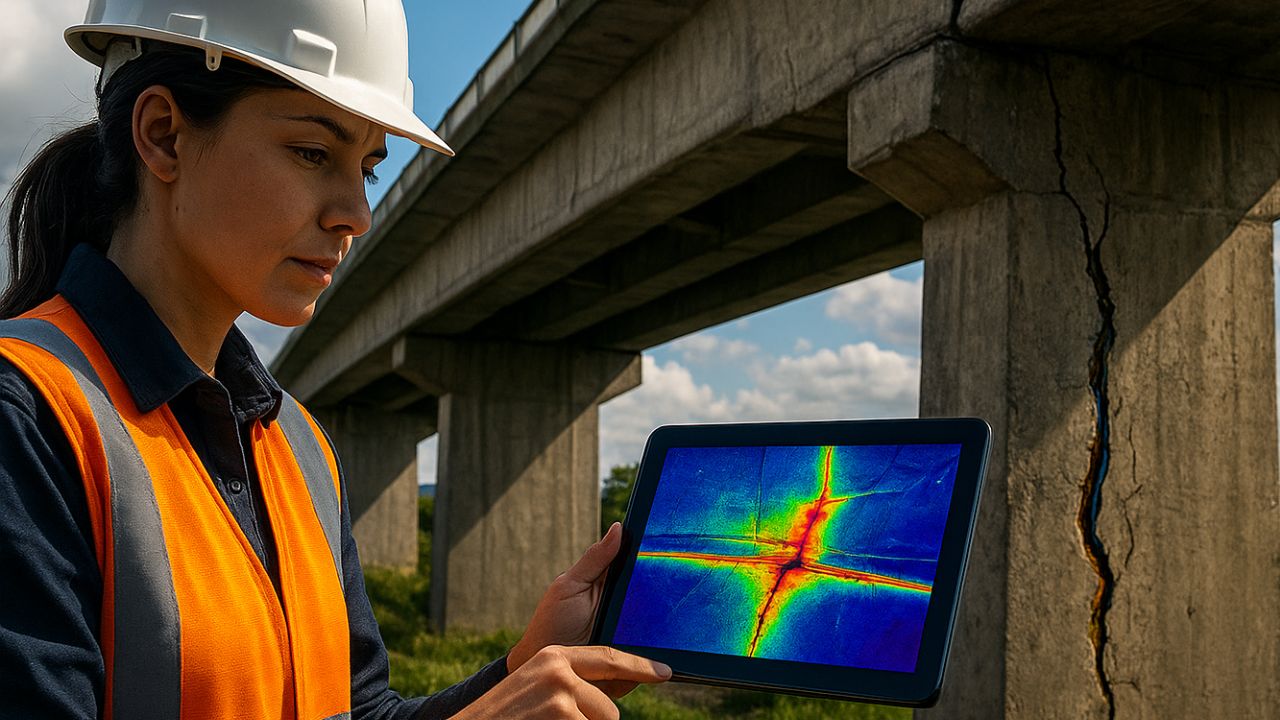
Swiss Startup Adapts Space Exploration Software to Find Cracks and Hidden Flaws in Critical Infrastructures, Such as Bridges, Pipelines, and Aircraft Components.
An advanced NASA technology, originally developed to uncover the secrets of Mars’ interior, has been reimagined by a Swiss startup to protect lives on Earth. Mondaic, a spin-off from the renowned ETH Zurich university, adapted a wave physics software to function as a true “x-ray”, capable of detecting structural damage invisible to the naked eye in bridges, aircraft, and other essential constructions, without the need for drilling or destructive methods.
This innovation represents a paradigm shift in the maintenance and safety of infrastructures. What once required supercomputers and complex analyses can now be executed in the cloud in a matter of minutes. As detailed by Interesting Engineering, the tool that helped scientists map the crust and core of the Red Planet now provides accurate diagnostics on the health of constructions we use every day.
From Space Exploration to Land Security
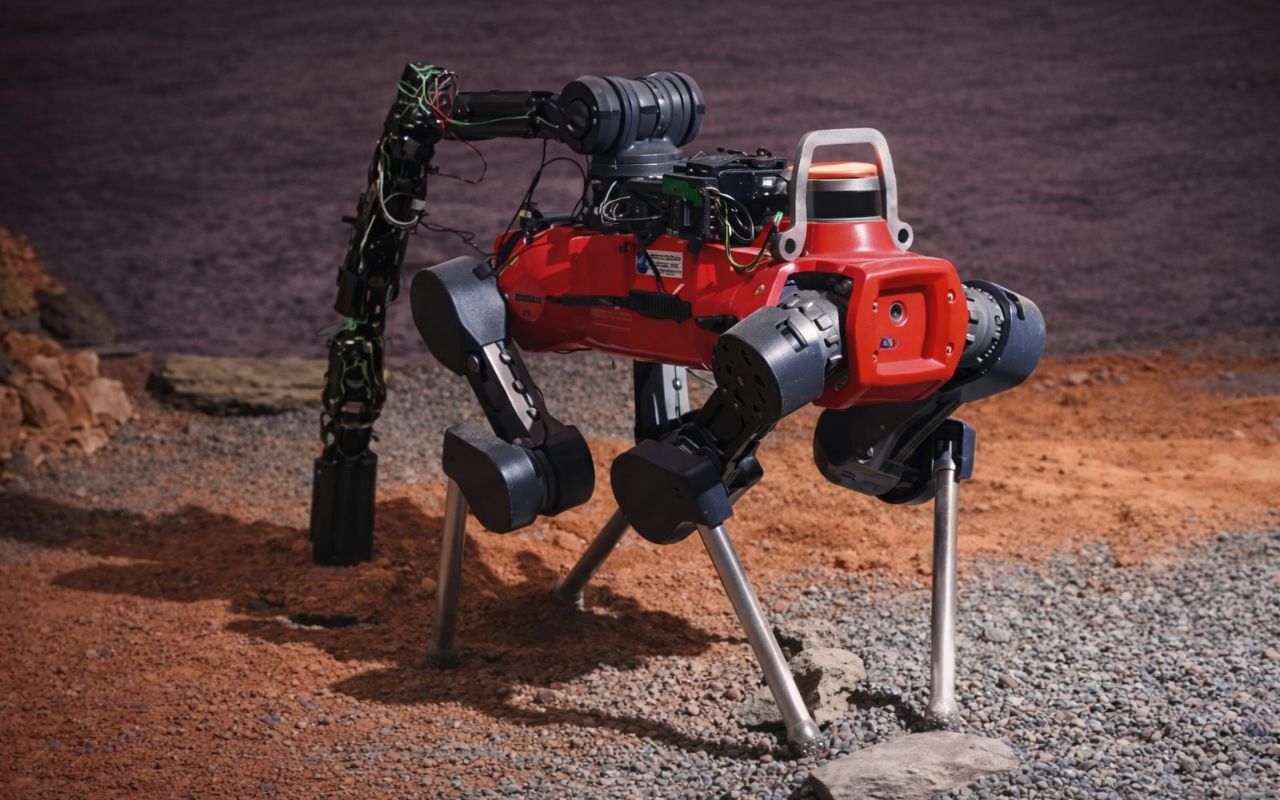
The journey of this technology began with the InSight mission from the U.S. space agency, which landed on Mars in 2018 to study its seismic activity. The Seismology and Wave Physics group at ETH Zurich, including Mondaic’s founders, Christian Boehm, Michael Afanasiev, and Lion Krischer, developed simulators to interpret the seismic data collected on the planet. The success in modeling Mars’ internal structure sparked an idea: to apply the same logic to solid structures here on Earth.
-
China creates hypersonic engine that can make planes and missiles fly more than 6 times the speed of sound with less weight, more range, and without system change.

-
Mysterious object on Mars divides NASA and Harvard after Curiosity image reignites suspicions about what was really found on the planet.
-
Giant structures 14 meters beneath Egypt are revealed by satellites and expose a millennia-old secret buried in Buto.
-
Children have been making clay pieces for 15,000 years in Southwest Asia, and fingerprints preserved on 142 ornaments helped archaeologists prove this.

“What allowed us to probe the Red Planet back then helps us today to look inside bridges, aircraft parts, or other materials without needing to cut or drill them”, explained Christian Boehm, managing director of Mondaic, in a statement quoted by Interesting Engineering. The team realized that the same waves revealing a planet’s composition could be used to identify flaws such as cracks, voids, or water infiltrations in civil and aerospace engineering components.
How Does Wave Inspection Work?
Mondaic’s method is a brilliant example of non-destructive engineering. The process relies on sending waves, such as ultrasound, through a solid object. Strategically positioned sensors measure how these waves move and change when encountering different internal features of the structure. The “magic” happens when this real-world data is compared to a perfect virtual model of the object, known as a digital twin.
To illustrate, Boehm uses the example of a pipeline: “We use our software to simulate how an ultrasonic wave should move through the pipeline if it is not damaged”. If the wave measured in the actual structure behaves differently from the simulation on the digital twin, the software identifies the inconsistency. This anomaly signals the location and nature of a problem, such as an internal crack or corrosion, before it becomes critical.
From Laboratory to Market: The Role of Cloud Computing
Transforming an academic research tool into a robust, user-friendly commercial product was a significant challenge. According to Interesting Engineering, the Mondaic team had to redesign the software to ensure stability and automate the entire workflow, from data collection to the generation of the final image that indicates the damage. The goal was for maintenance teams, without knowledge of wave physics, to be able to operate it.
The commercial viability of this adapted NASA technology was only made possible thanks to the power of cloud computing. Analyses that previously relied on supercomputers and would take hours or days, are now completed in minutes. “The efficiency of modern cloud solutions makes our technology competitive and suitable for everyday use, even outside of the research world,” Boehm stated, highlighting the democratization of access to ultra-precise analysis.
Applications Ranging from Swiss Bridges to Egyptian Pyramids
The potential of the system has already been proven in various scenarios. In Switzerland, Mondaic collaborates with the Federal Roads Authority (FEDRO) to inspect bridges, detecting early issues such as air pockets in concrete and defective joints, allowing for preventive repairs that save resources and increase safety. In the aerospace sector, tests conducted with ETH Zurich validated the tool’s ability to find manufacturing defects in carbon fiber components, a crucial material for modern aircraft.
However, the applications do not stop there. The versatility of the software is so great that, according to the researchers, it has been used to assess earthquake risks, monitor nuclear tests, and even to help discover a hidden corridor in the Great Pyramid of Egypt. This range of uses demonstrates the robustness and precision of the technology. “Perhaps one day, a component inspected by Mondaic will fly to Mars,” Boehm concluded. “Until we reach that stage, however, we have much to do here on Earth.”
And you, what do you think about using space technologies to solve everyday problems? Do you believe that more innovations like this can transform the industry and security in Brazil? Leave your opinion in the comments, we want to hear from those who live this in practice.




Seja o primeiro a reagir!