





 Portuguese
  English
  Spanish
  3 min of reading
  0 comments


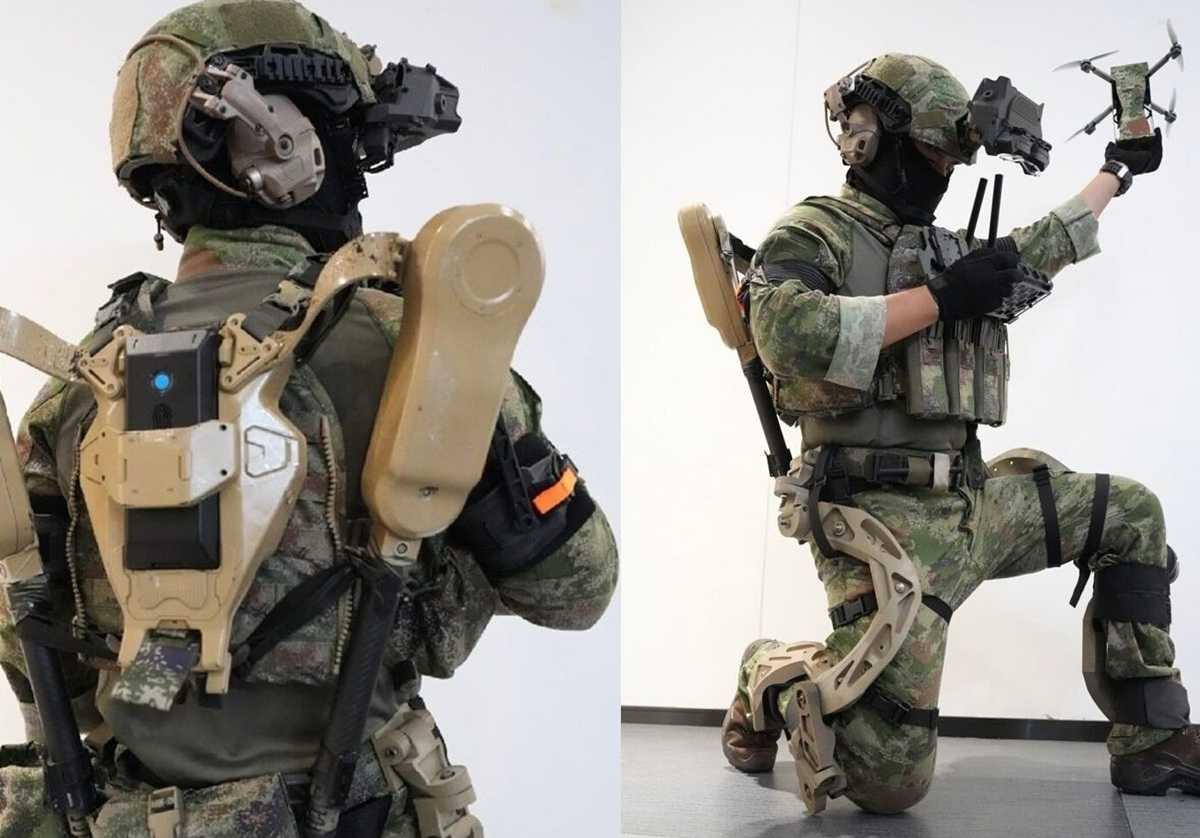
Chinese Army Invests In Robotic Suit To Provide More Strength, Resistance And Tactical Control To Soldiers In Field And Urban Combat Missions.
China has unveiled a new exoskeletal combat robotic suit that transforms regular soldiers into high-tech mobile platforms. Developed by Kestrel Defense, the equipment is geared towards drone operations, reconnaissance, and mobility on the battlefield.
Images released on Chinese social media show a promising prototype: a soldier equipped with robotic legs, a modular backpack, a smart visor, and mounted drone launchers.
Enhanced Mobility For Difficult Terrain
The lower structure of the suit includes mechanical supports on the thighs, reinforced knee pads, and articulated connections that extend to the calves.
-
A rare phenomenon of silent electric flashes in trees on the east coast of the United States intrigues researchers, confirms a century-old suspicion, and raises concerns about invisible environmental impacts.
-
5,000-year-old bacteria found frozen in a cave in Romania already shows resistance to modern antibiotics and raises a global scientific alert about the future of infections.

-
5,000-year-old bacteria found frozen in a cave in Romania already shows resistance to modern antibiotics and raises a global scientific alert about the future of infections.

-
Scientists thaw microbes trapped in Alaska for 40,000 years, discovering that they reorganize, become active again, and start releasing greenhouse gases in a troubling climate alert.

This allows the soldier to walk on rugged terrain with greater stability and carry extra weight with less physical effort.
According to the manufacturer, the initial focus of the exoskeleton is on drone operators, artillery units, and reconnaissance forces.
In these cases, military personnel often remain crouched for long periods, which causes fatigue. The suit helps sustain these positions without compromising the mission.
Launching Drones Directly From The Body
One of the most visible differentials is the compact system that allows drones to be launched directly from the suit.
The soldier can activate small flying reconnaissance robots with ease, even in urban environments or confined combat zones.
One of the images shows a camouflaged quadcopter being held in the right hand while the left operates a control attached to the tactical vest.
The backpack on the soldier’s back functions as a power and data center, housing batteries, communication systems, and controls.
Augmented Vision And Gesture Control
On the helmet, the soldier uses an augmented reality visor with support for live video feeds sent by drones, overlay maps, and thermal or night vision.
The visor can also respond to gestures, voice commands, or eye movements, offering intuitive control of the systems.
Additionally, screens on the wrist and other visible devices indicate the presence of functions such as vital signs monitoring, digital navigation, and encrypted real-time communication.
Soldier As A Mobile Digital Platform
Although the complete technical specifications have not been released, Kestrel Defense’s material points to use in ISR functions — intelligence, surveillance, and reconnaissance. The suit was designed to operate with small, lightweight, controllable drones in motion.
The structure resembles a technological backbone. It connects the systems of the suit, integrating sensors, motors, and command modules. Robotic arms can also assist in lifting weight or even transporting injured soldiers.
Part Of A Global Race For Advanced Soldiers
Experts see the suit as another step in the race to modernize global armed forces. Robotics, wearable systems, and artificial intelligence are being combined to create hyper-connected soldiers.
The Chinese exoskeleton shows that the country is determined to narrow the gap in military technologies with the United States, Russia, and Europe. The equipment is still in the testing phase, but its rapid development points to practical use in the near future.
A New Type Of Presence On The Battlefield
Capable of running with robots, launching drones, seeing through walls, and operating autonomously even without GPS, the new suit proposes a different kind of soldier — a mobile and intelligent command node.
Whether for patrol, surveillance, or direct combat, the combination of physical strength, augmented vision, and digital connectivity can change the operational logic of modern troops.









Seja o primeiro a reagir!