





 Portuguese
  English
  Spanish
  3 min of reading
  0 comments


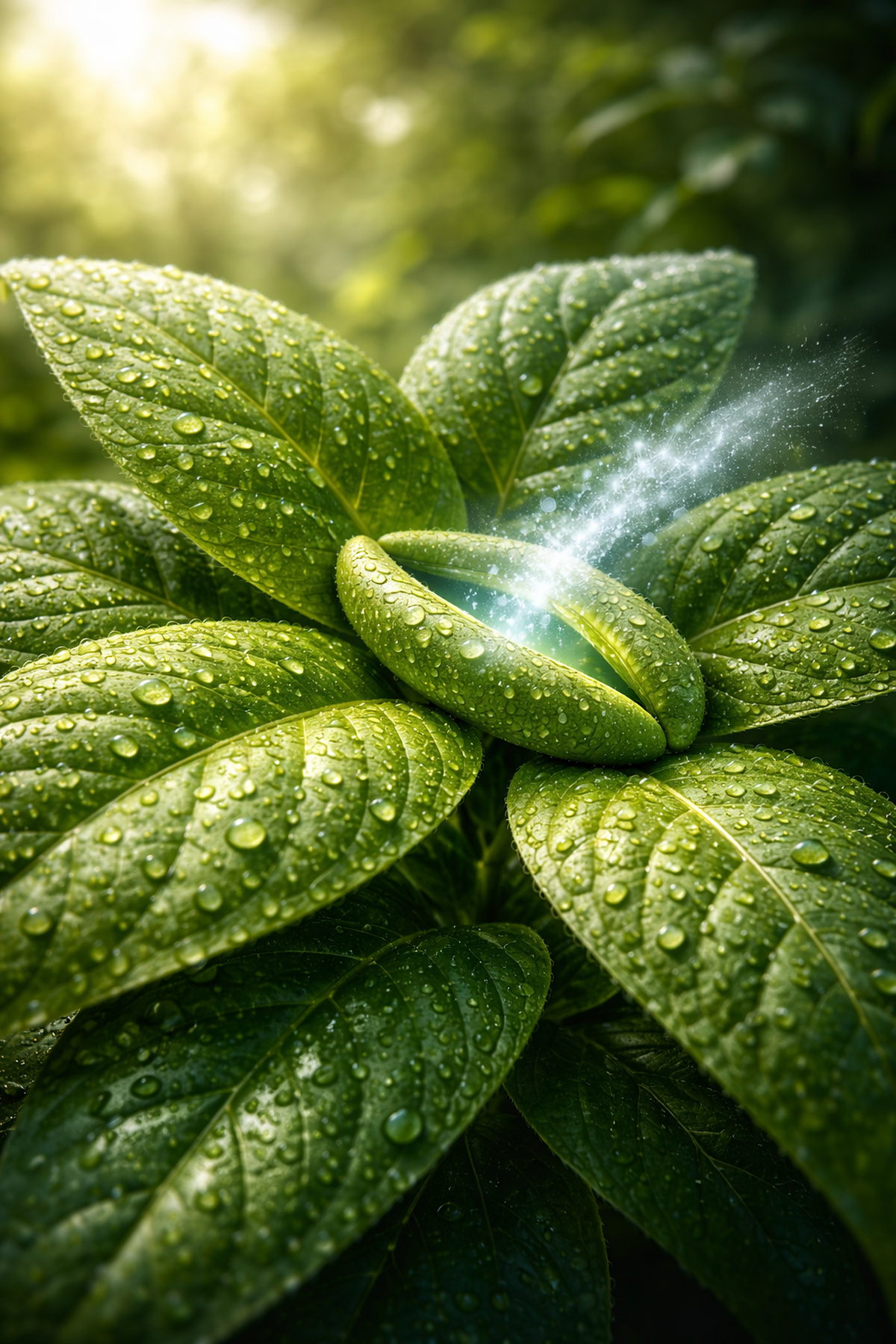
A Novel Technology Allows Real-Time Monitoring of How Plants Regulate CO₂ and Water, Providing Decisive Clues to Tackle Droughts and Climate Change
Researchers from the University of Illinois Urbana-Champaign have achieved a significant scientific breakthrough for botany and agriculture. In 2024, the team was able to observe plants breathing in real time, something that had previously remained beyond the reach of experimental science.
With this achievement, scientists began to monitor the simultaneous movement of leaf pores and the gas exchange with the atmosphere, without interfering with the plant’s natural functioning. This research has opened a new window to understand how vegetation reacts to rapid environmental changes.
System Integrates Technologies and Surpasses Historical Limits
To enable this unprecedented observation, researchers developed the Stomata In-Sight system. For decades, plant science faced a technical deadlock: observing the structure of stomata or measuring their physiological function, but never both at the same time.
-
With a cost per shot close to zero, the DragonFire laser could change naval warfare in 2027 and provide British ships with nearly unlimited defense against drones.

-
A British startup creates tires that generate electricity in electric vehicles when passing over potholes, speed bumps, and cracks.

-
Scientists have created robots made with living cells that have their own nervous system, swim on their own, explore the environment, and self-organize without any genetic engineering, and now they want to do the same with human cells.

-
Students create a solar-powered ambulance that operates without a plug, without fuel, and still keeps medical equipment running in remote areas.


Previous methods only captured static images, akin to frozen photographs. Therefore, they did not capture the immediate responses of plants to changes in light, temperature, or humidity.
Now, the new system resolves this problem by integrating three advanced technologies into a single device, allowing continuous observation and precise measurements under controlled conditions.
Stomata Control Vital Balance of Plants
Stomata are microscopic openings in leaves, a term derived from Greek meaning “mouths.” These structures regulate essential processes for plant survival, functioning as adjustable valves.
Through them, plants absorb carbon dioxide (CO₂), an essential element for photosynthesis. At the same time, when these pores open, water vapor is released, which requires constant control between growth and water conservation.
This balance becomes even more critical in scenarios of drought and extreme heat, which have become increasingly frequent since the beginning of 2020, according to scientific analyses of climate change.
Technology Allows Simulation of Drought and Extreme Heat
The Stomata In-Sight uses high-precision lasers to generate three-dimensional images of plant cells without damaging the tissue. Simultaneously, sensitive sensors measure the amount of CO₂ absorbed and the volume of water lost during the process.
Additionally, an integrated environmental chamber adjusts light, temperature, and humidity, allowing the simulation of real conditions of water or thermal stress. Thus, researchers observe, in real time, how stomata respond to each physical or chemical stimulus.
Direct Impact on Agriculture and Food Security
The practical application of the discovery goes beyond the laboratory. Scientific studies discussed since 2020 indicate that water availability represents the main environmental limit of modern agriculture.
With this new tool, scientists can identify genetic traits of more efficient plants, capable of absorbing more carbon with less water loss. This advancement paves the way for the development of agricultural crops and biofuels more resistant to drought.
By precisely understanding which signals cause stomata to open or close, the research brings science closer to creating plants capable of producing more food using fewer water resources.
Research Redefines Plant Adaptation
By combining real-time observation, environmental control, and precise physiological measurements, the research conducted by the University of Illinois Urbana-Champaign redefines the scientific understanding of how plants adapt to their environment.
Although practical applications are still advancing gradually, the study has already established itself as a strategic step in facing global agricultural challenges.
Amid the increase in droughts and pressure on natural resources, to what extent will technologies like this define the future of food production on the planet?








Seja o primeiro a reagir!