





 English
  Francês
  Alemão
  Italiano
  Japonês
  Norueguês
  Portuguese
  Spanish
  2 min of reading


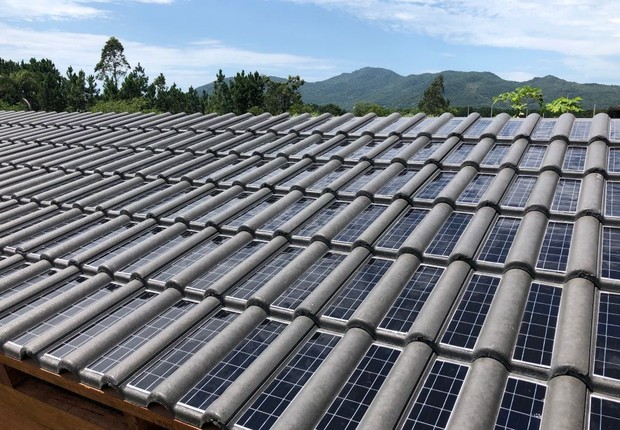
Photovoltaic Cells Installed Directly on Concrete Tiles Capture Solar Energy, Replacing Traditional Solar Panels.
The National Institute of Metrology, Quality and Technology (Inmetro) has granted Eternit the authorization to sell concrete tiles capable of producing solar energy. With the certification, the company can now start selling the product. The Director of Aneel Highlights Billion-Dollar Investment in Solar Energy in Paraíba with the Expectation of Generating 50 Thousand Jobs in the Region by 2025
Read More
- More Than 109 Solar Energy Equipment Have Import Tax Exemptions by the Government
- For the First Time, Solar and Wind Energy Represented the Largest Share of New Energy Generation in the World
- Job Openings in Offshore to Work for a Naval and Petrochemical Contractor Based in Rio das Ostras and Rio de Janeiro
- Job Openings to Meet Petrobras Contracts in Macaé for Electricians and Technicians to Work Offshore in UO-Rio and for Engineers in Maintenance Shutdown REFAP – RS
The photovoltaic cells installed directly on the tiles capture solar energy, replacing traditional solar panels. The construction materials manufacturer and responsible for the technology expects that its commercialization will only begin in the second quarter of 2021.
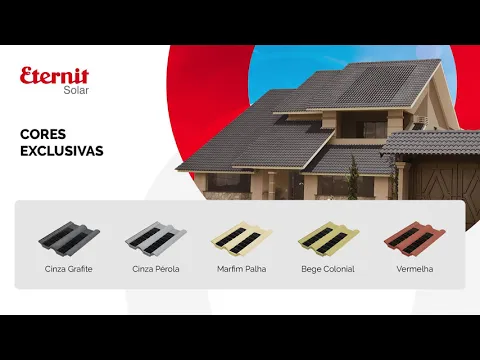
Each solar tile from Eternit Solar produces 9.16 watts and measures 365 x 475 mm. The average monthly production capacity of a single tile is 1.15 Kilowatt-hours per month (kWh/month). The concrete models have two finish options and five colors: graphite gray, pearl gray, straw ivory, colonial beige, and red.
-
Renewable energy advances over protected areas in Brazil, and a survey by the Energy Transition Observatory reveals silent impacts that challenge environmental conservation and pressure sensitive traditional territories.

-
Rio Grande do Sul accelerates energy transition: State invests in renewable technologies and consolidates decarbonization strategies and pathways to attract billions in new industrial investments.

-
With 160,000 m² of collectors, an area larger than 20 football fields, Silkeborg, in Denmark, hosts a solar thermal plant that heats 19,500 homes and could become the largest solar heating plant in the world.

-
A study reveals the expansion of renewable energy procurement in Brazil and shows how companies are taking advantage of opportunities to reduce expenses, ensure energy efficiency, and strengthen strategic environmental commitments.

According to the commercial director of Grupo Eternit, Rodrigo Inácio, the estimate is that the concrete tile capable of producing solar energy will allow the consumer to save between 10% and 20% on the total cost of purchasing and installing photovoltaic tiles compared to solar panels installed on regular rooftops. The return on investment occurs between 3 to 5 years, depending on the system.
According to Eternit, a small residence needs about 150 tiles, while larger houses should use around 600 solar tiles. The rest of the roof can be covered with regular tiles.
The company states that, once installed, the system can generate returns in a period of 3 to 5 years.
A select group of clients will have early access to the new technology, which will be produced in a factory in the interior of São Paulo, belonging to Grupo Eternit.
Check Out the Video of the Solar Generating Tile That Will Be Marketed by Eternit










Seja o primeiro a reagir!