Portuguese
  Spanish


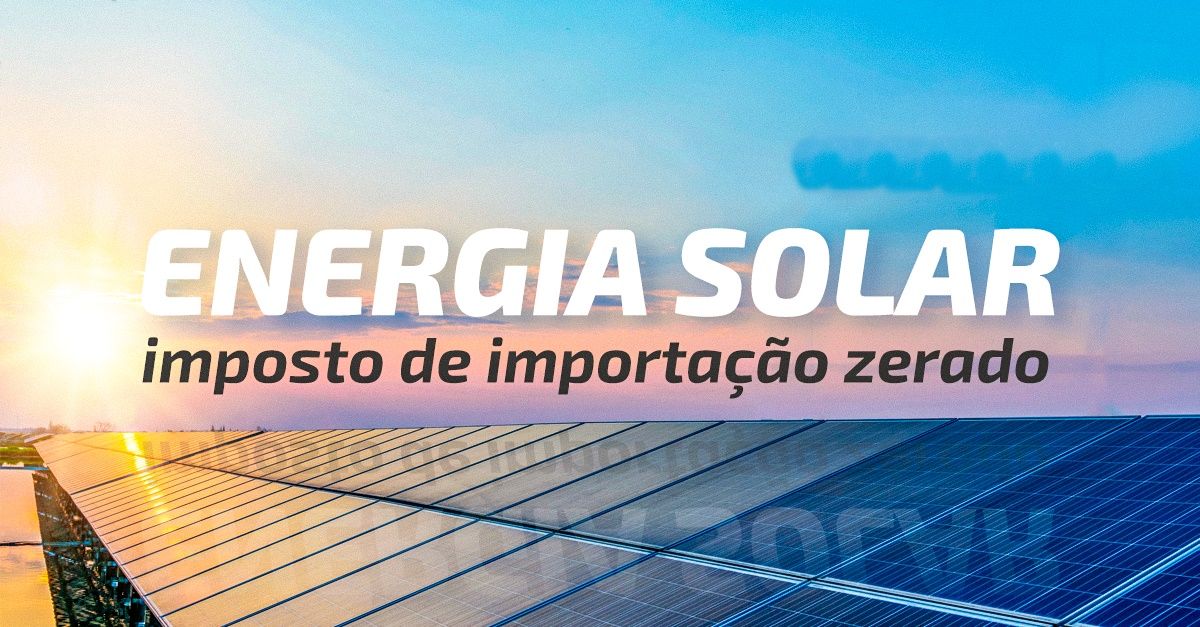

Solar Power Modules and Inverters Will Have Zero Import Tax Starting Today, August 1st. Products Typically Have a 12% to 14% Tax.
The Federal Government has decided to eliminate the import tax on more than 109 solar power generation equipment, such as photovoltaic inverters, static converters, and trackers used for solar panels. Bolsonaro Inaugurates Solar Power Plant in Goiás and Ensures That “The Sun Will Not Be Taxed”
This action came from the Executive Management Committee of the Chamber of Foreign Trade last Thursday (August 27th) and includes various products. The inclusion of the new items in the list of solar power products exempt from import tax under the ex-tariff condition will take effect starting August 1st.
The measure continues the elimination of taxes on other solar power components announced in July and aims to help stimulate business during the crisis caused by the new Coronavirus, where the depreciation of the real against the dollar increases the costs of components for generation with the technology, which mainly relies on imports from China.
-
World’s Largest Engie Solar Plant in Brazil Highlights Billion-Dollar Energy Waste Issue: Company Considers Batteries and Bitcoin Mining to Avoid Wasting Production

-
Air Products Cancels $2.9 Billion Clean Hydrogen Megaproject in Louisiana, Shuts Down Arizona Unit, Highlighting High Costs of U.S. Energy Transition
-
Over 60 Tractors Take to the Streets in Lopera as Solar Parks Compete with Olive Groves, Affecting 13,000 to 100,000 Trees According to Conflicting Reports

-
Green Hydrogen Projects in Northeastern Brazil Stalled for 18 Months Awaiting Government Decree, Delaying Billions in Investments


Check Out Other News About Energy
- Photovoltaic Plant Will Be Installed in the Irrigation District of Ponto Novo, Bahia, to Reduce Electricity Bills for Farmers
- Wartsila Wins Petrobras Contract in Amazonas to Convert the Manauara Thermal Power Plant to Gas
- Billion-Dollar Investment Will Enable the Construction of 20 Solar Power Parks in Minas Gerais This Year
On the other hand, the few companies that manufacture solar power equipment in Brazil may find their competitiveness pressured compared to imported products, which traditionally already have cost advantages.
However, the country still has another 3.4 gigawatts in distributed generation, in cases where, for example, solar panels are used at home. According to Aneel, the sector has shown strong growth here, both in large power plants and for residential installations.
Still, solar energy currently represents just under 2% of the operating capacity in Brazil, according to data from the National Electric Energy Agency (Aneel), with enormous potential for expansion in the coming decades.