





 Portuguese
  English
  Spanish
  4 min of reading
  0 comments


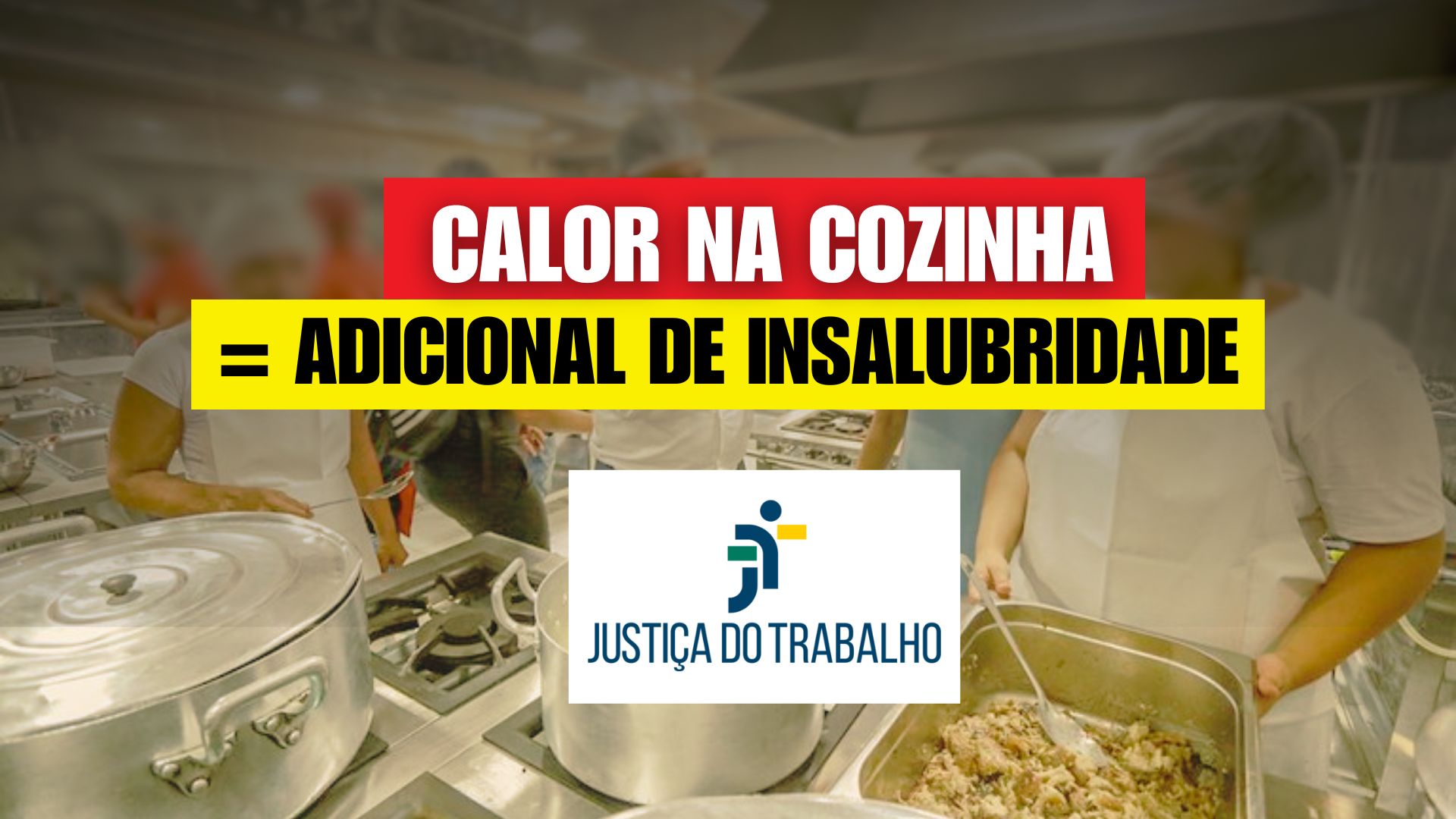
Superior Labor Court Decided on Hazard Pay in Commercial Kitchens, with Immediate Impact on Bars, Bakeries, and Restaurants. The Ruling May Lead to New Lawsuits and Broaden the Discussion on Occupational Diseases Related to Heat.
The 5th Panel of the Superior Labor Court ruled in August 2025 that a cafeteria worker in Belo Horizonte is entitled to a 20% hazard pay, based on a report that indicated exposure to heat above the limits set by Regulatory Standard 15 (Annex 3).
The collegiate applied Summary 47, according to which intermittency does not eliminate the hazard pay.
Although the case is individual, the understanding paves the way for new actions in bakeries, restaurants, and pastry shops that operate at elevated temperatures without technical control of heat by the Wet Bulb Globe Temperature Index (IBUTG).
-
End of the 6×1 shift: when the changes will truly come into effect with the proposal for a 36-hour workweek advancing in Congress in 2026 and mobilizing CLT workers.

-
The end of the 6×1 shift becomes a hot topic in Congress! Lula makes the decision, confirms the submission of a project to eliminate the 6×1 shift and reduce the workweek to 40 hours, with two days off and maintenance of salaries.

-
In Spain, a law has created paid menstrual leave funded by the state, turning debilitating cramps into legal leave and placing the country among the most advanced in Europe in terms of women’s health rights.
-
Government enacts new law: paternity leave increases from 5 to 20 days with gradual increases until 2029, and Social Security pays the paternity salary; companies no longer bear the absence cost, estimated at R$ 5.4 billion.

TST Decision and Immediate Impact
The TST reaffirmed that it is not the function performed that defines the right to the hazard pay, but the actual exposure to heat above the tolerated limit.
The rapporteur was Minister Morgana Richa, who reinstated the condemnation at the medium level.
The decision highlighted that commercial kitchens can exceed legal parameters even without continuous contact with flames, due to the combination of ovens, grills, and poor ventilation.
How Heat Measurement Is Done
The Annex 3 of NR-15 requires quantitative assessment by IBUTG, calculated with globe thermometers, natural wet bulbs, and, in some cases, dry bulbs.
For activities classified as moderate, the limit for continuous work is 26.7 °C of IBUTG.
Above this value, the environment is considered unhealthy.
The parameters of the standard define work and rest regimes and establish that above 31.1 °C work can only be performed with control measures.
Conventional thermometers, which often register up to 45 °C in kitchens, do not substitute the official measurement required.
Consequences for Bars and Restaurants
The ruling reinforces companies’ obligation to assess and control exposure to heat according to the parameters of NR-15.
This includes recording measurements and adopting measures such as adequate ventilation, efficient exhaust systems, shading of heat sources, and rotating activities according to IBUTG.
Intermittency Does Not Exclude Hazard Pay
Summary 47 of the TST establishes that the intermittent nature of hazard does not exclude the payment of the additional.
Thus, cooks and assistants who alternate tasks but remain in hot environments are entitled to the benefit whenever the measurement exceeds the limits.
Reflections of Hazard Pay on Labor Rights
The hazard pay at medium level has salarial nature and applies to amounts such as 13th salary, vacation, and FGTS.
When recognized judicially, it may generate retroactive claims.
Depending on the length of the contract, the accumulated amounts can be significant for micro and small companies in the sector.
12 Months of Job Security and Occupational Diseases
Another relevant point involves Topic 125, established by the TST Plenary on April 25, 2025.
The court determined that, for the 12 months of job security provided in Article 118 of Law 8.213/91, no more than 15 days of absence or receipt of benefit B-91 is necessary.
It is sufficient that, after dismissal, the causal or co-causal link between the disease and the work is proven.
This broadens the possibility of reinstatement or compensation equivalent to one year of wages.
Diseases Related to Excessive Heat
Research associates prolonged exposure to high temperatures with cases of heat exhaustion, dehydration, and cardiovascular and renal overload.
The Pan American Health Organization (PAHO) has already pointed out an increased risk for acute kidney injuries and chronic kidney disease among workers in hot environments without sufficient hydration.
The extension of heat waves intensifies these risks.
Prevention Measures in Commercial Kitchens
Occupational health specialists advise companies to implement control programs with regular IBUTG measurements.
They also recommend installing appropriately sized exhaust fans, reorganizing physical space, compatible breaks, and providing a constant supply of water.
The technical documentation must reflect the type of activity (light, moderate, or heavy) and comply with the limits established by NR-15.
Guidelines for Workers and Employers
Workers can protect themselves by keeping records of measurements, inspection reports, and medical consultations in case of symptoms such as fatigue, dizziness, and excessive thirst.
Employers can reduce legal risks by adopting preventive measures, training teams, and keeping updated evidence that they comply with the norm.
With the expectation of increasingly hotter summers, will the food sector be able to adapt its kitchens to legal requirements or face an increase in lawsuits?









-

Uma pessoa reagiu a isso.