





 Portuguese
  English
  Spanish
  5 min of reading
  0 comments


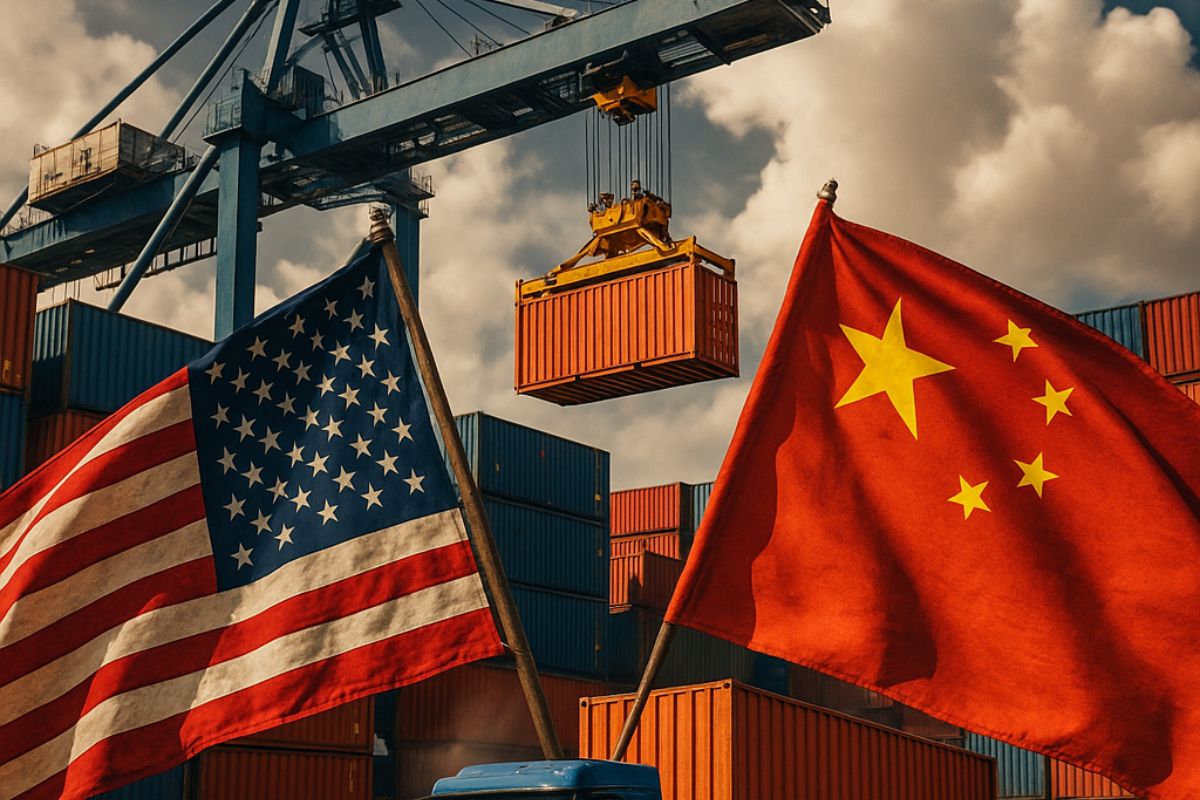
Beijing Proposes New Round Of Talks “As Fast As Possible” After Announcement Of 100% Tariff By Washington; Leaders Meeting May Occur In The Coming Weeks To Contain Damage.
The announcement of 100% tariffs against China by Washington has reignited fears of a new trade war. In response, Beijing agreed to resume negotiations “as fast as possible,” in a gesture to prevent the dispute from escalating. This signal opens a window for diplomatic de-escalation, but does not dispel uncertainty: the White House classifies the measures as necessary, while China calls the move “hostile.”
In the background, a call between Vice Premier He Lifeng and U.S. Treasury Secretary Scott Bessent was described as “frank and constructive”. At the same time, Donald Trump stated that the tariffs against China “are not sustainable” in the long run, but that he felt forced to impose them, maintaining pressure for a comprehensive agreement. There is expectation of a meeting with Xi Jinping in the coming weeks, in an effort to halt an escalation that is already reverberating in markets and supply chains.
What Changes With The 100% Tariff
The decision to double the tariffs against China to 100% affects a broad range of products and sends a direct political message: Washington wants to rebalance trade terms. The U.S. government maintains that Beijing engages in unfair practices and that tariff responses are the urgent tool to address distortions.
-
Brazilian city bets on the business environment to generate jobs and attract investments in the energy sector — secretary reveals strategy at Macaé Energy 2026.

-
50 viaducts, 4 tunnels, 28 bridges, and 40 kilometers of bike paths: BR-262 in Espírito Santo will receive 8.6 billion reais for the largest engineering project in the state’s history, inspired by the Immigrant Highway in São Paulo.

-
Brazil produces too much clean energy and doesn’t know what to do with it: over 20% of solar and wind capacity was wasted in 2025 while investors flee and 509 renewable generation projects were abandoned in the last year.

-
Piauí will produce a new fuel that replaces diesel without needing to change anything in the truck’s engine and reduces pollutant gas emissions by half: truck drivers from all over the Northeast are already celebrating the news that will arrive later this decade.


For the industry, the immediate effect is increased cost of imports, partial price passes, and reconfiguration of orders. Companies that rely on Chinese inputs may expedite purchases or seek alternative suppliers, while others assess absorbing smaller margins to preserve market share.
How Beijing Responded
China communicated its willingness to negotiate quickly, relying on the technical channel that brought He Lifeng and Scott Bessent together. The reading in Beijing is that dialogue can “stabilize expectations” and prevent further measures. At the same time, China’s Ministry of Commerce emphasized that it will respond to unilateral actions to protect its “rights and interests.”
In the multilateral arena, the Chinese mission at the WTO raised the tone, accusing the U.S. of weakening trade rules by adopting tariffs against China and unilateral sanctions. The country promised a comprehensive report on U.S. compliance with commitments, keeping the dispute also in the institutional field.
The U.S. wants a “fair agreement” that addresses market access, subsidies, and export restrictions, especially after China limited critical elements of rare earth materials for technology and defense. Washington is also targeting specific sectors, such as supply chains related to cooking oil and other industrial goods, mentioned by Trump as subject to restrictions.
For China, the focus is reducing tariffs against China and rebuilding predictability. Beijing seeks to remove new barriers and obtain minimum guarantees, while also diversifying export destinations to reduce dependence on the American market.
Effects On The Trade Route: Accelerated Diversification
With higher tariffs against China, Chinese exporters are intensifying the migration of sales to Europe, Latin America, and the Middle East. This is a defensive strategy to compensate for losses in the U.S., even though margins are pressured and competition is greater.
The change is already evident on the ground at trade fairs and in portfolios: fewer American buyers and more inquiries from countries like Brazil. Although China’s total exports remain strong, businesspeople report falling prices, tougher competition, and occasional losses to maintain flow.
The Shanghai and Hong Kong stock markets had their worst week since April, reflecting profit-taking in technology and fears over the tariffs against China. The CSI300 and the Hang Seng declined, while investors await definitions of the Chinese Communist Party’s economic plan.
The short-term sentiment is one of risk aversion, with tactical reallocations and a search for protection in sectors less exposed to foreign trade. Volatility may persist until there is a clear roadmap for the meeting between Trump and Xi.
Brazil On The Board
On the Brazilian side, the political channel with Washington is gaining relevance, with Chancellor Marco Vieira opening talks in a meeting with American authorities. For local exporters, reconfiguring supply chains may open windows of opportunity, both to fill gaps in U.S. niches and to increase sales to China itself.
At the same time, there are risks: prolonged tension raises input costs, affects logistics, and may import exchange rate volatility. Brazilian companies integrated into Sino-American supply chains will need to reassess pricing, deadlines, and stock scenarios, adjusting contracts and risk clauses.
Costs, Margins, And Planning: How Companies Are Likely To React
In the short term, importers in the U.S. are assessing passing on part of the tariff shock, while studying nearshoring, friendshoring, and multiple sourcing to reduce exposure. Prioritizing contracts with flexible deadlines and force majeure clauses is gaining traction, given the risk of new rounds of tariffs against China.
On the Chinese side, manufacturers are redistributing production, renegotiating with suppliers, and mapping regional incentives. Meanwhile, they are seeking certifications and technical adaptations to expedite entry into alternative markets, a costly but necessary task to preserve volume.
Possible Scenarios: Tactical Truce Or New Chapter In The Dispute
A meeting between Trump and Xi in the coming weeks may produce a tactical truce: freezing new measures, establishing a schedule of technical groups, and calibrating the tariffs against China in specific sectors. This would be a “breathing agreement”, sufficient to reduce noise but without resolving structural issues.
The risk scenario, on the other hand, is a gradual escalation: more tariffs, more export controls, and cross-retaliations. In this case, the cost would fall on consumers and global supply chains, with impacts on prices, deadlines, and investment especially in technology and advanced manufacturing.
For Those Importing, Exporting, Or Financing Foreign Trade: Are The Tariffs Against China Changing Your Strategy Yet? Do You See Room To Redirect Orders To Brazil Or Fear Cost Pass-Throughs To Consumers? Share In The Comments How Your Company Is Adjusting Real Stories Help Map Risks And Opportunities And Press For Solutions That Work In The Practical World.








-

-

2 pessoas reagiram a isso.