





 Portuguese
  English
  Spanish
  3 min of reading
  0 comments


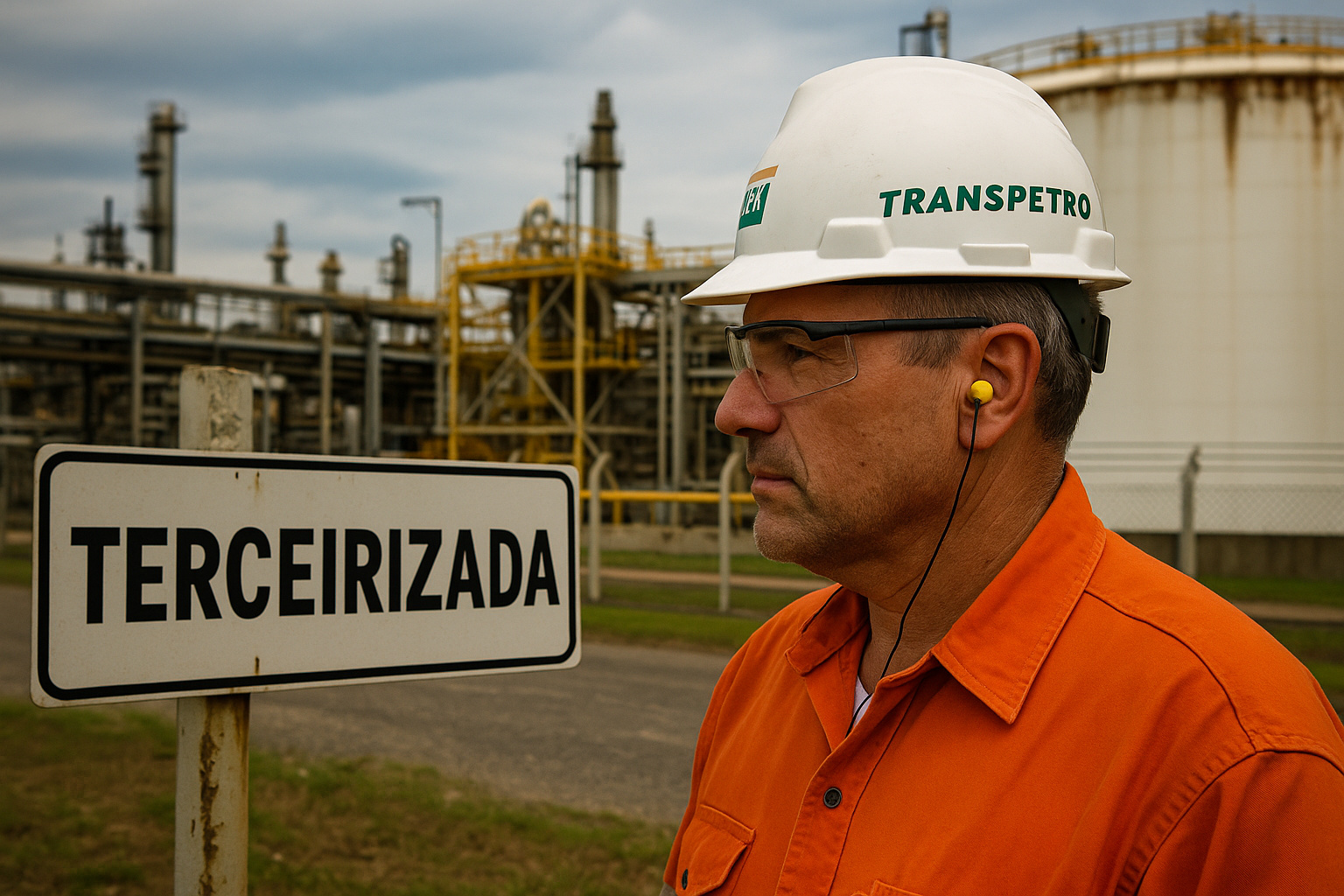
Reports Presented Since 2024 Expose Overload, Cuts, and Oversight Failures Involving Third-Party Workers at Various Transpetro Bases
A series of labor complaints gained momentum between 2024 and 2025, bringing Transpetro’s outsourcing back into national focus. Although the Petrobras subsidiary seeks financial targets, workers report overload, exhaustion, and insecurity, especially during night shifts with reduced teams.
During the 24-hour warning strike held in March 2025, outsourced workers were called in at five in the morning, even after salary delays and lack of meal vouchers at the end of 2024. According to workers, no manager sought information during Christmas 2024, which increased dissatisfaction.
Internal Investigation Reveals Routine Accumulation and Precarization
Reports from various regions show that since the end of 2024, security guards, cleaning teams, and drivers have faced long hours, reduced teams, and cuts in benefits. In August 2025, MIB security guards in Uberaba (MG) reported shifts without time off, restrictions on overtime, and role misalignment, even as operational volume remained high.
-
A major turn in the Justice system suspends tax increases and directly impacts oil and gas companies in Brazil by affecting costs, contracts, and financial planning, leaving uncertain what could happen to the sector if these costs had increased.

-
Brava Energia begins drilling in Papa-Terra and Atlanta and could change the game by reducing costs in oil while increasing production and strengthening competitiveness in the offshore market.

-
Petrobras surprises the world again by announcing a new discovery in the pre-salt with excellent quality oil.

-
Offshore industrial demand in Macaé skyrockets with the recovery of oil and gas and could grow by up to 396% by 2026 in the Campos Basin.

At the same time, bases like OSBRA in Senador Canedo (GO) report only two workers for all cleaning tasks, despite increased demand following the pandemic. Consequently, there is a lack of equipment and reinforcement, which escalates physical wear and tear.

Social and Labor Impacts Affect Essential Groups
Drivers linked to the contract transferred to VIX in August 2025 report cuts in overtime, use of taxis as substitutes, and calls in the early morning without additional pay, reducing income and predictability.
Furthermore, outsourced companies made benefit cuts, such as Eleva in Haus, which announced reductions starting December 1, 2024, according to workers. These cuts have increased internal tensions.
Union Positioning and Alert to Operational Risks
The director of Sindipetro Unificado, Rodrigo Araújo, states that the most serious accidents within the Petrobras System involve third-party workers, highlighting significant risks. He explains that the pressure for cost reduction compromises safety.
Similarly, the director of FUP, Reinaldo Alves, states that the bidding model based only on the lowest price selects companies without adequate technical capacity, including cases such as Sudamin, which left pending issues in Rio de Janeiro and São Paulo. He also recalls that in 2023, there was a return of health insurance for dependents, deemed essential after years of losses.
Transpetro’s Responsibility According to Industry Experts
Leader Vereníssimo Barsante asserts that the responsibility for the problems falls on Transpetro itself, which should ensure rigorous oversight of contracts. According to him, companies aim for profit, but a state-owned company must guarantee dignified conditions for workers.
Official Responses from the Mentioned Companies and Recent Developments
MIB denied irregularities and stated that long hours occurred only in “emergency demands.” VIX claimed to operate in accordance with the law and to pay overtime and night premium, in addition to denying the replacement of drivers with taxis.
What Does the Future Hold for Transpetro Workers?
The set of complaints reinforces the need for intensive oversight, contract review, and strengthening of operational safety. However, the essential question remains: how to ensure dignified conditions for the workers who sustain the country’s energy base?









Seja o primeiro a reagir!