





 Portuguese
  English
  Spanish
  5 min of reading
  4 comments


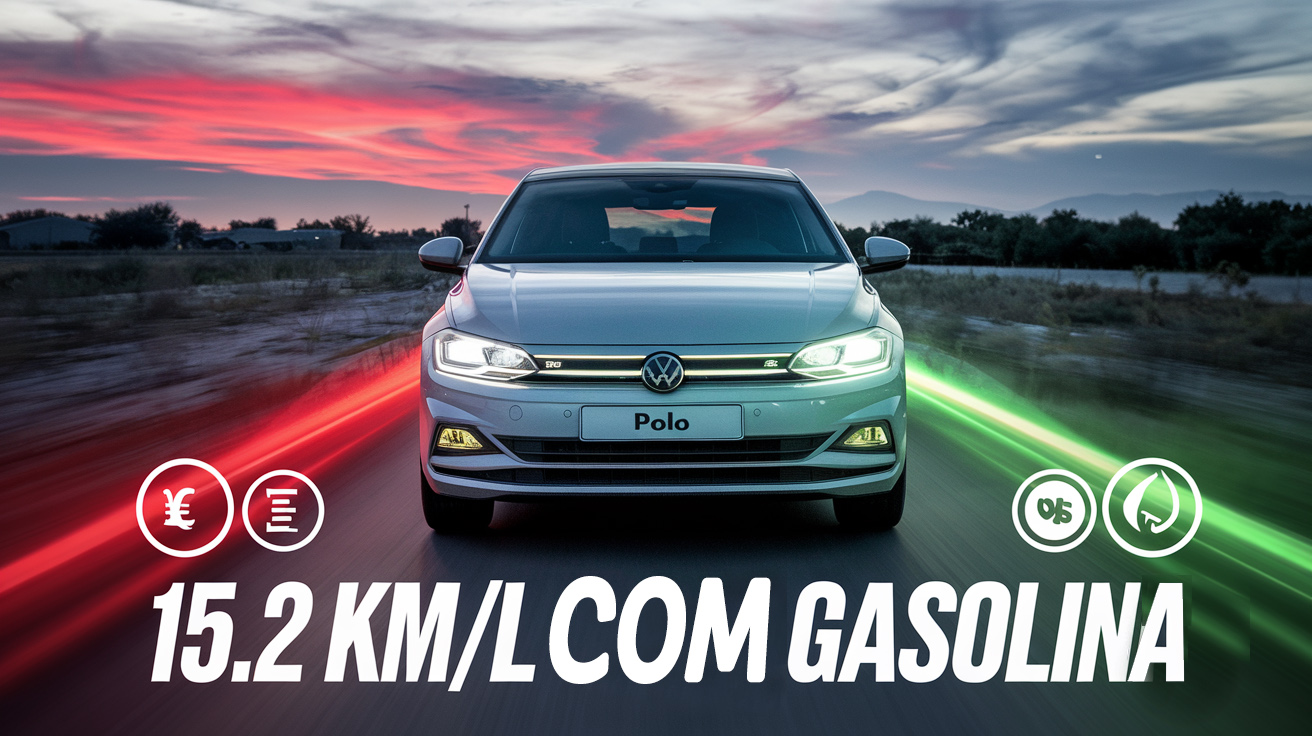


With Improvements Certified by Inmetro, the Volkswagen Polo Becomes Even More Efficient. The Compact Hatch Now Delivers up to 15.2 km/l with Gasoline and Reduces CO2 Emissions. Available in Track and MPI Versions, the Model Combines Sustainability, Performance, and Cost-Effectiveness, Establishing Itself as One of the Most Attractive Vehicles in the Brazilian Market.
What happens when Volkswagen decides to go further and transforms an already efficient model into a true money-saving machine?
Well, the Volkswagen Polo, one of the most popular options on the market, has just become even more economical, with fuel consumption numbers that are sure to cause tremors at gas stations.
After all, who would have imagined that a hatchback could deliver such mileage per liter of fuel while maintaining the performance that made it a favorite among drivers?
-
Less than a Tera TSI, up to 710 km of range and charging in 9 minutes: the new BYD Song Ultra expands the Chinese brand’s bet on increasingly faster, more technological, and competitively priced electric SUVs.

-
With a 1.0 engine producing 75 hp and costing less than R$ 70,000, Fiat’s car returns to the podium as the cheapest in the country; a temporary promotion for the 2026 Like version reduces the price of the Fiat Mobi.
-
With a mild hybrid system of 48 V, 176 hp and a price of R$ 175,990 in the Sahara version, the new Jeep Renegade changes mostly on the inside, improves slightly in fuel consumption, and remains almost the same car.
-
With a 293.5 cm³ engine and a range of up to 400 km with a 14.1-liter tank, the Honda CB 300F Twister 2026 has up to 24.7 hp, an initial price of R$ 25,150, and already exceeds R$ 29,000 in the Fipe Table.

If you think that Polo’s economy couldn’t improve, get ready for a big surprise.
The Brazilian Vehicle Labeling Program (PBEV), from Inmetro, has updated the information on the consumption of the Track and MPI versions of the model, and the data reveals that the hatch, launched in 2022, has become even more efficient.
Yes, the Polo now has a surprising range, with consumption reaching impressive more than 15 km/l.
The numbers don’t lie, and drivers looking for fuel efficiency no longer need to look for another option.
New Consumption Numbers: The Most Economical Polo of All Time
The Polo Track and Polo MPI have a 1.0 MPI flex aspirated three-cylinder engine, and according to Inmetro, the new measurements show a slight but relevant improvement in consumption.
When the model was launched, the Polo was already one of the most economical cars in its category, but the current numbers go even further.
The urban consumption with ethanol was 9.3 km/l, and with gasoline, the hatch reached 13.5 km/l.
On the highway, the model delivered 10.5 km/l with ethanol and 15 km/l with gasoline. Now, the Polo offers even better numbers.
According to the updated data from Inmetro, the Polo 1.0 MPI with ethanol achieves 9.4 km/l in the city and 10.8 km/l on the highway.
When fueled with gasoline, the model achieves 13.7 km/l in urban routes and an impressive 15.2 km/l on highways.
These numbers make any driver rethink the efficiency of traditional car models, and the Polo stands out even more as an excellent option for those looking to save.
Reduction in Energy Consumption: More Efficient Polo
In addition, the model also registered a reduction in energy consumption, dropping from 1.51 MJ/km to 1.48 MJ/km.
This means that the Polo is using less energy to travel the same distance, directly reflecting in lower fuel consumption and consequently a lower emission of polluting gases.
Speaking of emissions, the Polo Track version had a significant reduction in the CO2 (carbon dioxide) index per kilometer driven.
The amount of carbon dioxide emitted fell from 227 mg/km to just 150 mg/km, a number that is a significant step toward sustainability, especially when we consider the growing concern about environmental issues.
On the other hand, the Polo MPI version, although it showed an increase in CO2 emissions, rose from 140 mg/km to 150 mg/km, still maintaining a good average in general comparisons.
Performance Maintained: Power and Acceleration in the Polo
Although fuel consumption and energy efficiency have improved, the Polo’s performance remains the same, which can be good news for those looking for a good balance between economy and power.
The 1.0 MPI flex engine continues to deliver 77 hp of power with gasoline and 84 hp with ethanol, with torque of up to 9.6 kgfm at 3,000 rpm in the gasoline version and 10.3 kgfm with ethanol.
The five-speed manual transmission MQ200 has also not changed, meaning the Polo maintains its reliability in performance, without losing the agility and dynamics expected of a compact model.
The performance on the streets, as always, is one of the Polo’s strong points. It accelerates from 0 to 100 km/h in 13.4 seconds and reaches a top speed of 169 km/h.
These numbers please drivers who do not compromise on agility without sacrificing fuel efficiency.
Prices and Configuration Options: Accessible and Customizable
When it comes to prices, the Polo Track is now available for R$ 92,990, a value that may vary based on color options.
The Polo MPI version starts at R$ 96,490 and, like the Track, also offers several external color options, such as the metallic paint in Sunset Red, which is available at an additional cost.
And if you are looking for more technology and comfort, the VW Play package is the ideal option to add to your configuration.
This package includes a 10-inch multimedia center with wireless smartphone connectivity and is available for both models.


Another highlight is the color options for the Polo.
The Track version does not charge extra for solid black, but metallic options like Platinum Gray and Sirius Silver have additional costs ranging from R$ 900 to R$ 1,650, depending on the choice.
The Polo MPI also offers the same color options, with an additional R$ 1,650 for the metallic paint in Sunset Red.
The price variations for colors may seem small, but they make a difference for those looking to customize their car.
More Sustainable: Economy and Environmental Responsibility Together
The Polo, besides being economical, is also more sustainable and accessible.
This combination of factors can make the model continue to be an excellent option in the Brazilian market, especially for those concerned about fuel efficiency and environmental impact, but who don’t want to give up a car with good performance and power.
With improvements in consumption rates and reductions in CO2 emissions, the Volkswagen Polo becomes an even more attractive choice for drivers seeking the perfect balance between economy, performance, and environmental responsibility.
The Polo That Drivers Expected
With autonomy now exceeding 15 km/l, gas stations must certainly fear the success of the Polo.
Who would have thought that a hatchback could become one of the most efficient models on the market?
Volkswagen has managed to elevate the Polo to a new level of economy, and in the current scenario of high fuel prices, this car stands out as one of the smartest options for those looking to make their money go further on the road.
Now, the question remains: what more can we expect from other models looking to compete with the Polo? Are we really witnessing a shift in the automotive industry towards greater efficiency, or is the Polo just an isolated case? The future looks promising!







Tenho um polo 1.0 TSI automático e rodei 1000 km a uma média de 19km/L a 100km/h e ar ligado
Fui do Rio de Janeiro até Araçatuba SP
Gente que mentira e essa di polo 1.0 aspirado ter bom desepenho. O carro e pesado e o motor simplismente nao da conta dele. Se vc nao tomar cuidado vc morre facil em ulttapassagens.
Esses cálculos de laboratórios em pista plana ou dinamômetro não são reais, o ideal é rodar um período e abastecer pra ver qual realmente foi a media, pois são vários fatores que devem ser levados em conta, local, trânsito, **** na frente, acidente, pezinho peaado do condutor se tá frio, se tá quente e etc etc etc.