





 Portuguese
  English
  Spanish
 5 min of reading


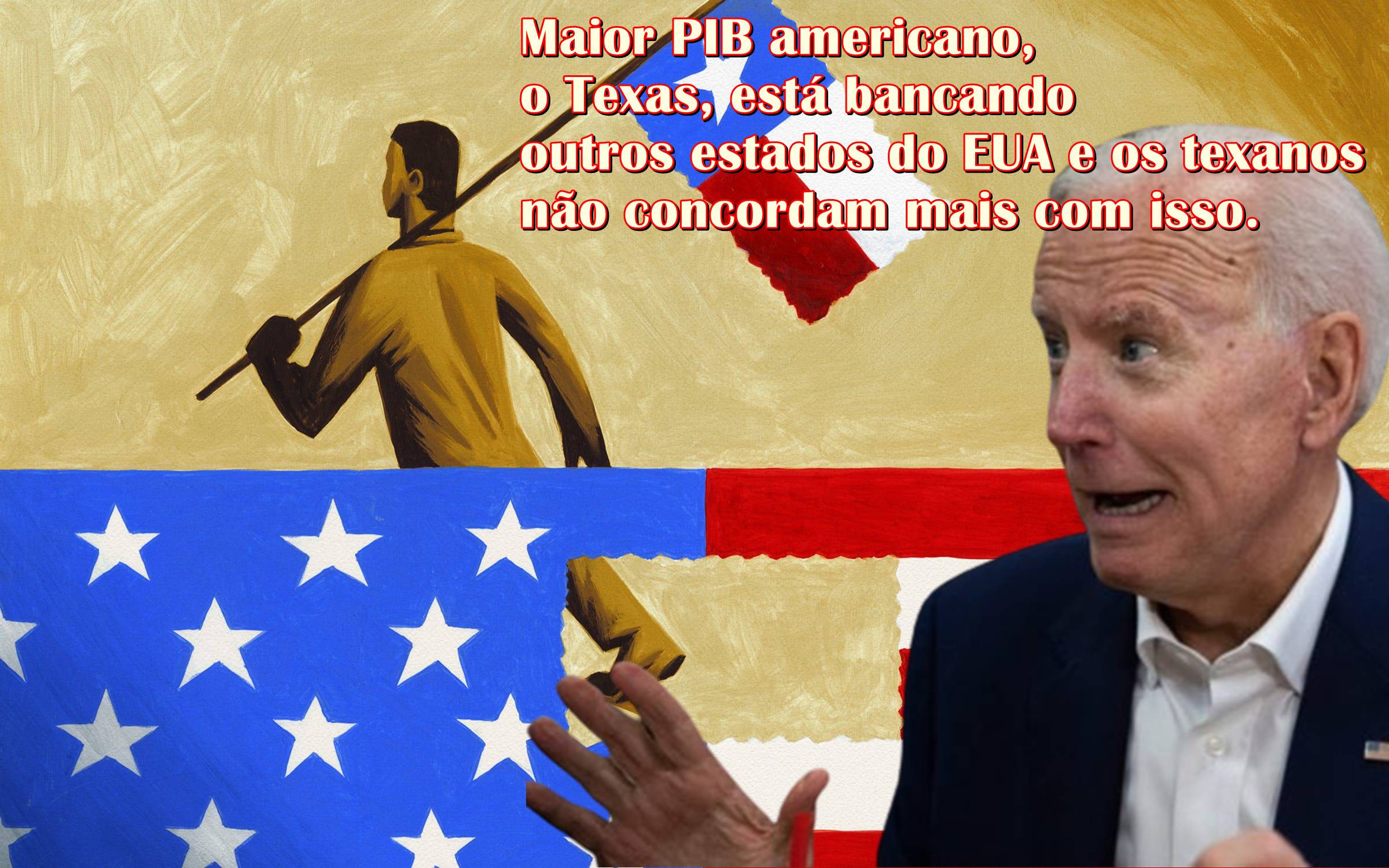
American State Has Significant Differences with the Federal Government
Texas is a large American state with approximately 700 thousand square kilometers and a population of around 30 million inhabitants. It is located in the southern United States and was once part of Mexico in ancient times. However, the separatist movement emerged, and in 1845, Texas was incorporated into the United States.
However, the Texan people have a culture, customs, philosophies, and economy that are very different from the rest of the American country. Therefore, all these issues are culminating in a new separatist movement that seeks independence for the state. But, after all, what are the real reasons for this separation? Is Texas capable of sustaining itself alone? Discover all this in today’s article.
Understand More About Why Texas Wants to Leave the United States with the Video Below


Texas is Divided into Counties and Its Culture Reflects Spanish Colonization
Texas is the second-largest state in the United States and is subdivided into 254 distinct counties, which are unions of several cities that form small regions. Each county is managed by a council made up of five members: one judge and four officials. However, these people must be from the county itself and have been chosen by the population.
-
Piauí will produce a new fuel that replaces diesel without needing to change anything in the truck’s engine and reduces pollutant gas emissions by half: truck drivers from all over the Northeast are already celebrating the news that will arrive later this decade.

-
A new Brazilian shopping center worth R$ 400 million will be built in an area equivalent to more than 4 football fields, featuring 90 stores, 5 cinemas, a supermarket, a college, and parking for 1,700 cars, potentially generating 3,000 jobs.

-
Larger than entire cities in Brazil: BYD is building a 4.6 km² complex in Bahia with a capacity for 600,000 vehicles per year, but the discovery of 163 workers in conditions analogous to slavery has shaken the entire project.

-
With an investment of R$ 612 million, a capacity to process 1.2 million liters of milk per day, Piracanjuba inaugurates a mega cheese factory that increases national production, reduces dependence on imports, and repositions Brazil on the global dairy map.

This type of organization reflects the culture left mainly by colonization, which was done by the Spaniards when the state was still part of Mexico. However, in 1836, Texas achieved independence from Mexico and began some moves to incorporate into the United States. However, it was not until 1845 that effective incorporation occurred.
However, the significant blow came when realizing that only state boundaries separated Texans from a completely different culture. After all, the people of Texas have had their generations founded on more traditional customs and based on the Catholic religion. Moreover, the state has always had a conservative majority, while surrounding states tend to be more progressive.
Reasons for Texas Wanting to Separate from the United States
Now we delve into the central factor of this matter: the real reasons for Texas’s separation from the United States. Here’s a list of some of the main factors:
- Differences in beliefs, cultures, and philosophies concerning the country;
- Higher federal tax contributions with lower returns;
- More conservative and Republican positioning, while other states are mixed or Democratic;
- Feeling a lack of representation for the state in the federal government.
After All, Could Texas Live on Its Own?
Texas is the second-largest state in the United States, as we mentioned earlier. Furthermore, it has a Gross Domestic Product (GDP) that is truly impressive: 2 trillion dollars. In this sense, to put things into perspective, the total GDP of Brazil amounts to just 1 trillion and 600 billion dollars.
And do you know why this GDP is so high?
The state of Texas has 227 thousand farms, more than any other American state, and is the largest cattle producer in the United States. Additionally, it holds vast reserves of oil, natural gas, and derivatives, being the largest in the country. Therefore, it also plays a crucial role in the production of oil and its derivatives.
Moreover, it is the largest electricity producer in the United States. However, its energy sources are not renewable:
- 50% from thermal power plants;
- 40% from coal plants;
- 10% from nuclear plants.
In other words, Texas is fully capable of sustaining itself.
State Economy Faces Major Impasse with the Federal Government of the United States
Texas is one of the places that charge the least taxes in the entire United States and one of only seven states in America that do not impose a state income tax. Moreover, the “ICMS,” or tax on products, is only 8.25% per unit, regardless of the type and location within the state.
A major clash between the state and the federal government is over the amount they pay in taxes and how much they receive in return, which they claim is disproportionate. For example: for every $1 that Texas collected in state taxes, the federal government returned about $0.60 to them through government programs and the like.
Thus, Texans have the perception that they are paying for the development of other states. And this is one of the main reasons, in addition to distinct philosophies, for Texas seeking its independence.
Brazil Also Has States That Provide Higher Tax Contributions Than Others: SP, MG, and RJ
Based on analyses from recent years by the Federal Revenue, São Paulo, Rio de Janeiro, and Minas Gerais are the Brazilian states that contribute the most to tax transfers to the government. According to data from the General Comptroller of the Union, we had the following figures in 2021:
- São Paulo: R$538.3 billion;
- Rio de Janeiro: R$198.5 billion;
- Minas Gerais: R$80.9 billion.
When we compare these with the funds received in federal programs, works, and other attributes, there is a significant gap:
- São Paulo: R$47.2 billion;
- Rio de Janeiro: R$45.5 billion;
- Minas Gerais: R$40.0 billion.
These data extracted from the survey conducted in 2021 by the Federal Revenue and the General Comptroller of the Union (CGU) point to the significant gap that exists in tax distribution. Moreover, data from the same year indicate that the North and Northeast regions of Brazil contributed the least in taxes and received the most government investments.
However, although many people feel wronged by this national tax distribution, separatist movements have not yet gained the strength to sustain themselves. However, in southern Brazil, some enthusiasts have created the movement “the South is my country,” which also does not seem to be taken very seriously.




Seja o primeiro a reagir!