






 Portuguese
  Spanish
  3 min of reading


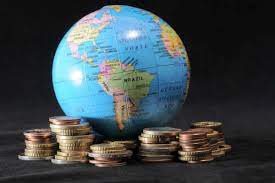
The Brazilian Institute of Geography and Statistics (IBGE) announced on this Thursday (02/03) that Brazil’s Gross Domestic Product (GDP) had a surprising growth, reaching 2.9%, totaling R$9.9 trillion.
The end of the restrictions imposed to combat the COVID-19 pandemic, combined with the fiscal stimuli adopted, were the key factors for this economic recovery. The services sector was responsible for the highest growth rate, with 4.2% of the GDP of Brazil, but all activities had significant increases.
The industry did not fall behind and recorded a 1.6% growth. On the other hand, the agriculture sector experienced a decline of 1.7% due to a decrease in production and loss of productivity. Household consumption expenditure rose by 4.3%, while government spending increased by 1.5%. Exports of goods and services had a gradual increase of 5.5%, and imports had a slight advance of 0.8%.
In this promising scenario, the GDP of Brazil per capita grew by 2.2% compared to 2021, reaching R$46,154.6. Just as new opportunities were opened for the country with these positive results, the investment rate rose to 18.8% of the total GDP.
-
Brazilian Joins Homeownership Consortium, Faces Decade of Dual Payments Totaling $141,000, Surpassing Traditional Mortgage

-
Land Rover to Halt Production in July, Putting 371 Jobs at Risk, as Chinese Automaker Negotiates to Convert Factory to 100,000 Vehicles Annually by 2027

-
Mexican Pest Threatens U.S. Cattle Herds at Historic Lows, Potentially Boosting Brazilian Beef Exports as Burger Prices Soar

-
Brazilian Freight Bill Progresses in Congress with $5,000 Minimum Wage, 70% Advance Payment, and Fines Up to $1 Million, as Agriculture and Industry Warn of Rising Costs and Legal Uncertainty


However, the fourth quarter of last year was marked by a deceleration of the Brazilian economy due to a 0.2% decline recorded in the GDP of Brazil during that period. Despite this, Brazil managed to overcome the obstacles with great skill and perseverance, closing 2022 with an unmatched performance.
The Agriculture Sector of Brazil Lost Space in the GDP of Brazil in 2022, the Retraction Was 1.7%, According to the IBGE.
Agriculture has been affected by climatic factors that harm the production of basic products and, consequently, the national economy. The production of corn and soybeans – essential for the country – saw a drop of 20 million sacks in 2021.
However, the sector has been investing in technology to improve its exports and make agriculture a force in the Brazilian economy again. More than just strong sunlight is needed to produce the desired results: technological brilliance is also necessary. Like a growing beacon, technology can enable the sector to reach new heights and become fluorescent again.
According to the IBGE, there was a reduction in the participation of this sector in the total economy, which fell from 4.9% in 2019 to 8.8% in 2021 and then retreated to 7.9% last year. Livestock also faced challenges during the last quarter of 2022, with lower production of beef and pork, but a slight increase in chicken production. This resulted in a lower growth rate of the GDP of Brazil in the sector compared to the third quarter of 2021.
In the crop fields, the numbers are also concerning. The main product of Brazilian agriculture, soybeans, had an 11% drop in production, along with a 15.5% decrease in productivity. Rice also recorded a decline in harvest and reduction in productivity.
However, some items managed to surpass these negative numbers. Wheat achieved a record harvest of over 10 million tons and productivity 9.4% higher than the previous year. Corn also saw growth in both area and productivity: 26% and 15%, respectively.
Based on current prospects for 2023, there are reasons for hope. If the weather cooperates with the crops, it will be possible to achieve a harvest above 300 million tons of grains. The livestock sector, on the other hand, depends on how long it takes China to resume Brazilian imports to perform well again.
The government has been taking gradual measures to encourage and improve the results of national agriculture. Thus, just like a ship sailing into the sea towards a safe harbor, we will have the conditions to achieve more promising goals for this important economic activity in Brazil.
Brazil’s GDP Grows 2.9% in 2022, but 4th Quarter Has Slight Decline






Be the first to react!