





 Portuguese
  English
  Spanish
  3 min of reading
  0 comments


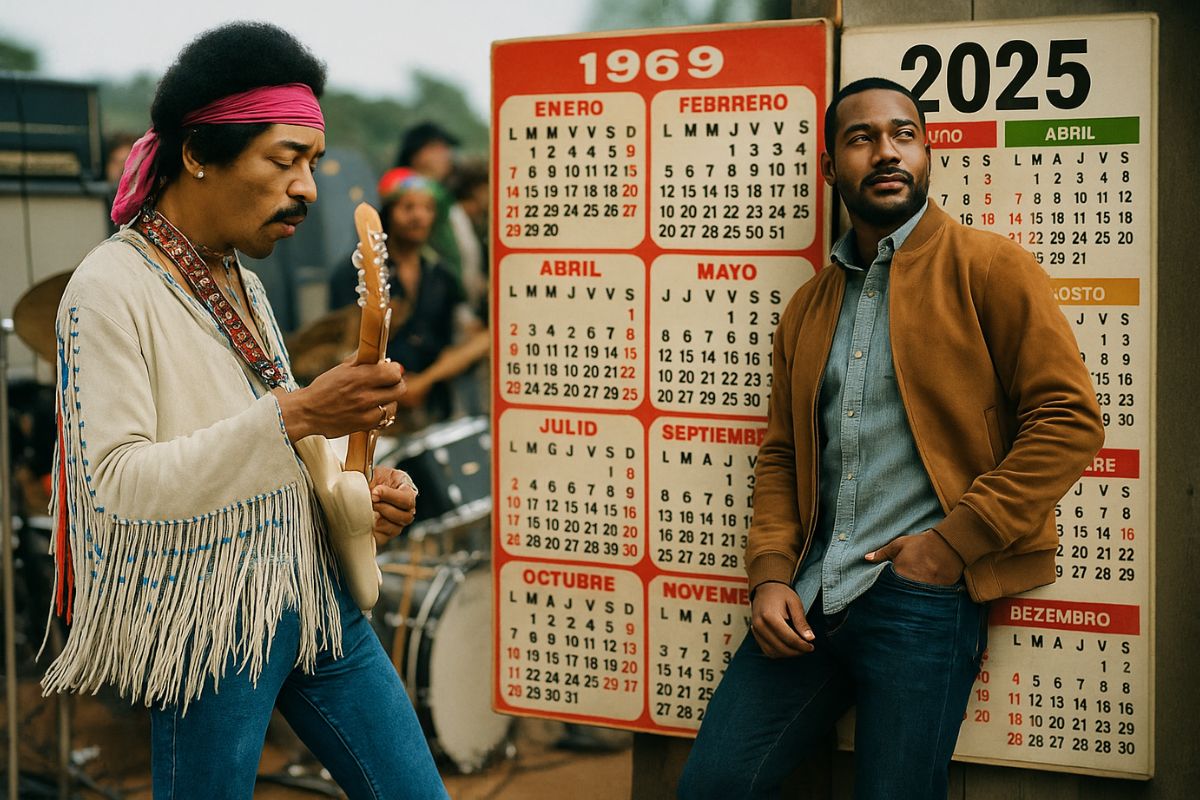
Understand Why, Despite the Days of the Week Being the Same, the Distribution of Holidays Makes the Calendar of 2025 Completely Different from That of 1969 in Brazil.
A curiosity circulating on the internet claims that the calendar of 2025 will be an exact repetition of that of 1969. This coincidence, which happens every 28 years, means that all the days of the year will fall on the same days of the week as they did 56 years ago. A Wednesday, January 1, in 2025, would have been a Wednesday, January 1, in 1969.
But is this statement completely true? Although the math behind the repetition of the days of the week is correct, an analysis of national holidays shows that, in practice, the two years will be quite different for Brazilians.
The Mathematics of Repetition: Why Do the Days of the Week Coincide in the Calendar of 2025?
The idea that calendars repeat is based on the mathematics of our Gregorian calendar. A common year has 365 days, which equates to 52 complete weeks plus one day. This extra day causes the calendar to “move” one day forward each year.
-
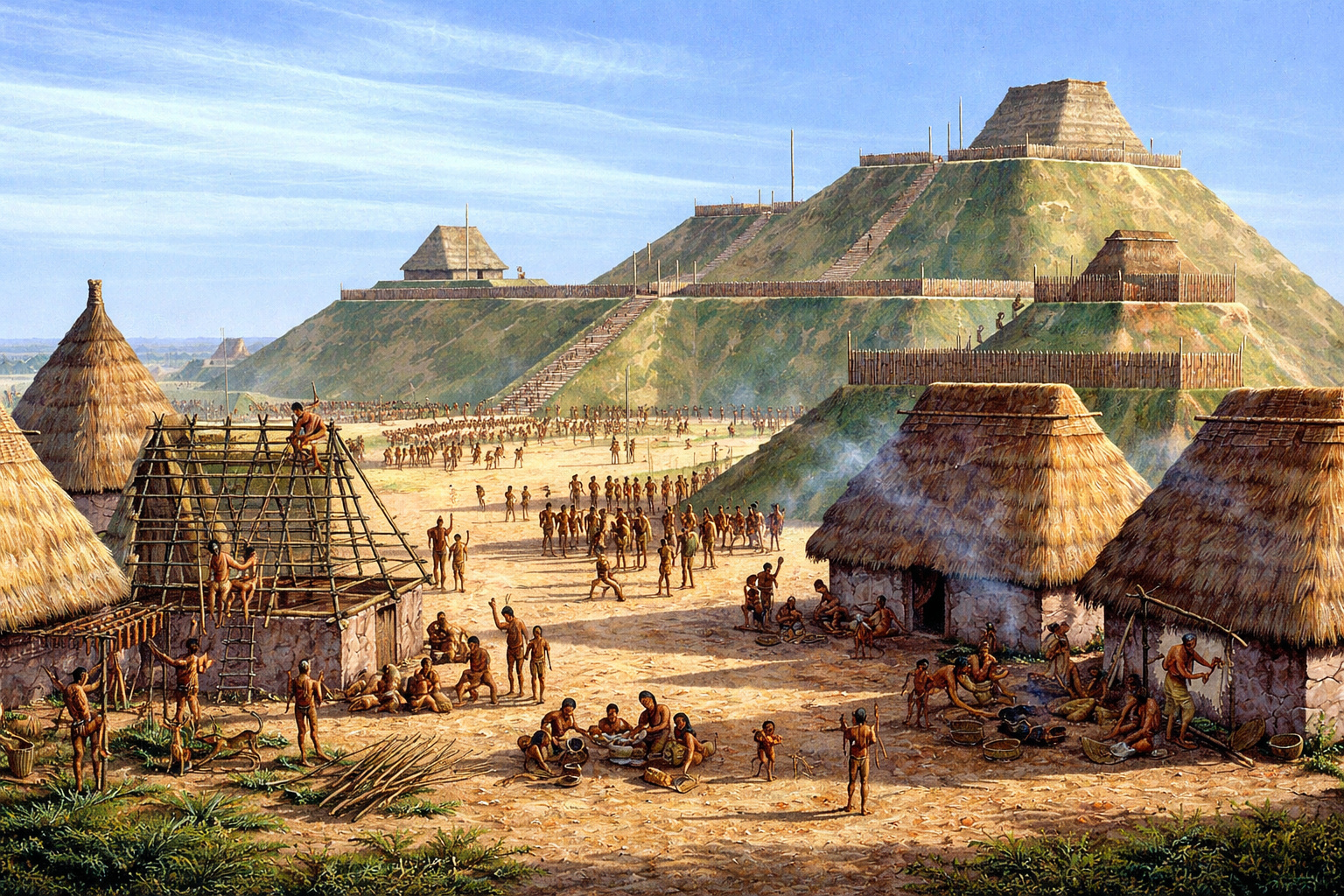
With over 14 million baskets of earth moved, an ancient North American metropolis built a monumental pyramid of 30 meters and established a city with 20,000 inhabitants nearly a thousand years ago.
-
A 1,900-year-old treasure emerges from a Roman house destroyed by fire and sealed since antiquity in Romania, with coins and metals fused among the ashes.

-
The Brazilian colonial city that stopped in time and shares territory with a rocket launch base.

-
79-year-old woman challenges limits, visits 193 countries in the world after 56 years of planning and reveals the behind-the-scenes of a global journey that few have managed to accomplish.


The calculation is complicated by leap years, which have 366 days (52 weeks plus two days). For the entire structure of days and the cycle of leap years to align perfectly, a period of 28 years is necessary. Since 2025 is exactly two cycles of 28 years away from 1969 (56 years), the correspondence of the days of the week is perfect.
The First Problem: The Holidays That “Dance” in the Calendar
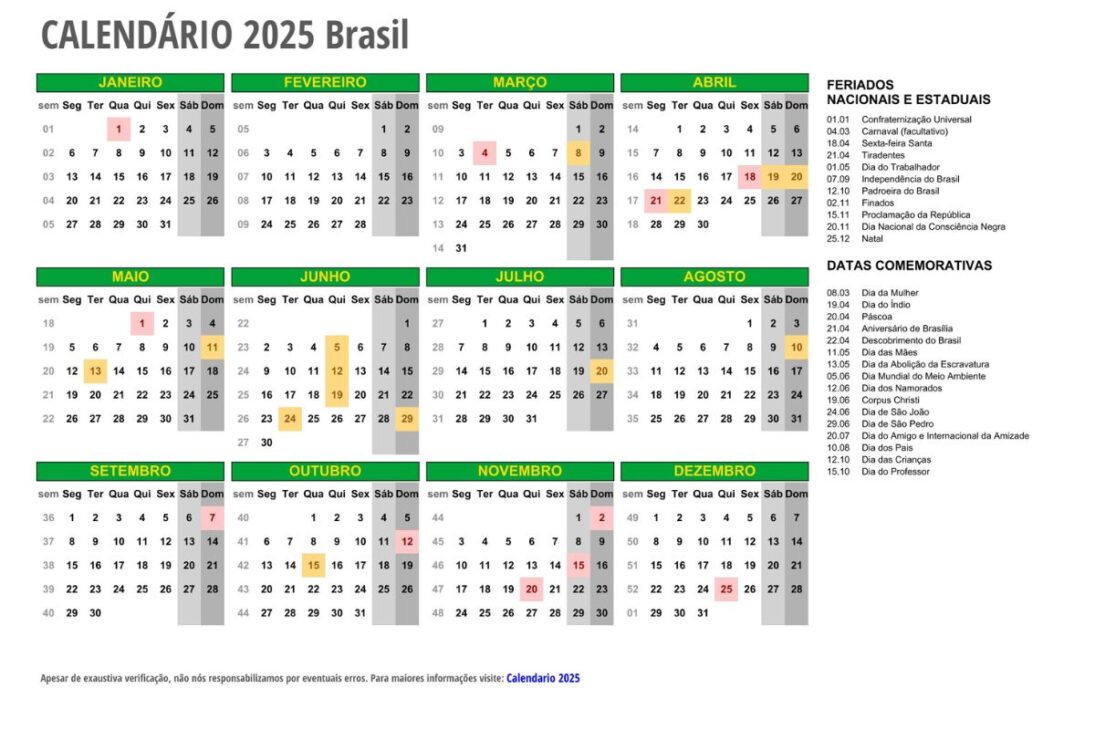
The first major difference that breaks the idea of an “identical” calendar is the movable holidays. The dates of Carnival, Easter, and Corpus Christi do not follow the solar calendar, but rather a cycle based on the phases of the moon.
Therefore, the dates of these holidays in 2025 have nothing to do with those of 1969:
- Carnival: In 1969, Carnival Tuesday was on February 18. In 2025, it will be on March 4.
- Easter: In 1969, Easter was on April 6. In 2025, it will be on April 20.
- Corpus Christi: In 1969, it was on June 5. In 2025, it will be on June 19.
The Second Problem: The Holidays That Brazil Did Not Have in 1969
In addition to movable holidays, Brazil has gained new fixed national holidays since 1969. These days, which are now holidays for most Brazilians, were regular workdays back then.
The two main examples are:
- Our Lady of Aparecida (October 12): Although the date was already commemorative, it only became a national holiday in 1980, with the sanctioning of Law No. 6,802. In 1969, it was a normal day.
- National Day of Zumbi and Black Consciousness (November 20): This date became a national holiday only recently, with Law No. 14,759, enacted in December 2023. In 1969, the debate on the date didn’t even exist.
1969 vs. 2025: The Proof of Differences
To clarify, see how the distribution of some important holidays completely changes the experience of the calendar of 2025 compared to that of 1969.
| Holiday | Date in 1969 | Date in 2025 | Status in 1969 | Status in 2025 |
| Carnival | February 18 | March 4 | Optional Holiday | Optional Holiday |
| Easter | April 6 | April 20 | Commemorative Date | Commemorative Date |
| Day of Our Lady of Aparecida | October 12 | October 12 | Regular Day | National Holiday |
| Black Consciousness Day | November 20 | November 20 | Regular Day | National Holiday |
The Calendar Is the Same, but Different
So, is the calendar of 2025 identical to that of 1969? The answer is yes and no.
Yes, if we only look at the mathematical structure. Each day of the month will fall on the same day of the week in both years.
No, if we think about practical life. The holidays, which define our breaks, days off, and planning, are completely different. The claim that went viral is an interesting mathematical curiosity, but for Brazilians, 2025 will have its own unique rhythm.






-

-

-

-

5 pessoas reagiram a isso.