





 Portuguese
  English
  Spanish
  5 min of reading
  0 comments


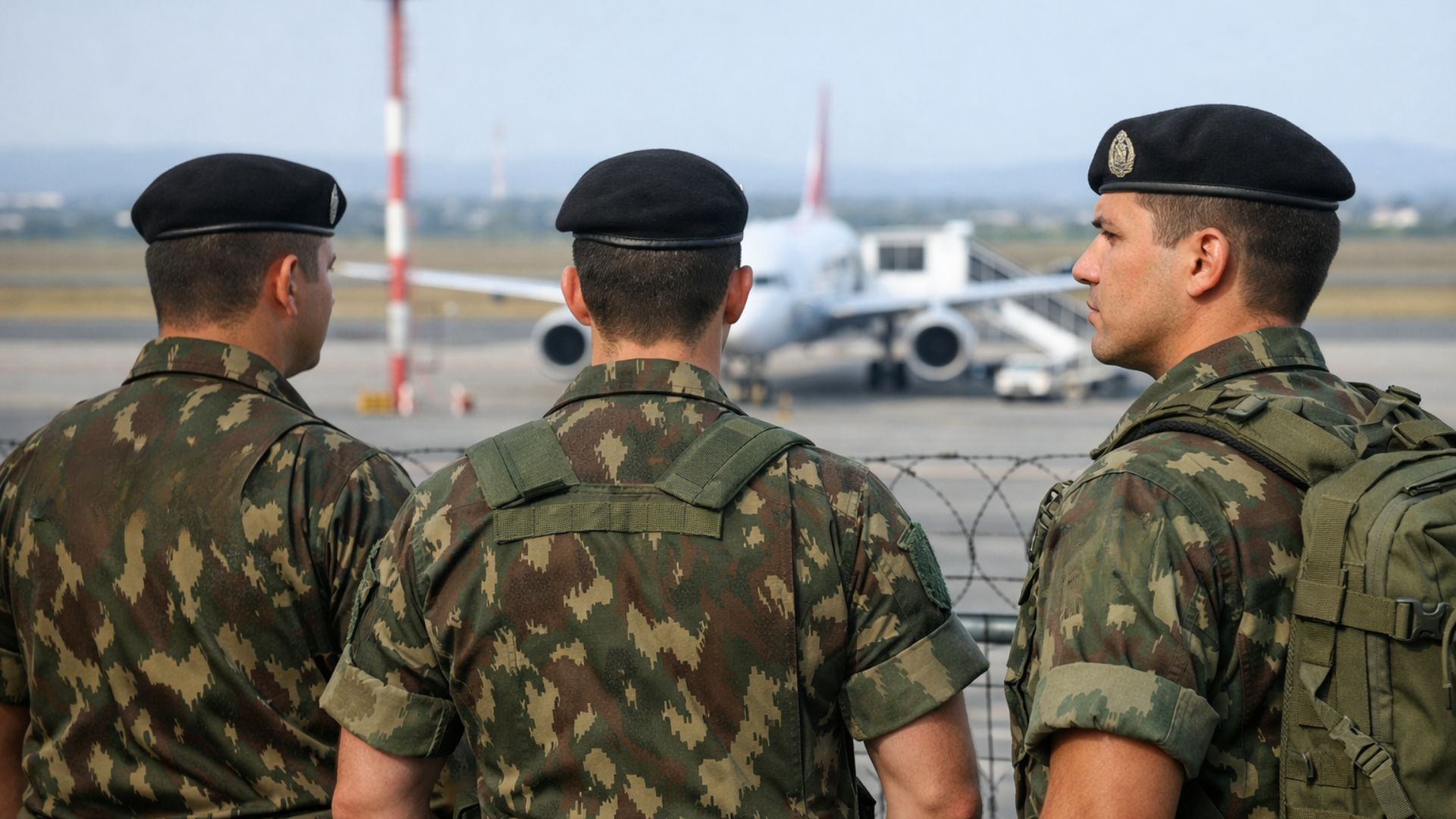
Silent change in the military sphere expands control over foreign travel and strengthens the country’s preparation for crisis scenarios, as the government projects significant growth of the armed forces in the face of a more unstable security environment in Europe.
Germany has begun requiring, since January 1, 2026, that men aged 17 and older obtain prior authorization from a Bundeswehr career center to stay outside the country for more than three months, a rule included in legislation modernizing military service.
The Ministry of Defense confirmed that the change is part of the effort to reorganize the recruitment registration system, amid the worsening European security environment since the Russian invasion of Ukraine.
According to the current wording of the Wehrpflichtgesetz, the obligation applies to men after completing their 17th year of life and is valid for extended departures from Germany when the condition of permanent residence abroad has not been established beforehand.
-
Abandoned airport becomes a residential neighborhood with an investment of R$ 47.6 billion, 9 circular architecture buildings, 79 luxury apartments, a 200-meter tower, and a complex with hotels, a casino, with opening scheduled for 2027.

-
Hershey admitted that it was replacing real chocolate with palm kernel oil in its most famous candies and now, after a flood of complaints, promised to return to the original recipes with real cocoa.

-
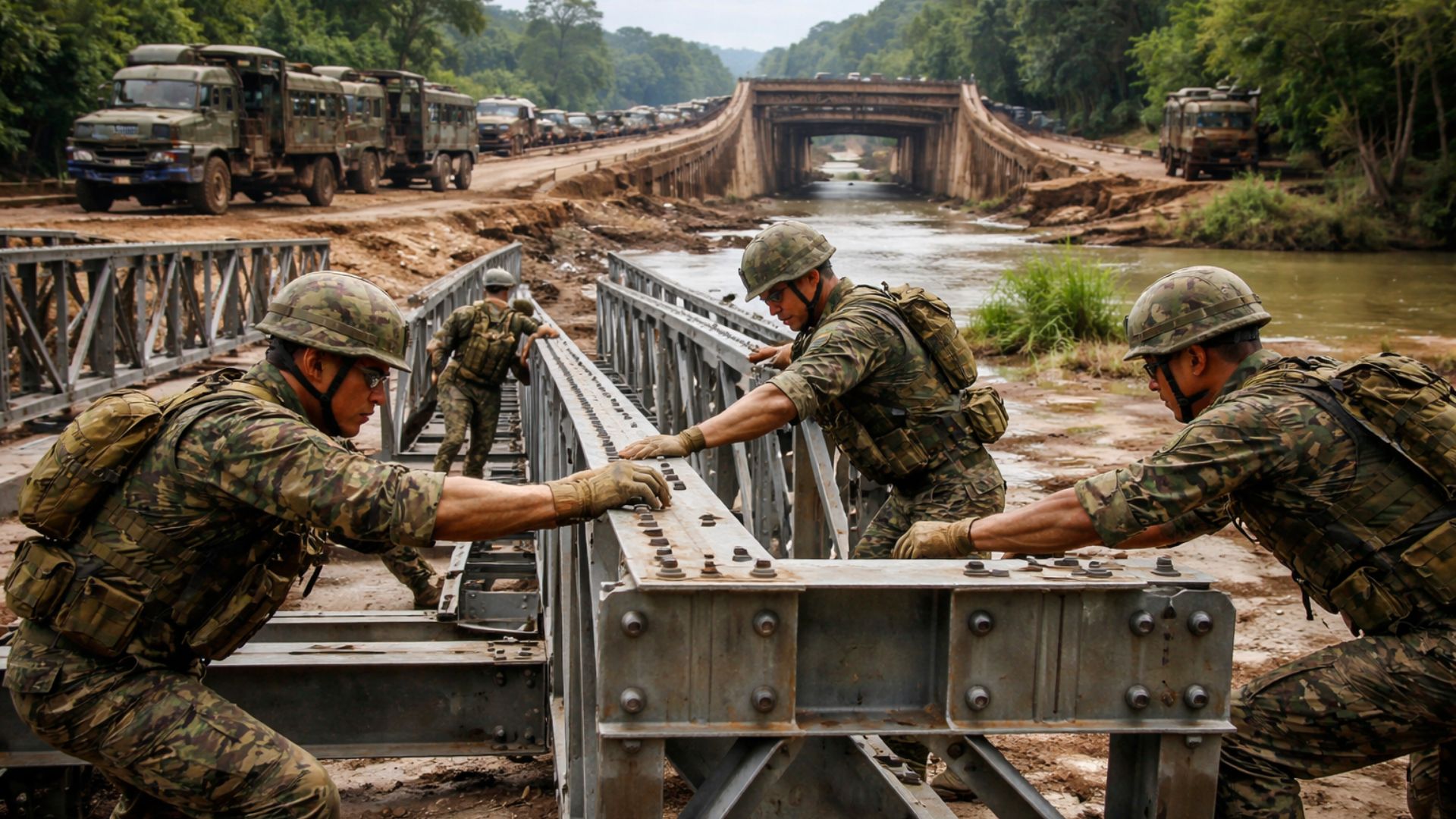
The Brazilian army gets to work and sends a convoy to set up a temporary bridge over an important river after a heavy storm.
-
From ruin to digital culture center, the 1920 mansion on Riachuelo Street is now open and has become a showcase of the revitalization of downtown Curitiba, attracting commerce, tourists, and projects.

The same rule establishes that military obligation, in most cases, ends at the end of the year in which the recruit turns 45 years old.
According to BBC News, the revelation gained attention only in recent days, after reports from the German press indicated that the provision came into effect without significant public debate about its practical effects.
To BBC News, a spokesperson for the Ministry of Defense stated that the purpose is to ensure a reliable and effective military registry, capable of indicating who may be abroad for an extended period in case of emergency.
At the same time, the ministry itself acknowledged that the rule may significantly affect the routine of young people planning exchange programs, work, or long trips abroad.
According to the ministry, administrative norms are still being developed to avoid unnecessary bureaucracy, and the practical interpretation is likely to be relaxed as long as the current model remains based on volunteerism, without an automatic return to universal mandatory service.
New German military law and control of foreign travel
The requirement regarding long trips abroad did not arise in isolation.
It is part of the Wehrdienst-Modernisierungsgesetz, approved by the Bundestag on December 5, 2025, which laid the groundwork for a “new military service” initially focused on voluntary adherence, reorganization of registration, and gradual expansion of the Armed Forces’ mobilization capacity.
In practice, the model adopted by Germany does not immediately restore the broad conscription suspended in 2011 but reopens legal instruments for future calls if the strategic situation or personnel shortages require it.
The text provides that the Bundestag may decide on a Bedarfswehrpflicht, a kind of recruitment by necessity, if the defense situation or military strength makes it necessary.
Additionally, men born from 2008 onwards have been incorporated into the new registration structure. Starting in 2026, they must submit a declaration of willingness to serve.
Mandatory fitness inspections, described in parliamentary documents as Musterung, are set to begin in July 2027, when the military administration estimates it will have the structure to process this volume of recruits.
Women continue to be allowed to volunteer for the Bundeswehr but are not subjected to the general military service obligation in the same way as men, according to the constitutional and legal structure preserved in the new design.
The system, therefore, expands the capacity for screening and mobilization without imposing, for now, an immediate return to compulsory enlistment of all youth.
Expansion plan for the Bundeswehr until 2035
The change is linked to a broader goal of expanding the Bundeswehr. The debate mentions the need to raise the contingent to at least 260,000 active soldiers by 2035, in addition to strengthening the reserves, within the commitments made by Berlin to European defense and NATO.
Today, the German military force already exceeds 186,000 uniformed members, according to the latest data released by the Bundeswehr itself. This goal contrasts with the downsizing that marked the period following the end of the Cold War.
Over the past few decades, Germany has significantly reduced its military apparatus, ended mandatory service in 2011, and come to rely on a professional and voluntary model.
The scenario changed with the war in Ukraine and the pressure for European countries to take on a larger share of their own defense.
The current Chancellor Friedrich Merz, in office since May 6, 2025, advocates for an accelerated rearmament of the Armed Forces and has associated this repositioning with the goal of making Germany a more robust pillar of security on the continent.
In government documents and official speeches, the administration maintains that the deterioration of the strategic environment requires structural growth, not just ad hoc adjustments.
Reaction of youth and social impact of the measure
The approval of the reform occurred amid contestation. In December 2025, student groups and youth organizations called for protests against the government’s military plans on the day of the vote in the Bundestag.
The opposition came from both leftist sectors, which pointed to the risk of normalizing rearmament, and critics who saw the new law as an open door for the return of compulsory recruitment in future stages.
Part of the resistance focused precisely on the combination of mandatory registration, the possibility of fitness exams, and the expansion of state mobilization powers.
For critics, even without immediately reinstating full conscription, the rule reintroduces into the routine of young Germans the prospect of closer submission to the military demands of the State.
The government, in turn, responds that the reform is a preventive adaptation to a context of heightened threat.
In the case of authorization for long stays abroad, this conflict appears more clearly because the change affects study, work, and international circulation, sensitive topics for a generation accustomed to free mobility within and outside the European Union.
Although the ministry claims that the measure has primarily a registration value and reintroduces a mechanism similar to that of the Cold War, the repercussions showed that the topic is unlikely to remain confined to the technical field.






Seja o primeiro a reagir!