





 Portuguese
  English
  Spanish
  5 min of reading
  0 comments


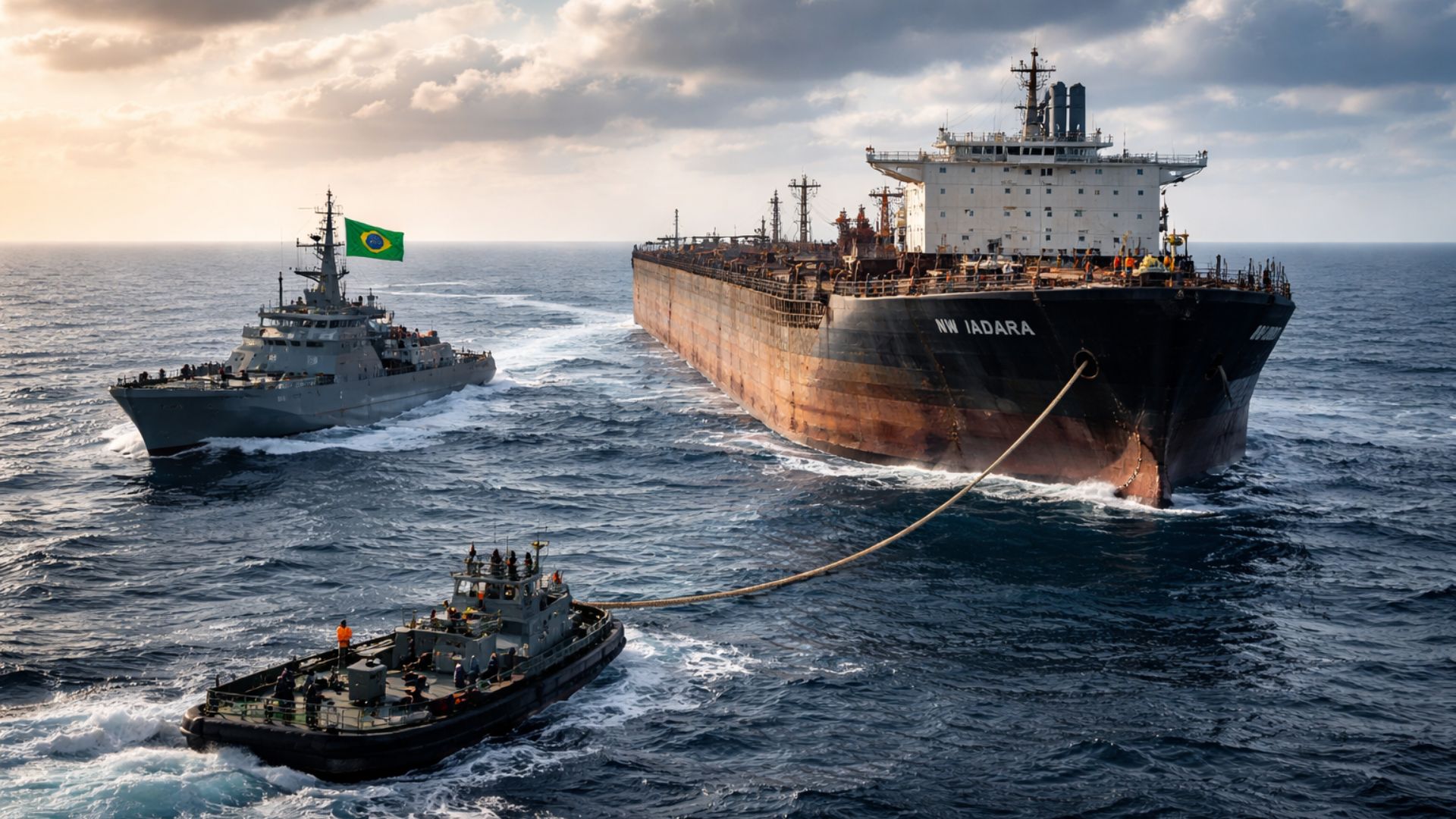
Naval operation at sea mobilizes Brazilian forces to rescue foreign vessel adrift for nearly two months, in a scenario of human risk, serious technical failure, limited communication, and environmental threat in the Atlantic.
The Brazilian Navy completed a search and rescue operation that brought the oil tanker NW AIDARA, flagged from Togo, to the Port of Fortaleza on the morning of last Friday (27), after nearly two months adrift in adverse conditions in the Atlantic.
According to information published this Tuesday (31) by the G1 portal, there were 11 crew members on board, who faced severe operational limitations after the vessel lost steering control due to a hydraulic failure, a situation worsened by the scarcity of supplies and the difficulty of communication in open sea.
When it entered the Brazilian area of responsibility, the ship already presented communication restrictions, lack of supplies, and navigation safety risks, requiring a coordinated and immediate response to prevent worsening of the scenario.
-
A 68-meter tower, which housed a historic brewery in the heart of Germany’s port, balances on a small base and uses activated core concrete for cooling that reduces the need for air conditioning.

-
For decades, a 50-kilometer ring structure in the middle of the Sahara has puzzled scientists: visible from space, it reveals layers of millions of years and turns the desert in Africa into a geological mystery.

-
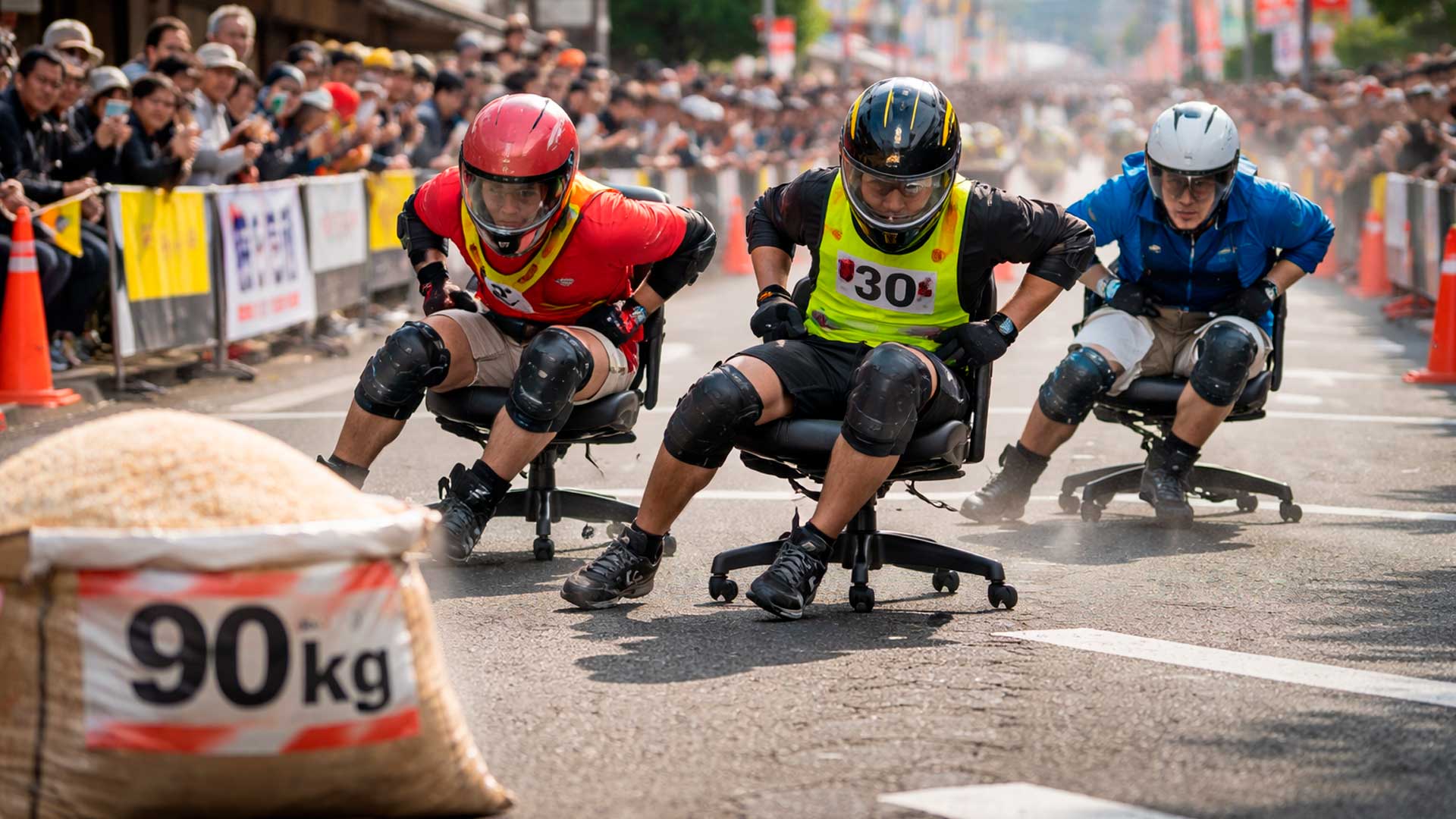
With an unusual prize, Japan transforms office chairs into a resistance race on the streets, the ISU-1 Grand Prix grows, fills events, and pays 90 kilograms of rice.
-
With a façade that resembles a giant zipper, the building in Milan creates a sense of strangeness, featuring lighting that transforms engineering and attracts the attention of residents and tourists.


Rudder failure left African ship adrift in the Atlantic
The problem began on February 5, when the rupture of a hydraulic hose caused an oil leak and compromised the mechanism responsible for steering the rudder, directly affecting the vessel’s control capacity.

Without a defined direction, the ship began to drift between the northeastern coast of Brazil and West Africa, initially remaining under the responsibility of the Dakar search and rescue center, outside Brazil’s direct operational area.
The initial communication with Brazilian authorities occurred only on February 25, when the vessel had not yet crossed the limits of national jurisdiction, delaying the possibility of direct intervention by the Navy.
Once within the Brazilian area, about 675 nautical miles (1,250 km from the coast), the operation began to be coordinated by Salvamar Nordeste, with logistical challenges amplified by the distance and the absence of immediate support in the region.
Limited communication and lack of supplies worsened the situation
While monitoring the drift, the Navy used maritime traffic tracking systems to identify nearby vessels and coordinate indirect support, a strategy that allowed some level of assistance even before the arrival of Brazilian naval assets.
With this cooperation, it was possible to send water and food to the crew, who were already facing supply shortages, reducing the immediate risk to survival while the rescue operation was being structured.
In addition to material difficulties, the ship operated without satellite communication and also without HF radio, drastically limiting the range of transmissions and making continuous contact with the authorities responsible for the operation difficult.
Only VHF was available, a technology that depends on proximity between vessels, which forced communication to occur indirectly and intermittently, depending on the presence of ships in the same area.

Onboard repair attempt did not resolve technical failure
On March 1, the merchant ship YK NEWPORT managed to approach the drifting vessel, establishing communication and facilitating a telemedicine consultation to assess the health conditions of the crew members.
After the assessment, it was reported that everyone was fine, and the captain decided to attempt to manufacture a new gear onboard, in an effort to resolve the problem without the need for immediate external assistance.
It was agreed that there would be new contact by March 8 if the repair was not successfully completed, creating an expectation of an autonomous solution that ultimately did not materialize in the following days.
Without a response within the stipulated timeframe, the failure persisted, and the ship continued drifting toward the northeastern coast of Brazil, increasing the risk of grounding and heightening the potential for environmental impact.
Navy mobilized warships and tugboat for rescue
In light of the absence of communication and the worsening scenario, the Navy decided to send the ocean patrol vessel Araguari on March 9, with the mission of intercepting the vessel and providing direct support to the crew.
Simultaneously, the corvette Caboclo left Salvador and headed for Fortaleza before advancing toward the drift point, increasing naval presence and ensuring greater response capacity for the operation.
With the scenario already stabilized in terms of monitoring, the deep-sea tugboat Triunfo departed from Natal and took over the decisive stage of the mission, towing the foreign ship to the Brazilian coast.
The movement occurred in a controlled manner to the Port of Fortaleza, consolidating an operation that involved multiple naval assets and continuous coordination among different Navy structures.
Rescue ensured crew safety and avoided environmental damage

Commenting on the operation, frigate captain Marcos Moreira Bezerra stated that “the Search and Rescue Service has as its primary objective to rescue lives that are at risk at sea”, emphasizing the human dimension as the central focus of the mission.
In the same vein, he highlighted that the preservation of the vessel is also relevant to avoid navigation risks, especially in situations where drifting can cause accidents or compromise other maritime routes.
The ship arrived at the Port of Fortaleza on March 27, with all crew members safe, concluding a prolonged period of uncertainty and exposure to risks at sea.
According to Vice Admiral Jorge José de Moraes Rulff, the operation ensured navigation safety and prevention of water pollution, while also ensuring the physical and psychological integrity of those involved.
The mission highlighted the importance of coordination among command centers, naval assets, and civilian vessels, especially in incidents that require rapid response in remote areas of the ocean.
Combining distance, technical failure, limited communication, and prolonged drifting, the case required integrated action and continuous planning to avoid more serious outcomes.
In the end, the ship was safely escorted to the Ceará coast, with no reported casualties, consolidating an operation deemed successful within the parameters of maritime search and rescue.






Seja o primeiro a reagir!