





 Portuguese
  English
  Spanish
  7 min of reading
  0 comments


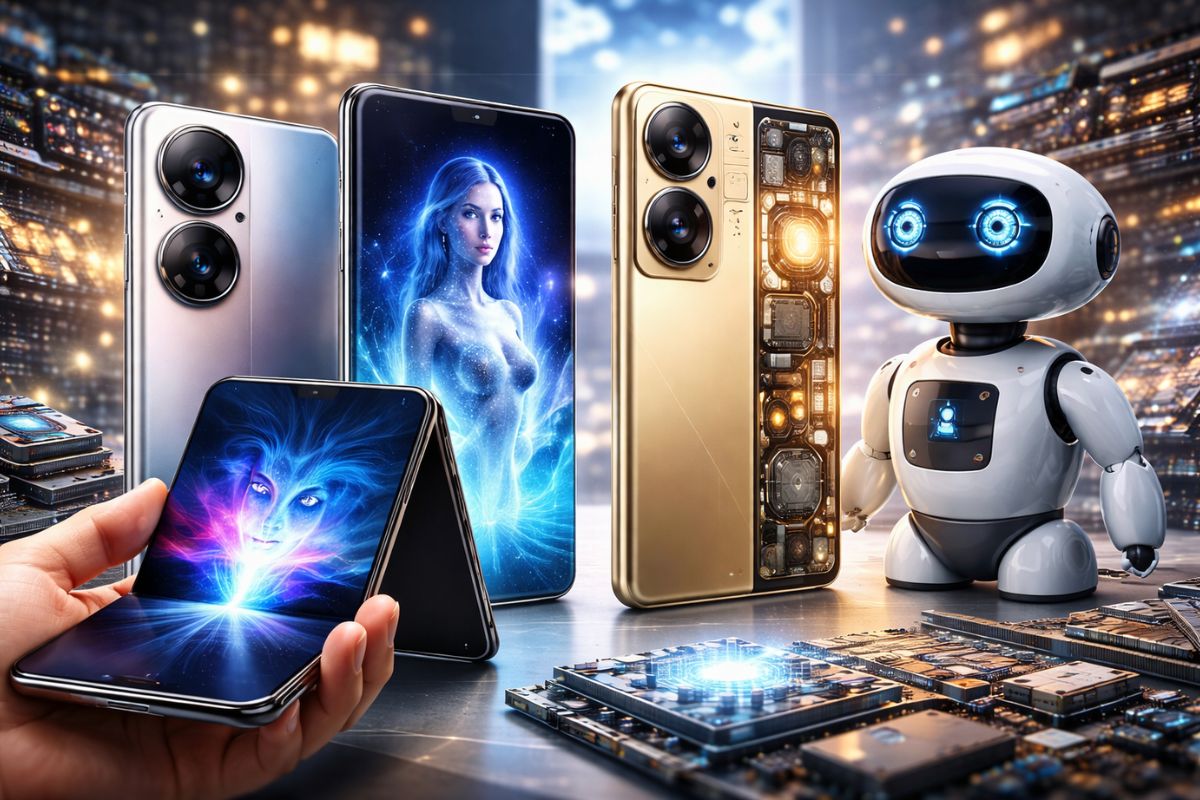
Mobile phones enter a new phase in Honor’s view, with artificial intelligence, foldable formats, and even concepts like robot phones gaining space, at the same time that the rise in component costs pushes the market towards more expensive and sophisticated devices.
According to Laurance Li, CEO of Honor in Spain, mobile phones will not be replaced anytime soon, but they are expected to undergo profound changes in form, use, and user interaction. In this scenario, the company bets on hardware and software innovation while trying to better position itself in an increasingly competitive European market.
The executive’s statement combines two fronts that currently intersect in the industry. On one side, brands like Honor accelerate testing with foldables, ecosystem integration, and new device concepts. On the other, the sector faces a cost increase that primarily affects entry-level models and makes 2026 a delicate year for the cheaper segments.
In Li’s view, the future of smartphones is less about disappearance and more about transformation. The device remains central, but the way it presents itself and communicates with the user is likely to change significantly, especially with the advancement of AI.
-
China’s artificial intelligence surpasses human commanders with 90% accuracy in military assault simulation tests.
-
The invisible system that keeps supermarkets cold in Brazil can account for up to 65% of the store’s energy; new pressure for efficiency targets freezers and refrigerated counters.

-
German reactor of 16 meters with twisted magnetic fields reaches a historic milestone in nuclear fusion by generating high-energy helium ions that simulate alpha particles from the Sun; progress in Wendelstein 7-X could unlock plasma control and explain phenomena observed in our star.

-
Long before modern medicine, an artificial leg made of bronze and wood buried in Italy showed that amputees were already receiving complex prosthetics around 300 B.C., at a technical level that seems unlikely for antiquity.

Mobile phones are not expected to disappear, but they will change significantly
Laurance Li has been working in the mobile phone sector for almost 20 years and has witnessed significant transitions, from 2G to 5G. When talking about the future, he makes it clear that he does not see mobile phones being replaced in the short term, even with the arrival of new connected devices.
His assessment is that the phone will remain the central piece of the digital experience. Even in a scenario with smart glasses and other connected devices, it will still be necessary to have a mobile phone to integrate all of this. For the executive, the device remains irreplaceable for now, although it is about to change in format and function.
This vision helps to understand why Honor insists on experimenting. Instead of treating the smartphone as a fully defined product, the company works with the idea that mobile phones are still in transformation.
AI appears as the next big turning point for the industry
Looking at the trajectory of mobile telephony, Li compares different phases of technological change. He recalls the impact of video conferencing and video calls in the transition from 2G to 3G, then the strength of gaming in the evolution from 3G to 4G, and notes that the leap from 4G to 5G did not have as visible a difference for the average user as was expected.
This is precisely where artificial intelligence comes in. For the CEO of Honor in Spain, AI will be the next watershed moment for the industry, with the potential to profoundly change how people use devices.
In practice, this involves a change in interface. Instead of relying solely on taps and typing, users will be able to interact with the device in a more conversational manner. The idea is for the software to become smarter, more responsive, and more natural in daily contact.
Foldables remain at the center of Honor’s bets
If there is one format that Honor has shown conviction about for some time, it is the foldable. Laurance Li states that he believes foldable phones will be the future, even though many people today do not make the switch due to price.
The company has heavily invested in this category and reinforced this strategy with devices like the Honor Magic V6, noted for being thinner and having a longer battery life. The proposal is to make the foldable seem less like an experiment and more like a device ready for everyday use.
This movement also has an important commercial objective. By reducing usability resistance and improving product design, Honor aims to broaden the appeal of foldables beyond just enthusiast audiences.
Robot phone shows that the competition also involves new formats
During MWC, Honor drew attention with the Honor Robot Phone, a concept that took the discussion about mobile innovation to another level. The device stands out for its retractable rear camera, but the idea goes beyond just a different visual feature.
According to Li, this type of device matters because it changes the way we interact with the phone. In the presented concept, the camera responds to the user, follows movements, and reacts to commands, bringing the device closer to a more emotional and dynamic experience.
The proposal still seems futuristic, but it serves to signal a direction. Honor wants to show that mobile phones can stop being just rectangular screens with strong specifications and start incorporating more active behaviors in their interaction with the owner.
Honor tries to attract iPhone users without breaking the ecosystem
Another important point of the brand’s strategy is the attempt to reduce barriers for Apple users who are considering migrating. Instead of making a total break discourse, Honor works on the idea of compatibility between its ecosystem and the iPhone.
According to Li, some users want to switch but encounter this integration barrier. Therefore, the company highlighted the coexistence between Apple devices and Honor products at MWC. The logic is simple: convince the consumer that they can try another system without losing everything they have built in the previous ecosystem.
This approach aligns with the bet on foldables. Honor tries to gradually gain space without requiring a sharp break from the user’s already established habits.
Retail partners and operators remain crucial for growth
When discussing Honor’s current presence in Spain, Laurance Li emphasizes the relationship with operators and retailers. Much of the conversation about 2025 revolves around strengthening the brand in these channels.
According to data cited by the executive, MasOrange already holds over 8% of the smartphone market, and considering tablets sold by the operator, this number rises to 20%. In partnership with Vodafone, he states that Honor has 800 points of sale where the brand maintains direct contact with consumers.
MediaMarkt has also joined this recent expansion effort, and the collaboration with El Corte Inglés continues. The company believes that growing in physical presence and commercial partnership is still crucial for building reputation in a complex and highly competitive market.
Europe is growing, but the competitive landscape remains tight
In the balance presented by Li, Honor closed 2025 with an 18% growth in Europe compared to the previous year, according to data from Counterpoint Research. This positioned it as the fourth largest brand, with 4% of the market, behind Apple, Samsung, and Xiaomi.
Still, the scenario is not entirely settled, as other rankings place the company in fifth place, with Motorola ahead. This shows that the brand has made progress but is still competing for space in a very tight market segment.
This context helps explain why Honor combines technological ambition with commercial effort. It is not enough to innovate in format and AI; it is also necessary to gain distribution, brand presence, and sales scale.
Component crisis changes the game for cheap mobile phones
If the future of mobile phones seems full of experimentation, the present of the industry brings a very concrete problem: the component crisis. Laurance Li classifies this moment as the biggest challenge faced by the telecommunications sector in the last 20 years.
The pressure comes not only from RAM but from a broader component crisis, driven by the explosion of data centers focused on artificial intelligence. The effect of this primarily falls on entry-level devices.
According to the executive, the rising cost of memory is expected to significantly affect the cheaper devices, which reinforces Honor’s decision to focus more energy on mid-range and high-end models. In these segments, the impact exists but is relatively smaller within the total cost of the device.
Market is expected to push brands towards the premium segment
This combination of expensive innovation and pressured components creates a clear trend for 2026. Instead of broadening the focus on more affordable devices, brands like Honor are likely to reinforce their presence in higher value-added categories.
The logic is economic. If costs are rising heavily for entry-level models, it makes more sense to work on products where the margin is more protected and consumers are more accepting of differentiators like AI, premium finishes, and foldable formats.
This helps explain why the debate about the future of mobile phones today simultaneously involves robot phones, embedded AI, and the rising costs of cheap devices. Innovation continues, but it advances more rapidly where the final price can absorb this leap.
Mobile phones remain at the center of digital life, but in another form
At the end of the conversation, Laurance Li’s view is clear. Mobile phones are not close to disappearing, but they are heading towards an important transformation. Artificial intelligence is expected to change the interface, foldables are expected to gain ground, and bolder concepts are likely to pave the way for new forms of interaction.
At the same time, the component crisis pushes the market upward and complicates the situation for entry-level devices. This makes 2026 a year where technology and cost walk together in an even more visible way.
In the understanding of the CEO of Honor in Spain, the mobile phone remains at the center of the digital experience, but the device that dominates this role in the coming years may be very different from what we know today.
In your opinion, will the mobile phones of the future gain more strength with AI and foldables, or will the price still hold back this change for longer?







Seja o primeiro a reagir!