





 Portuguese
  English
  Spanish
  4 min of reading
  5 comments





An Infrastructure That Connects Cities, Challenges Waters, and Redefines Modern Engineering.
In the depths of Dushu Lake, in China, a masterpiece of modern engineering emerges to challenge the forces of nature. The China Tunnel, located in Suzhou, is not only a functional structure but also an impressive testament to the power of technology in the service of connectivity and progress. It is incredible to think that, beneath the calm waters of the lake, one of the most complex and bold infrastructures in the country runs.
The China Tunnel, better known as the Dushu Lake Tunnel, stretches for 7.37 km and directly connects the east and west banks of the city, transforming the mobility of millions of people. But what makes this work so unique and why is it considered a true masterpiece of modern engineering?
The Construction That Bridged the Past to the Future: A Masterpiece of Modern Engineering
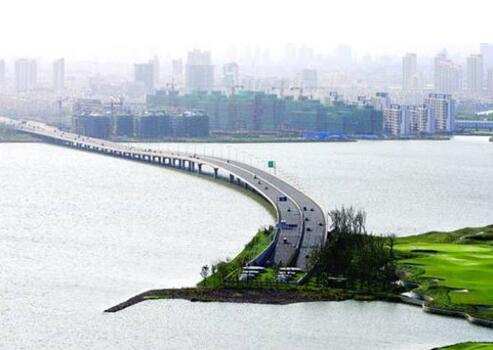
Initiated in 2006, the Dushu Lake underwater tunnel arose from an urgent need to improve connectivity in the growing city of Suzhou, which faced traffic difficulties due to the lake. Before the tunnel, the only way to cross the region was via long bridges or roads, making travel slow and inefficient. The project was not only a response to the increasing demand for mobility but also a brilliant solution to preserve the natural and archaeological surroundings of the area.
-
The lack of welders, electricians, and operators becomes a structural threat in 2025, with the construction industry and manufacturing already suffering from delays, cost pressures, and labor shortages in Brazil.

-
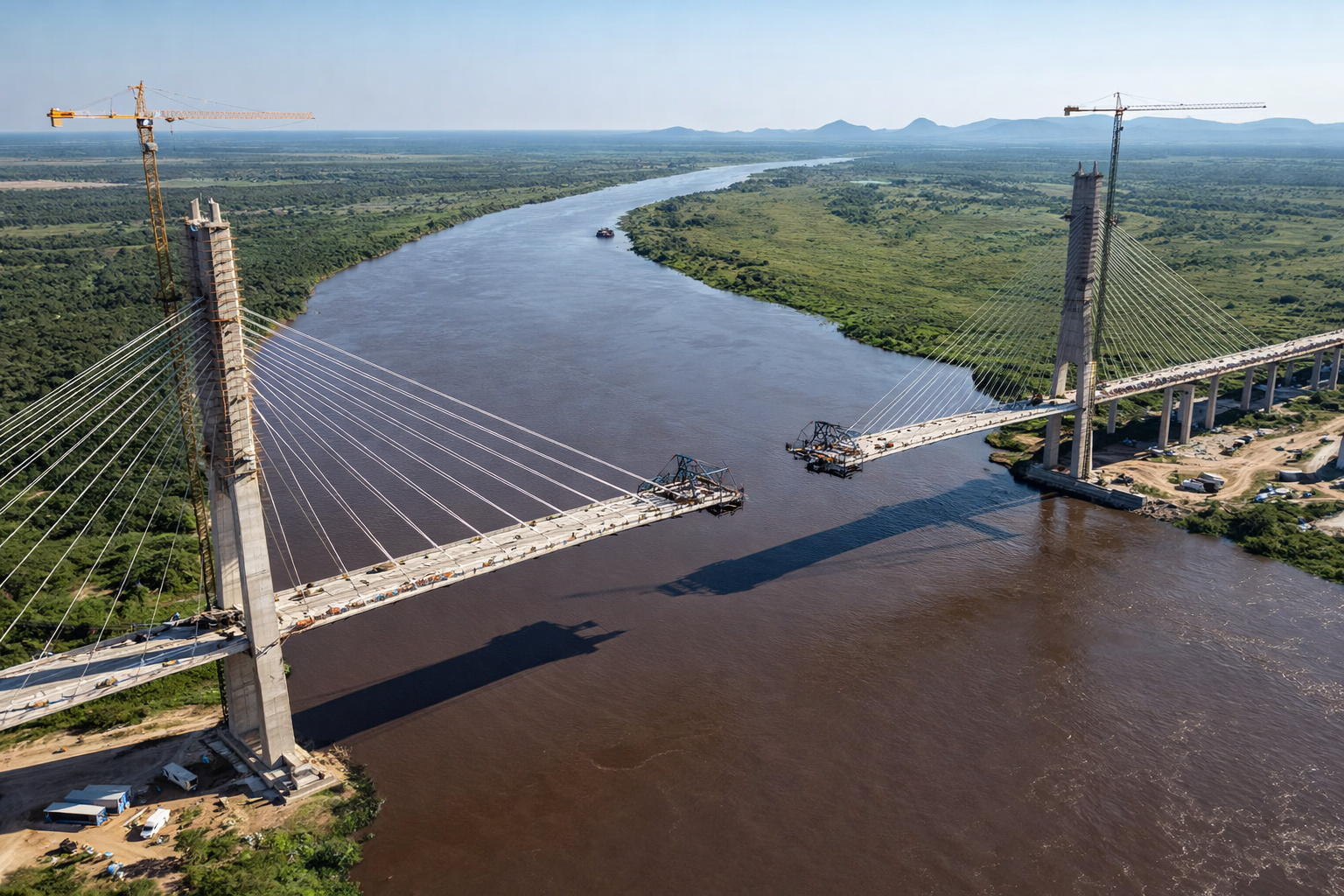
Brazil and Paraguay are just 46 meters away from a historic union on the bioceanic bridge that promises to revolutionize trade between the Atlantic and the Pacific.
-
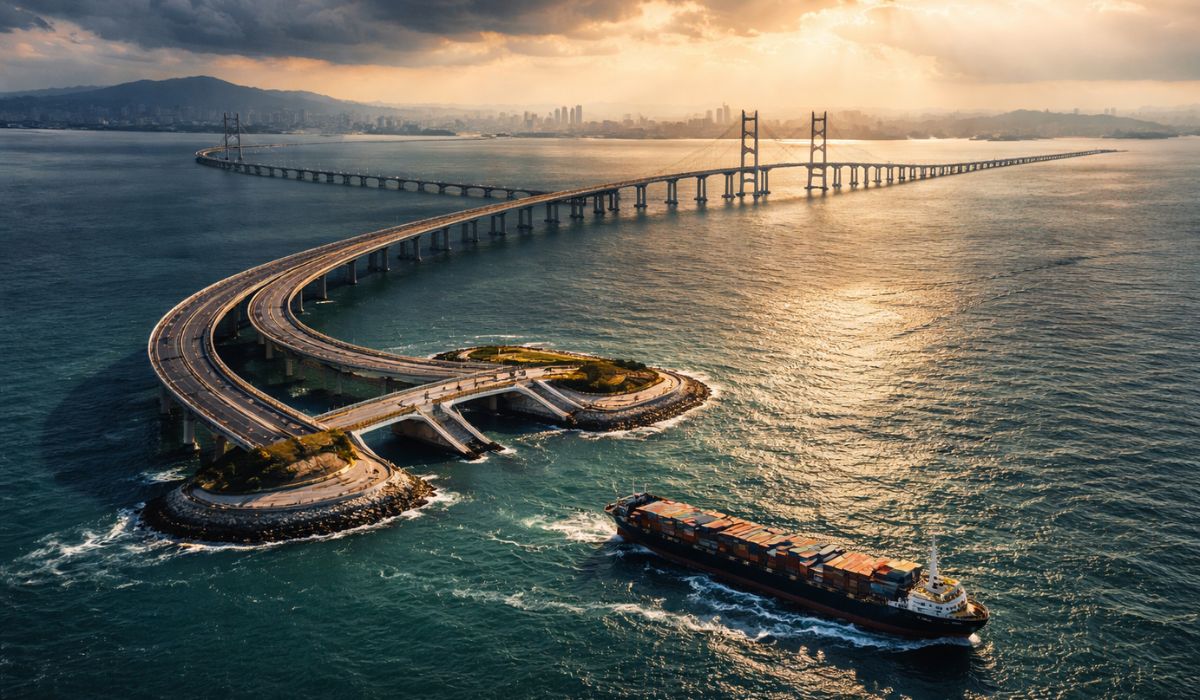
With 55 km over the sea, a cost of US$ 20 billion, and enough steel to build 60 Eiffel Towers, China’s largest project has connected Hong Kong, Zhuhai, and Macau in a colossal bridge that defies the logic of engineering.
-
A trick with joint compound transforms a Styrofoam ceiling into a plaster-like ceiling: leveled panels, wires and mesh at the joints, sand, paint, and change the environment while spending little today.

Throughout the construction process, archaeologists discovered over 300 ancient wells at the lake bed, evidence of habitations dating back to the Neolithic period. This finding highlighted the historical significance of the region and increased the complexity of the work. The preservation of these historical treasures was admirably reconciled with technological innovation.
Challenges Overcome by Cutting-Edge Technology
The masterpiece of modern engineering that is the China Tunnel faced a series of unique challenges. The varied geology of the terrain, with hard soil in some areas and soft substrate in others, required the use of advanced technologies to ensure the safety and stability of the tunnel.
Crack control in the concrete was one of the greatest concerns, as the tunnel is constantly subjected to different underground pressures. To mitigate these risks, smart monitoring systems based on artificial intelligence were implemented, which analyzed in real-time the possible deformations of the structure.
These systems continuously monitor the deformation, displacement, and temperature of the tunnel, preventing potential problems in advance. This approach allowed the work to maintain its integrity over time, proving to be a model of efficiency and innovation for tunnel construction worldwide.
Economic and Social Impact: More Than Just a Tunnel
The impact of the engineering of the China Tunnel goes far beyond the infrastructure. It has transformed mobility and the local economy by reducing travel time and improving accessibility in areas previously separated by the lake. Economic development was boosted by facilitating traffic between Suzhou’s Industrial Park and other strategic regions. Properties around the tunnel have significantly appreciated, attracting new investments and contributing to the city’s growth.
The tunnel also plays an important role in environmental preservation. By minimizing the need for constructing bridges and alternative routes that would cross the lake, the project was able to significantly reduce environmental impact.
The Future of Suzhou and Its Engineering Masterpiece
With the construction of a second tunnel to further ease traffic, Suzhou is poised for a future of connectivity and progress. The second tunnel, spanning 3.93 km, is designed to reduce travel time between urban areas from 30 minutes to just 5 minutes, a true revolution for the region.
Even with the challenges faced in construction, technological improvements allowed this second project to be carried out more efficiently, solidifying Suzhou as a model of innovation and progress.
As impressive as the engineering of the China Tunnel is, it still raises the question: how can new technologies and underwater works continue to challenge nature and transform cities around the world?
Comment below: Do you think works like this will be common in the future or are they exclusive to countries like China?









Saber ver o lado bom das coisas é uma questão de saúde mental. A obra está patente e a ajudar o desenvolvimento do país. De onde vem espaço para ideias de exaltação… Haaaa meu cara!!!
E o Brasil, q é um país de Direita há 500 anos nunca sai da miséria. Uma obra passa 15, 20, 50, 100 anos para se fazer, qd daz. Mas o dinheiro sai pelo ralo da ineficiência e pela corrupção.
Um exemplo, são as ferrovias que nos anos 1950 do século passado tinham + q atualnente.
Só para citar um exemplo, a Argentina tem + ferrovias que o Brasil, msm o Brasil sendo uma das maiores economias do mundo e ser 3 vezes maior que o país vizinho em extensão territotial.
O segundo comentário diz que o site esta exaltando o regime Chinês. Pelo menos eles fazem alguma coisa para melhorar a infraestrutura do País, melhorar o deslocamento do cidadão. Enquanto aqui no Brasil esse governo filha da **** só **** o cidadão. Rio de Janeiro e São Paulo o trânsito é horrível. Então não venha criticar um ótimo trabalho do País Chinês. É por isso que essa **** de Brasil não vai pra frente.