





 Portuguese
  English
  Spanish
  6 min of reading
  0 comments


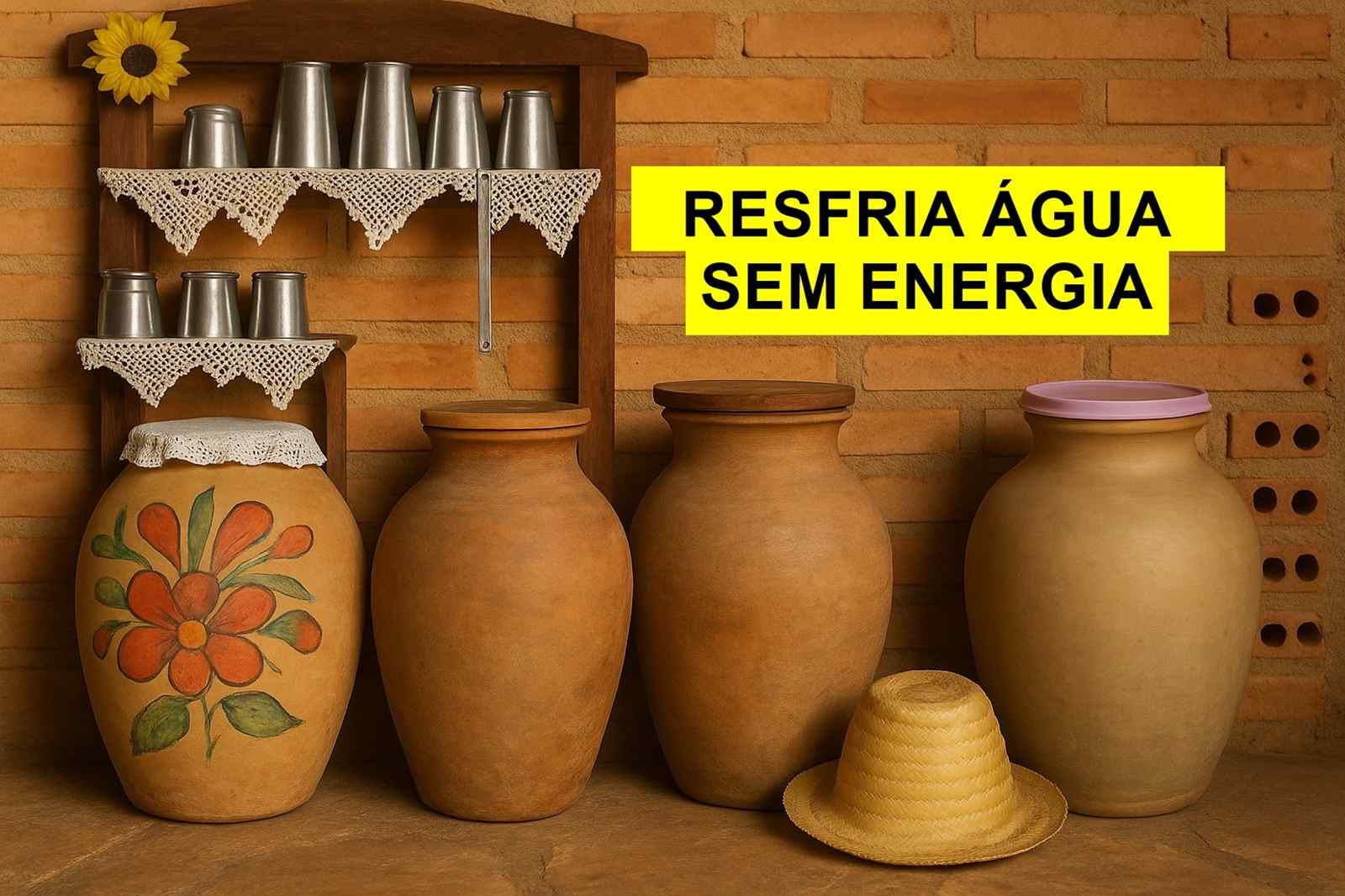
Even With Refrigerators Present in Many Homes, the Clay Pot Remains Essential in the Northeast Because It Naturally Cools Water, Preserves the Flavor Appreciated by Families, and Symbolizes Cultural Resistance in Regions Marked by Drought
In many homes, especially in the Northeast, the clay pot water establishes itself as a cultural category that defines a specific place for liquid within the house.
It doesn’t occupy just a container. It builds a symbolic space where cleanliness, warmth, and tradition meet.
The clay pot emerges as a protagonist of this domestic identity. It holds ten to twenty liters of water, displays its own aesthetic characteristics, and plays an essential role in daily life.
-
Scientists warn that a comet about 1 km in size that has started to release gases may actually change direction in space. It was spotted by NASA and surprises with potential impacts near Earth.

-
These living root bridges and ladders are over 700 years old and help indigenous people survive in one of the rainiest regions in the world.

-
From sertanejo star to international investor: Ana Castela invests millions in a mansion in the USA, creates a themed accommodation in Orlando, and shows that the “boiadeira” also wants to grow away from the stage.

-
The 10 most stunning motorhomes in the world: a $3 million trailer with a rooftop nightclub and garage for a Ferrari, “palaces on wheels” with Italian marble, private cinema, and five-star hotel luxury for billionaires.


In addition to functioning as a utensil, it communicates the presence of good water, signals organization, and expresses cultural belonging.
The wooden lid, produced especially for this use, complements the pure white cloth that covers the mouth of the pot.
This whiteness reinforces the idea of purity, serving as a visual guarantee that the water stored there maintains a cleanliness standard recognized by the community.
The Presence of the Pot in the Domestic Space

Inside homes, the pot usually stays in the kitchen or in a unique environment, typical of many northeastern dwellings.
It occupies the pot rack, a piece of furniture that not only supports it but highlights it as a central piece of family life.
Surrounding it are photographs, images of saints, and other important representations. Everything concentrates near the water’s place, revealing that the pot organizes not only practical functions but also human relationships.
Near the pot, glasses, mugs, bowls, and half-gourds are placed for drinking. The process of fetching water also has its own traditional instruments.
The dried coconut transformed into a water coconut appears as a special utensil. There are also tin vessels with serrated edges, created to prevent anyone from touching their mouths and contaminating the contents.
Every detail reinforces the commitment to water quality and hygiene maintenance.
Flavor, Purification, and Tradition

The pot participates in the process of decanting impurities present in the water. The waters come from different sources and carry various sediments.
The clay acts as a natural filter, improving the odor and flavor and producing water comparable to mineral water.
The water stored in a clay pot becomes part of the formation of taste, even affecting the food made with it.
The special flavor is not limited to drinking but extends to cuisine. In many homes where the pot represents the only way to ensure drinking water, it becomes a symbol of the daily struggle for survival and for the minimum quality necessary to live with dignity.
Natural Refrigeration and the Physics Behind Clay
Science explains why the pot cools the water. The clay, being porous, absorbs some of the liquid and keeps its surface moist.
The external temperature causes the evaporation of moisture from the container. This process removes heat from the internal water, reducing its temperature.
The effect persists as long as the pot walls are moist. It is a passive cooling system that reflects what happens in the human body: evaporation regulates heat.
Storage in clay not only cools. It releases micronutrients and facilitates absorption by the body.
During periods of intense heat, the cold water from the pot has no substitute in terms of effectiveness and satisfaction. It pleases, relieves, and sustains. No modern container offers the same combination of freshness, flavor, and adaptation to the climate.
Cultural and Affective Elements in the Use of the Pot
Despite the expansion of industrial materials such as plastic, glass, and stainless steel, the pot remains.
It resists. It refuses to disappear. The reasons go beyond functionality. They touch on affective, historical, and identity issues that resonate with life in the semi-arid region.
The researcher Daniella Magri Amaral investigated this persistence during a trip to the Pernambuco hinterland. Her thesis at the Museum of Archaeology and Ethnology of USP started from simple questions.
Why do the potters, who produce clay tableware for sale, not use these dishes in their own homes? Why, at the same time, do pots retain a captive space, even with refrigerators available?
The answers reveal deep cultural layers. Clay tableware has disappeared for convenience and market changes.
On the other hand, the pot has remained because its existence is directly linked to the way of life in the hinterland and the agreste, regions marked by long periods of drought. It participates in the storage and transportation of water in scarcity scenarios. It is part of survival strategies.
Pot as Resistance, Memory, and Sertaneja Identity
The researcher identified that the pot is a central vehicle of sertaneja sociability. It connects people to the semi-arid environment, to the territory, and to collective memories.
During interviews, there were constant reports about old pots in families, about the tastier and cooler water, about the sense of security it provides.
There is an affective relationship with the flavor of clay and with the cold touch of stored water. For those who have faced severe droughts, these details represent comfort and stability.
The pot also functions as a symbol of resistance. It challenges historical prejudices that associate clay tableware with poverty, rusticity, and dirt.
This view, present since colonization, still influences government sectors, local elites, and even academia. Traditional pottery is often disqualified as coarse, poorly finished, or ugly.
By persisting within homes, the pot confronts this devaluation. It asserts sertaneja identity, rejects colonial aesthetics, and resists the market’s homogenization that imposes products without local cultural traits. Cups, basins, and pots have been replaced by industrialized materials. The pot has not. It remains a symbolic and functional axis.
Archaeology and the Political Role of Traditional Ceramics
Daniella Magri Amaral observed that devaluation does not occur only in everyday life. It also appears in archaeological practices.
Small rural sites in the hinterland are often not registered as archaeological sites and are reduced to occurrences of little importance. According to the researcher, archaeology needs to open up to a broader understanding of materiality and should include political action and activism.
The interest of communities needs to coexist with academic interest. The ideal would be for potters to receive incentives to continue producing ceramics and for these productions to result in financial return. However, there is still no economic or aesthetic valuation capable of sustaining this traditional knowledge.
The transmission of manufacturing techniques is threatened.
Younger people show little interest in learning the craft. Low demand puts at risk an immaterial heritage that could disappear with the last artisans. The end of clay tableware would mean the erasure of knowledge accumulated over many generations.
The Persistence of the Pot as a Reflection of Brazilian Reality
The use of the clay pot to store water reveals much more than a domestic habit.
It expresses forms of cultural resistance, relationships with the territory, survival strategies, and collective identities. At the same time, it exposes social contradictions.
In many regions, it remains because it is still the only way to ensure minimally potable water. In others, it persists due to the memory and sensory pleasure of cooler and tastier water.
Pot water intertwines with stories of struggle, adaptation, and creativity. It carries a symbolic dimension that goes beyond functional practice. It is memory and it is affection. It is science and it is culture. It is resistance and it is identity.
The clay pot remains because it reflects the daily life of thousands of Brazilians facing water limitations while preserving deep traditions. It holds water. It holds memories. It holds ways of existing.








-

-

-

-

-

-

29 pessoas reagiram a isso.