





 Portuguese
  English
  Spanish
  5 min of reading
  0 comments


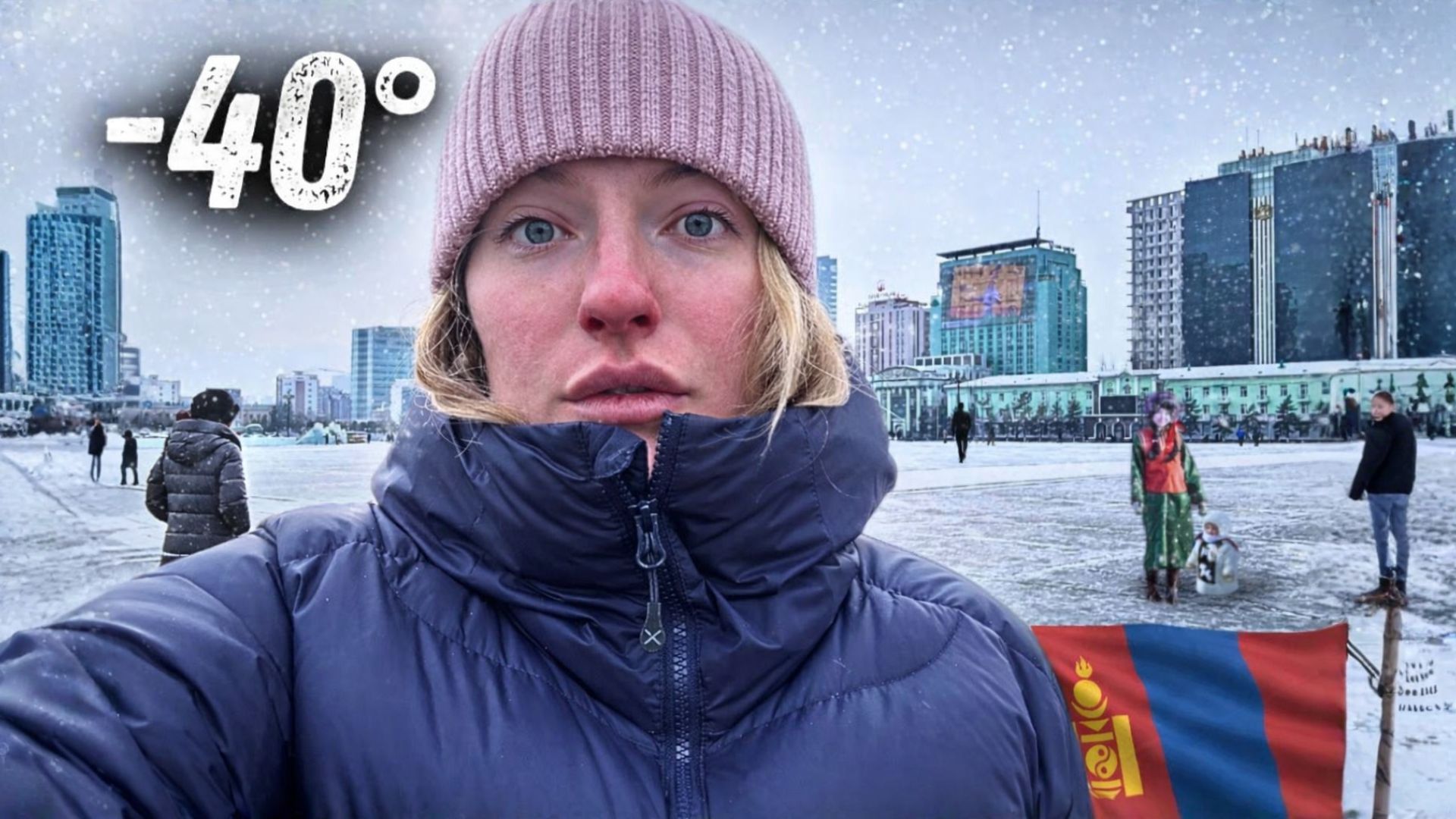
Mongolian capital combines extreme climate, accelerated urban growth, and structural challenges that put millions of residents in one of the coldest environments among major cities in the world, with direct impacts on daily life, infrastructure, and quality of life.
Ulaanbaatar simultaneously combines metropolitan scale and rare climatic conditions among national capitals.
Political and economic center of Mongolia, the city is described by institutional and scientific sources as the coldest national capital in the world, with an annual average close to −3 °C, long winters, and an estimated population of 1.64 million inhabitants.
This fact is striking because it does not refer to an isolated point on the map, but to the main urban center of the country, where about half of the Mongolian population lives.
-
What is it like to live inside a $13 billion aircraft carrier where 5,000 military personnel eat 17,000 meals a day and spend months sleeping in cramped bunks?

-
Without a button, sensor, or any electronic system, Harvard scientists create a solar device that decides on its own whether to generate energy or heat and could transform energy use in homes and buildings.

-
Neither Brazil nor the USA: China produces over 60% of the world’s farmed fish and accounts for about 40% of all global seafood, using industrial-scale aquaculture megafarms to influence the international market and supply billions of people.
-
Archaeologists opened the only Etruscan chamber never looted in 2,600 years and found four individuals lying on stone beds with 110 intact objects around them, and the inscriptions found in the tomb have not yet been deciphered because the Etruscan language is a mystery that science has not yet solved.

Why Ulaanbaatar is the coldest capital in the world
In the central-northern part of Mongolian territory, the capital spreads along the banks of the Tuul River, in a high area surrounded by mountains, at about 1,350 meters above sea level.
This combination helps explain why the cold does not appear as an occasional event, but as a structural feature of local daily life.

Far from maritime influences capable of softening the climate, Ulaanbaatar concentrates typical characteristics of a deeply continental region.
Continental climate and extreme temperatures throughout the year
Geography is central to understanding the title attributed to the city.
NASA states that Ulaanbaatar holds this position due to being inland in Asia and at high altitude, two factors that favor persistently low temperatures.
The Encyclopaedia Britannica describes Mongolia’s climate as markedly continental, with long, cold winters and short summers, a scenario that is directly reflected in the capital.
The numbers reinforce this condition.
Britannica Kids reports an average annual temperature of about 27 °F, equivalent to −3 °C, while technical reports on the country record a very close value of −2.9 °C for the capital.
In practice, the difference between one measurement and another does not change the essence: it is a capital where the cold dominates much of the calendar and reduces the window of milder weather to a few months of the year.

The severity of winter is also evident in seasonal averages.
Data compiled by international organizations place January around −22 °C and July near 17 °C in the Ulaanbaatar region.
In other words, the title of the coldest capital on the planet does not depend on an isolated extreme episode, but on a persistent combination of altitude, continentality, and a long cold season.
Urban growth under temperatures below −30 °C
The most striking contrast is in urban scale.
Ulaanbaatar is not a scientific base, an outpost, or a city of temporary occupation.
It concentrates government, services, universities, commerce, and national infrastructure, in addition to accounting for a decisive share of the country’s economy.
Still, it faces a winter where thermometers can regularly drop below −30 °C, according to documents from the World Bank and other organizations that monitor the urban reality in Mongolia.
This scenario helps explain why the city arouses curiosity outside Central Asia.
While several areas of the planet associated with similar temperatures have low population density, Ulaanbaatar grows as a metropolis and increases its share of the total population of Mongolia.
The capital already houses 1.64 million people unevenly distributed over 470.4 square kilometers, according to a World Bank study published in 2024 on urban mobility.
However, growth does not dilute the effects of the climate; in many cases, it makes these effects more visible.

The larger the city, the greater the pressure on transportation, energy, housing, and basic services during the coldest months.
In Ulaanbaatar, winter does not only interfere with thermal comfort. It conditions urban routine, cost of living, commuting, and how entire neighborhoods adapt to the harshest season of the year.
Ger areas and the challenges of the peripheries in extreme cold
Vulnerability is heightened in the so-called ger areas, peripheral areas largely formed by traditional housing and rapidly expanding occupations.
According to documents presented to the United Nations Economic and Social Commission for Asia and the Pacific, these territories concentrate about 60% of the population of the capital.
In these areas, extreme cold mixes with challenges of urbanization, sanitation, mobility, and access to less polluting heating sources.
The city’s topography exacerbates part of this scenario. Situated in a valley surrounded by mountains, Ulaanbaatar is subject to thermal inversions that trap cold air and pollution near the ground.
This phenomenon becomes especially sensitive in winter, when the need for heating increases in areas less served by conventional urban infrastructure.
The result is an impact that goes beyond meteorology and directly affects public health.
Air pollution in winter worsens the situation in Ulaanbaatar
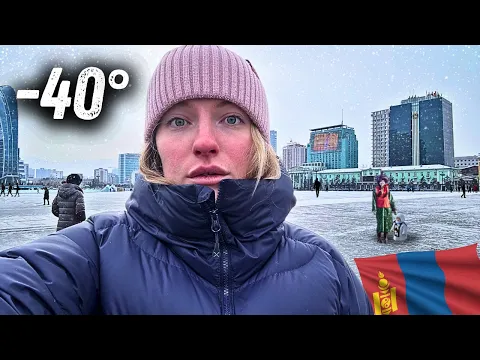

In Ulaanbaatar, record-breaking winter and pollution go hand in hand for much of the season.
The World Bank points to the burning of coal and wood for residential heating as one of the main sources of ground-level pollution, especially in the ger areas.
The World Health Organization reported that the annual average concentration of PM2.5 in the capital remained between six and ten times above the level considered safe in its guidelines.
The peaks recorded on the coldest days help measure the severity of the problem.
In material dedicated to the topic in Mongolia, UNICEF reports that the daily average of PM2.5 can reach 687 micrograms per cubic meter, a value presented as 27 times above the level recommended by the WHO.
Therefore, it is not just about living in a cold capital, but facing an environment where the necessary heating to endure winter also pressures air quality.
Still, the case of Ulaanbaatar remains unique in the global scenario.
The city combines a large population, political and economic centrality, and a severe climatic regime that shapes everything from urban occupation to health risks.
Instead of appearing as a peripheral exception, it imposes itself as an example of how a metropolis can grow under conditions that, in many other places, would be associated with much smaller settlements.
This uniqueness helps sustain international interest around the Mongolian capital.
The climatic record does not arise solely from the annual average close to −3 °C, but from the coexistence of extreme cold, high altitude, continental interiority, and continuous urban expansion.
Ulaanbaatar has become an emblematic case of contemporary urban geography precisely because it shows that a large capital can function, grow, and concentrate population even under a winter that redefines the city’s rhythm for months.




Seja o primeiro a reagir!