





 Portuguese
  English
  Spanish
  4 min of reading
  0 comments


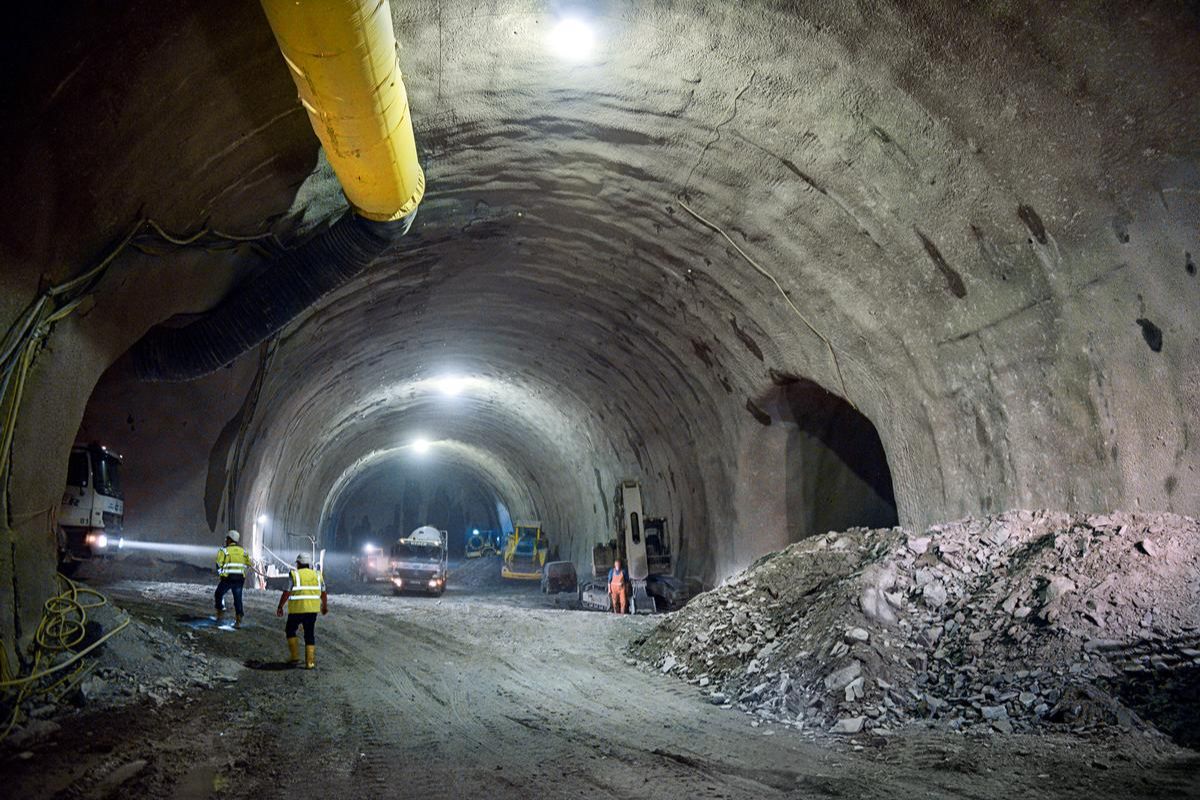
With Operations Scheduled For 2032, The Brenner Base Tunnel Is The Key Piece Of A Corridor That Will Revolutionize Freight And Passenger Transport In Europe, Shifting Traffic From Roads To Rails.
One of the most impressive engineering works in the world is in its final phase beneath the Alps. The construction of the longest railway tunnel in the Alps, known as the Brenner Base Tunnel (BBT), represents Europe’s ambition to create an underground transport artery that will redefine the connection between the north and south of the continent, linking Austria to Italy.
With a total length of 64 kilometers, the project is a pillar of the trans-European transport network. In 2025, with excavations nearly complete, the mega-project will move into the complex phase of installing railway equipment. The goal is clear: to take trucks off the roads and place freight on the rails, on a faster, more efficient, and sustainable route.
What Is The Brenner Base Tunnel And Why Is It So Strategic For Europe?
The Brenner Base Tunnel is a new high-capacity railway line that crosses the Alps. It is the heart of the Scandinavian-Mediterranean Corridor, a European Union project aimed at connecting Finland to Mediterranean ports.
-
He started running at 66 years old, broke records at 82, and is now a subject of study for having a metabolic age comparable to that of a 20-year-old, in a case that is intriguing scientists and inspiring the world.

-
Oldest tree on the planet reappears after 130 years of searches: Wattieza, 385 million years old, was 10 meters tall and had no leaves or seeds; Gilboa fossils in New York solved the mystery in 2007.

-
A 48-square-meter house assembled in hours with 4,000 bricks made of recycled plastic that does not absorb moisture, has natural thermal insulation, and costs less than 90,000 reais in a complete kit.

-
Luciano Hang revealed that Havan’s air fleet has already accumulated more than 20,000 landings, 10,000 flight hours, and 6 million kilometers traveled, and he says that without the planes, the company would never have grown so quickly.


Its main mission is to solve the problem of congestion and pollution at the Brenner Pass, one of the busiest trade routes in Europe.
Since 1970, freight transport by truck in the region has increased sevenfold, making the route unsustainable.
The tunnel was designed to shift about 50% of heavy traffic from the road to the railway, a crucial objective for Europe’s environmental goals and for the economic integration of the continent.
The Engineering Behind The Construction Of The Longest Railway Tunnel In The Alps
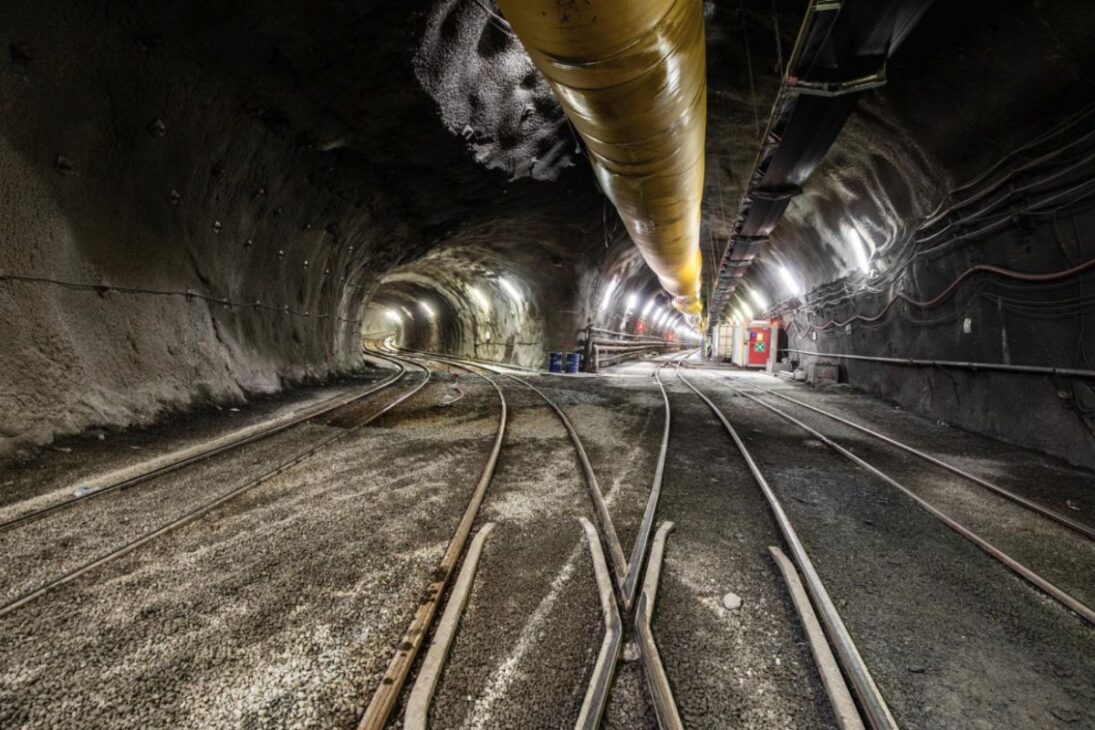
The project is a feat of modern engineering. The system consists of two main single-track tunnels, each 8.1 meters in diameter, running parallel to each other.
A third, smaller tunnel, called the exploratory tunnel, runs 12 meters below and serves for geological investigation, logistics, and, in the future, drainage and maintenance.
Total Length: 64 km (considering the integration with the railway bypass of Innsbruck).
Tunnel System: including accesses and emergency galleries, the entire complex sums 230 km of tunnels.
Excavation: the project required the removal of 21.5 million cubic meters of rock.
Methods: about 50% of the excavation was done using giant tunnel boring machines (TBMs) and 50% with the conventional drilling and blasting method.
By May 2025, the excavation phase was practically finished, with teams now focused on the complex installation of railway equipment, such as tracks, catenaries, and signaling systems.
How The Tunnel Will Reduce The Trip From 80 To 25 Minutes
The benefits of the Brenner Base Tunnel will be transformative. For passengers, the change will be drastic: the travel time by train between the cities of Innsbruck (Austria) and Fortezza (Italy) will be reduced from 80 to just 25 minutes.
For freight transport, the change is even more significant. The project, being a “flat tunnel” with minimal gradient, will allow longer, heavier, and faster freight trains to cross the Alps much more efficiently.
The line’s capacity will jump from the current 260 trains per day to 660 daily trains, an increase that will make it feasible to transfer traffic from the highways. The projected speed is up to 250 km/h for passengers and 160 km/h for freight.
The Union Between Austria, Italy, And The European Union
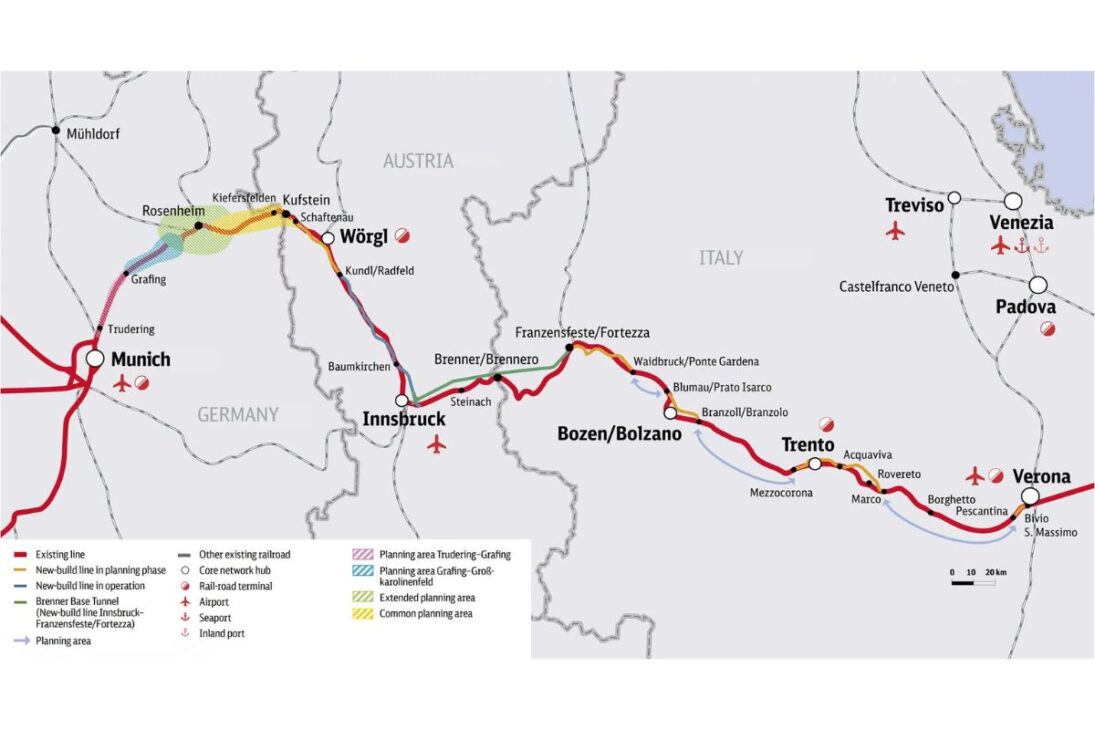
The construction of the longest railway tunnel in the Alps is an international collaboration project. The total estimated cost is 10.5 billion euros, jointly financed by Austria and Italy, with strong and growing support from the European Union.
The EU, through its Connecting Europe Facility (CEF) program, subsidizes a large part of the work, recognizing its strategic value for the continent.
In June 2023, for example, a new subsidy of 700 million euros was approved, raising the EU co-financing rate to 50% of construction costs.
This robust participation demonstrates the European commitment to move the project forward. The management of the work is carried out by the company BBT SE, founded in 2004 by the two countries.
Brenner Tunnel Vs. Gotthard Tunnel: The Battle For The Title Of Largest In The World
The Brenner Base Tunnel is often compared to another alpine mega-project, the Gotthard Base Tunnel in Switzerland, inaugurated in 2016. The Gotthard is 57 km long, making it currently the longest railway tunnel in the world.
However, when the Brenner Tunnel is completed, it will take the title. Although the main tunnel is 55 km long, the complete system, when connected to the existing railway bypass in Innsbruck, will reach 64 km of continuous underground extension, becoming the “longest underground railway link in the world.”
The project, which officially began in 2011, is scheduled to begin commercial operations around 2032.








Seja o primeiro a reagir!