





 Portuguese
  English
  Spanish
  5 min of reading
  0 comments


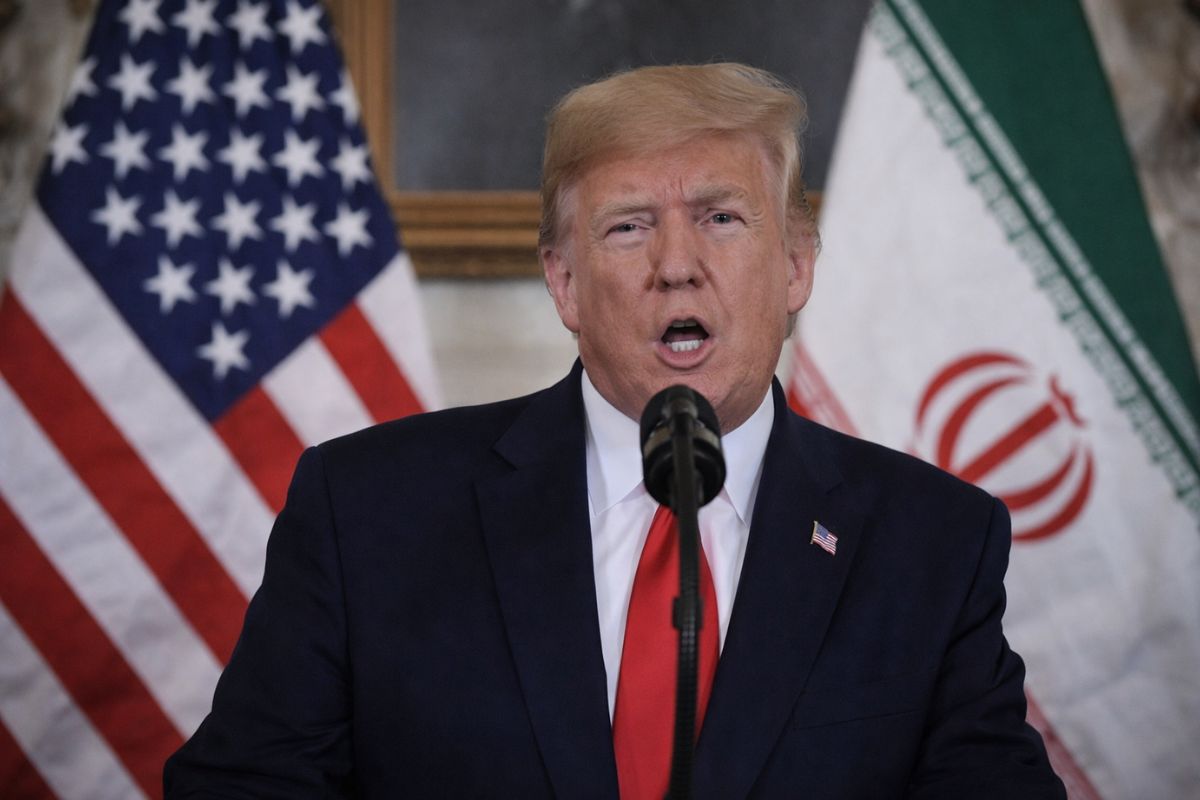
Iran rejected the ceasefire proposal presented by the United States and Israel, but presented a ten-point counterproposal that includes the end of hostilities, the reopening of the Strait of Hormuz, and the lifting of sanctions, while Trump issued an ultimatum for this Tuesday (7).
Tension between the United States and Iran has reached a level not seen in decades. The Iranian state news agency (IRNA) confirmed that Tehran rejected the ceasefire proposal to pause the conflict against the United States and Israel, a war that began on February 28 when the two countries launched military operations that resulted in profound changes in Iranian leadership. The rejection of the ceasefire, however, did not mean the end of negotiations: Iran presented its own ten-point counterproposal aimed at ending the war definitively, not just pausing it.
On the other side, President Donald Trump responded to the rejection of the ceasefire with an ultimatum that set this Tuesday (April 7) as the final deadline for a response. In a press conference on Monday afternoon, Trump stated that “the entire country could be destroyed in one night, and that night could be tomorrow.” The original deadline had been given on Friday (3) and extended on Sunday (5). The statement raised the crisis to a level of tension that puts the world on alert about the developments in the coming hours.
What Iran proposed instead of the rejected ceasefire
The Iranian counterproposal is not a simple refusal. According to the BBC and IRNA, the ten-point document presented by Iran includes demands that go far beyond a pause in hostilities.
-
A petition seeks to prohibit elderly people from driving, and no one is prepared for the consequences: without decent public transportation, revoking the license of those over 75 years old could be a sentence.

-
All truck drivers and bus drivers must take the tests to obtain a commercial driver’s license in English.

-
Buying a car may suspend Bolsa Família in 2026 and trigger automatic government oversight.

-
Chile reaches 4,088 electric buses and puts 62% of the fleet in zero emissions; Santiago already has the largest fleet of e-buses outside of China, with a decrease in PM2.5, less noise, and 60 million liters of diesel saved.

Among the main items are the complete end of hostilities in the region, a protocol ensuring safe passage through the Strait of Hormuz, the reconstruction of what was destroyed during the conflict, and the lifting of economic sanctions imposed on the country.
The fundamental difference between the rejected ceasefire proposal and the Iranian counterproposal lies in the scope. The ceasefire proposed by the United States envisioned a temporary pause in the conflict. Iran wants a definitive end to the war with concrete guarantees that the conditions that led to the conflict will not be repeated.
For Tehran, accepting a ceasefire without these guarantees would mean merely postponing the problem. For Washington, the Iranian demands may be seen as unacceptable conditions that hinder any quick agreement.
Trump’s ultimatum and what he declared about Iran
Trump’s statements over the weekend escalated progressively. On Friday (3), he issued an ultimatum for Iran to accept or reject the ceasefire proposal.
On Sunday (5), he extended the deadline to this Tuesday (7) and made additional statements about the Strait of Hormuz, the world’s most important oil trade route, which Iran closed as part of the conflict.
In an interview with Fox News on Sunday, Trump stated that if the Strait of Hormuz was not reopened, the Iranians would be “living in hell” soon. He also declared that the United States could simply “take” Iranian oil.
At the Monday press conference, the language became even more direct with the statement about the possibility of destruction in one night. The tone of the statements indicates that Washington considers the rejection of the ceasefire as a provocation that could have immediate military consequences.
The role of the Strait of Hormuz in the conflict and why it matters to the whole world
The Strait of Hormuz is not just a geographical point on the map. A significant portion of the world’s oil circulates through this maritime passage between Iran and the Arabian Peninsula, making any blockade or threat to navigation on this route a problem that affects energy prices, supply chains, and economies on all continents.
The closure of the strait by Iran has already impacted global oil and gas prices.
The Iranian demand for a protocol ensuring safe passage through the Strait of Hormuz is part of the counterproposal to the ceasefire, indicating that Tehran recognizes the strait as its main bargaining chip in negotiations.
For the United States and its allies, the immediate and unconditional reopening of the strait is a priority that precedes any discussion of peace terms. This deadlock over control of the trade route is one of the central knots preventing progress in negotiations.
What has happened since the beginning of the conflict in February
The war between the United States, Israel, and Iran began on February 28, 2026, when joint military operations were launched against Iranian territory. The conflict resulted in profound changes in Iran’s power structure and provoked a military response that included the closure of the Strait of Hormuz.
Since then, the world has been watching an escalation of statements, military operations, and negotiation attempts that have yet to produce any ceasefire agreement accepted by both parties.
The economic consequences of the conflict are already being felt globally. The price of cooking gas in Brazil has risen due to instability in the Middle East, and European countries have issued alerts about air travel in the region.
With each day without a ceasefire, the human, economic, and diplomatic costs of the conflict increase. The Iranian counterproposal and Trump’s ultimatum place this Tuesday as a decisive moment that could determine whether the conflict moves toward negotiation or escalates even further.
What to expect this Tuesday (April 7) and why the world is on alert
The deadline given by Trump expires this Tuesday, and the international community is awaiting developments.
If Iran does not accept the American terms and the United States does not accept the Iranian counterproposal, the deadlock could lead to a new military escalation in a region already devastated by weeks of conflict. Diplomats from various countries are working behind the scenes to prevent the situation from spiraling out of control.
The most feared scenario is an escalation involving large-scale attacks, while the most anticipated scenario is the opening of a real negotiation channel between the parties. Between these two extremes, there are intermediate possibilities such as deadline extensions, third-party mediations, and partial agreements on specific issues like the Strait of Hormuz.
What is certain is that Iran’s rejection of the ceasefire and Trump’s ultimatum have turned this Tuesday into a date that the whole world will watch closely.
What do you think of Iran’s rejection of the ceasefire and Trump’s ultimatum? Do you believe negotiations will advance or that the conflict will escalate? Leave your comments. Moments like this require information and debate, not silence.






Seja o primeiro a reagir!