





 Portuguese
  English
  Spanish
  4 min of reading
  24 comments


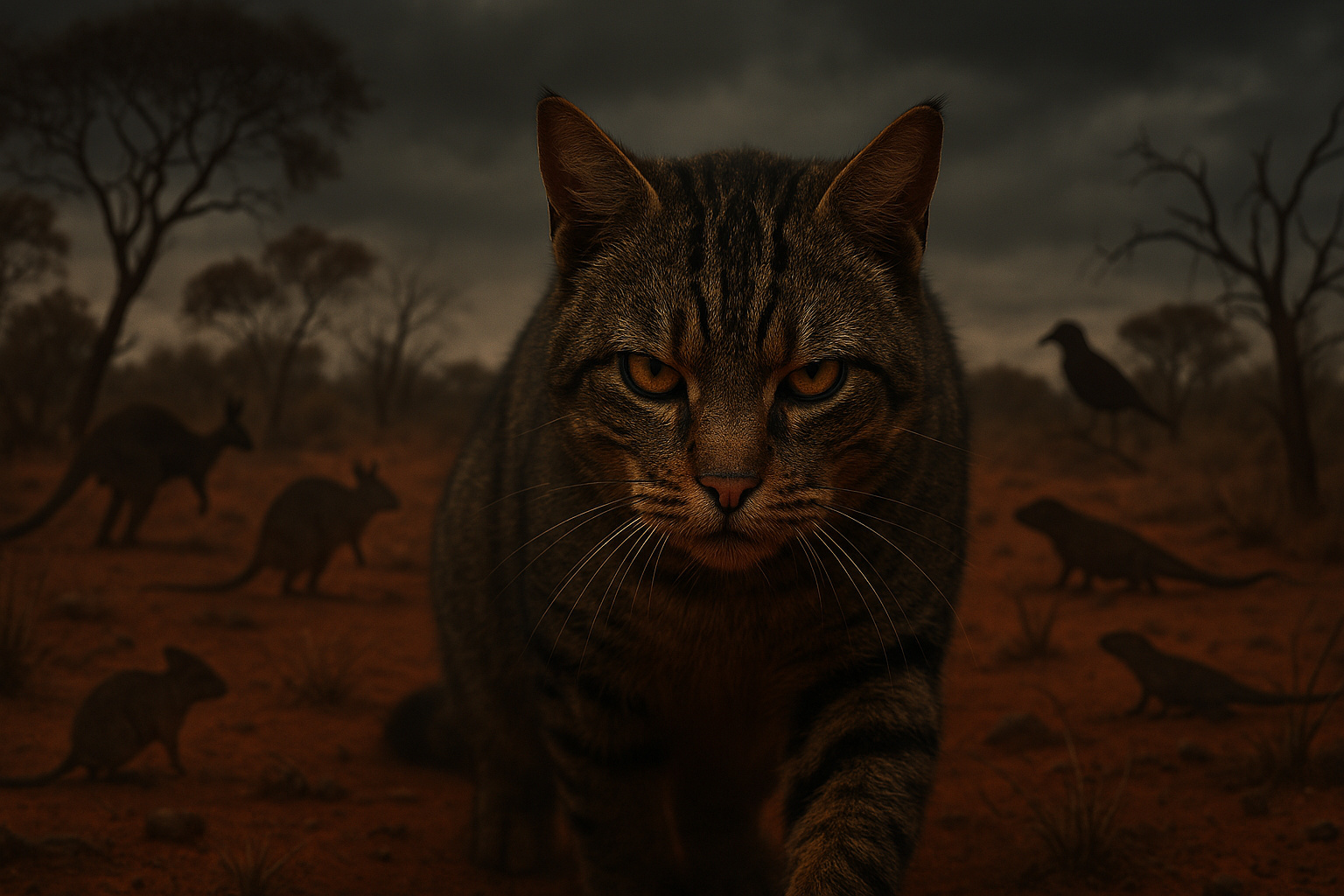


Extreme Measures Have Been Adopted To Contain Feral Cats That Kill Billions Of Animals A Year And Threaten Unique Species, In One Of The Largest Conservation Actions In The World.
The decision did not come overnight nor was it made impulsively. It is a scientific response, documented and deemed inevitable after decades of alarming data. In Australia, official studies have shown that wild cats — descendants of abandoned domestic animals — have spread throughout almost the entire territory, becoming one of the largest agents of destruction of native fauna ever recorded in any modern country.
Right at the introduction of the plan, the Australian government made the diagnosis clear: the country’s biodiversity was entering a silent collapse. Species that do not exist anywhere else on the planet were disappearing without the majority of the population noticing.
The Real Dimension Of The Feral Cat Problem
The numbers explain why the response was considered extreme. Research published in scientific journals such as Nature Ecology & Evolution estimates that feral cats kill about 2 billion native animals a year in Australia, including mammals, birds, reptiles, and small marsupials.
-
The Himalayas continue to grow to this day, with tectonic plates advancing 5 cm per year, mountains rising up to 10 mm annually, and the 2015 earthquake that killed 9,000 people may have increased the risk of an even larger seismic mega-event.

-
At an altitude of 400 km by astronauts from the International Space Station, Paris transforms at night into a golden mesh so precise that it reveals the outline of the Seine River, avenues, and entire neighborhoods like a luminous map drawn over the Earth.

-
iPhone 17 reaches historic low price with 256 GB, 120 Hz display, and drops to R$ 5,703 on Shopee, featuring A19 chip, dual 48 MP cameras, battery life of up to 30 hours, and advanced AI features.

-
Trip to Mars getting closer: Pulsar Fusion, from the UK, advances with plasma ignition in fusion engine and could drastically reduce space travel time, making crewed missions faster, safer, and economically viable.


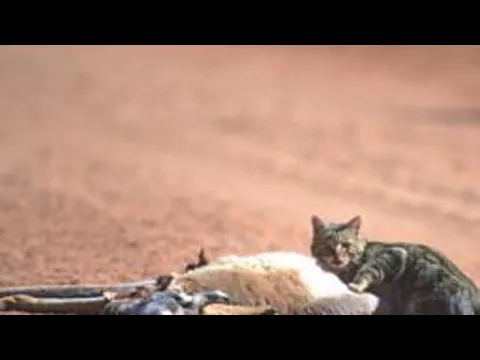

Unlike other countries, Australian fauna evolved without major feline predators. Many species live on the ground, move slowly, or did not develop efficient escape mechanisms. When the cats arrived, they found abundant and defenseless prey.
Today, it is estimated that there are between 2 and 6 million feral cats scattered across the country, occupying areas from deserts to tropical forests and coastal regions.
Species Pushed To Extinction
Since European colonization, more than 30 species of Australian mammals have already gone extinct, and wild cats appear as a direct or decisive factor in many cases.
Iconic animals such as bandicoots, small wallabies, kangaroo rats, and ground-nesting birds have started to disappear in regions where cats have established themselves. On smaller islands, the arrival of just a few individuals was enough to eliminate entire populations within a few years.
Biologists have classified the phenomenon as one of the greatest biodiversity crises caused by a single invasive species in modern history.
Why Eliminating More Than 1 Million Cats Became Official Policy
In light of this scenario, the Australian government launched national population control programs. The most well-known aimed at the removal of more than 1 million feral cats over several years, focusing on critical conservation areas.
The goal was not defined by ideology, but by ecological modeling. Studies indicated that without a drastic reduction in population, no other strategy — such as fencing, relocation, or habitat protection — would be sufficient to save endangered species.
The plan involved:
- Control in remote areas and national parks
- Priority protection of islands and biological reserves
- Satellite monitoring and population tracking
- Continuous assessment of ecological impacts
International Controversy And Ethical Dilemmas
The policy sparked global reactions. Animal protection organizations, celebrities, and international activists harshly criticized the measure, labeling it as cruel. On the other hand, scientists and conservationists argued that failing to act would mean accepting the mass extinction of unique species.
Environmental authorities were clear in stating that this is not a war against domestic cats, but an effort to contain a wild population out of control, which cannot be adopted, relocated, or reintroduced into urban environments.
The scientific consensus is uncomfortable but clear: in isolated ecosystems, invasive species can cause irreversible damage.
Observed Results And Signs Of Recovery
In areas where control was implemented continuously, the first results began to emerge. Populations of small mammals and birds began to recover, and some species were re-registered after years without observations.
Ecological fences combined with predator control proved to be especially effective, creating “refuges” where native fauna can reproduce again.
Researchers emphasize that the benefits only appear when actions are maintained over the long term, without political or budget interruptions.
A Case That May Redefine Global Conservation
The Australian case has begun to be studied by other countries facing similar problems with invasive species. Pacific islands, regions of New Zealand, and coastal areas around the world are closely observing the results.
More than a local measure, the decision exposed a global dilemma: how far is a society willing to go to preserve ecosystems that cannot be recreated.
Australia opted for a tough response, based on data, science, and long-term projections. The debate remains open, but one thing is certain: ignoring the problem would have cost much more than numbers; it would have cost entire species from the planet’s history.










Que tristeza.Eles se proliferam por culpa do ser humano que abandona esses animais.Como sempre os bichos que sofrem!
O mundo virou caos de matanças animais. Pq fazer isso. Enquanto estão alimentando monstros horríveis como crocodilos pitons e comodo prá ficar mais perigo pra população. Estes deviam ser extintos junto com as hienas tbm
Australia to Kill the Cats. It’s evil action . Only remedy is to help those cat, geving foods and 💧who Oder to kill need to be charged . This is not a solution!