





 Portuguese
  English
  Spanish
  3 min of reading
  0 comments


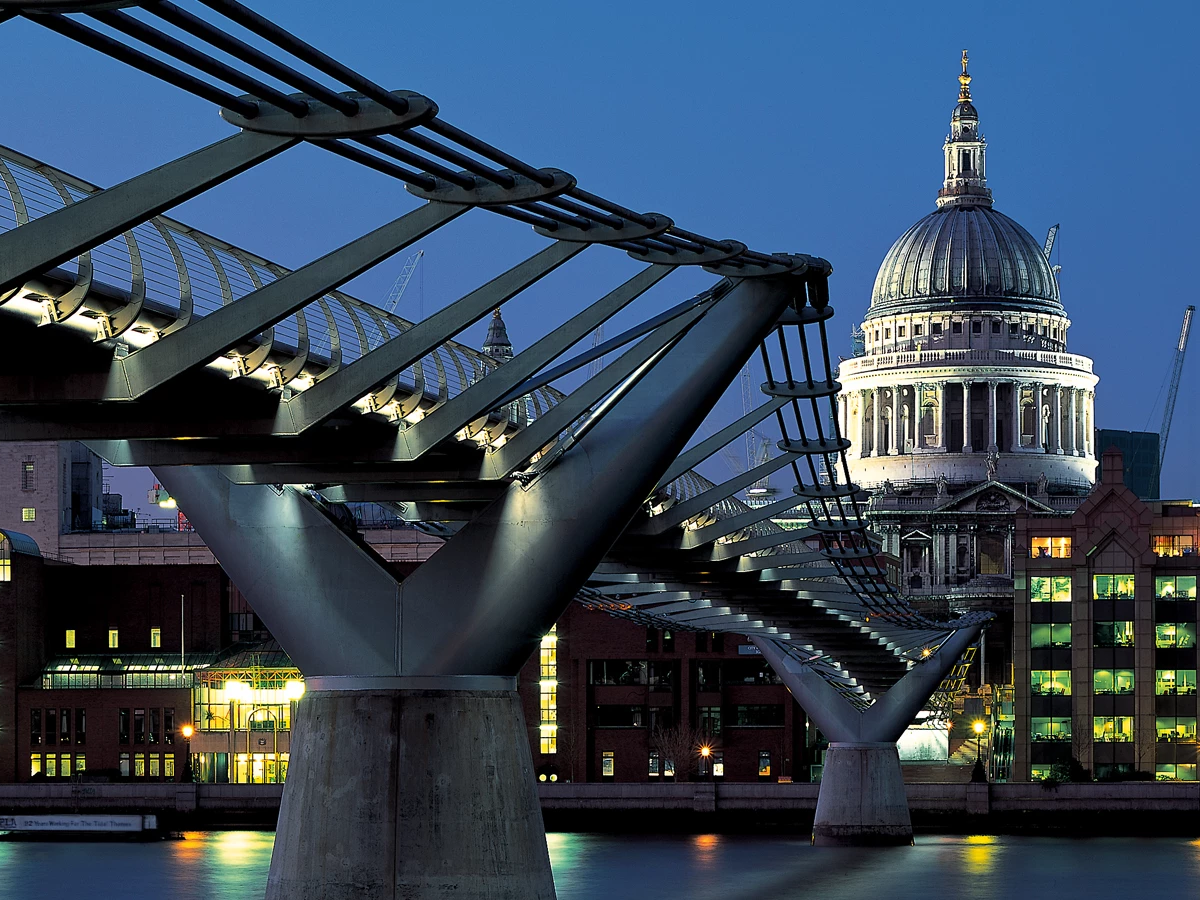
Inaugurated As An Icon, The Millennium Bridge Became The Bridge That Wobbled Too Much, Being Closed In Two Days. Understand The Engineering Behind The Problem And Its Ingenious Solution
Understand The Story That Became Known As The Bridge That Wobbled Too Much. We Analyze Its Innovative Design, The Causes Of The Problem, The Engineering Solution Implemented, And The Lasting Legacy It Left For Bridge Construction Worldwide.
The Millennium Bridge, In London, Was Conceived As An Emblem Of The Turn Of The Century, A “Blade Of Light” Of Steel Crossing The River Thames. However, Its Inauguration In 2000 Was Marked By A Dramatic Event: The Bridge Began To Oscillate Alarming, Earning The Nickname “Wobbly Bridge”.
The Innovative Design Of The Millennium Bridge
Born From A Design Competition Launched In 1996, The Millennium Bridge Was Designed By A Star Team, Including Architect Norman Foster, Engineering Firm Arup, And Sculptor Sir Anthony Caro. The Concept Was To Create A Minimalist Pedestrian Crossing, A “Blade Of Light” That Would Not Obstruct The View Of St. Paul’s Cathedral.
-
Scientists use sawdust mixed with clay to create a lighter brick, promising efficient thermal insulation and impressing by transforming waste into a solution for construction.

-
With a DNA shape, this bridge in Singapore draws attention in modern architecture and surprises tourists by transforming a simple crossing into an unforgettable visual experience in the urban heart.
-
Giant underwater pipeline begins to take shape with a R$ 134.7 million project at the Port of Santos: the 1.7 km structure uses 12-meter and 700 mm pipes to supply water to 450,000 people in Guarujá.
-
A mason reveals a professional plastering technique that uses aligned guides and a 3-meter ruler to plaster an entire wall in up to 3 hours, without visible seams, with uniform thickness, perfect plumb, and a finish ready for painting without rework.


The Result Was A Suspended Steel Bridge With A Length Of 320-333 Meters. Its Side Suspension Cables And A Very Shallow Profile, Without Large Towers, Gave It An Elegant And Slender Appearance, A True Landmark Of Design. The Construction Cost Was £18.2 Million.
Inauguration And Panic, The Phenomenon Of The Bridge That Wobbled Too Much
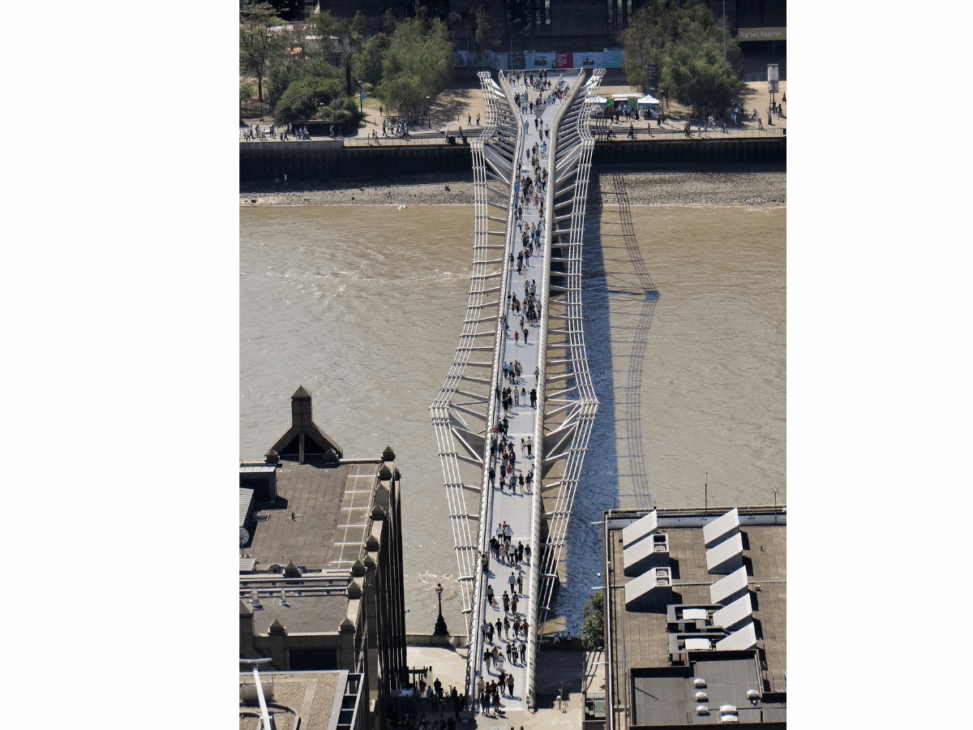
The Bridge Was Inaugurated On June 10, 2000, Attracting A Crowd Of Approximately 100,000 People Throughout The Day, With Up To 2,000 On The Structure Simultaneously. Shortly After Opening, Pedestrians Began To Feel An “Alarming Oscillation Movement”.
The Oscillation Was Predominantly Lateral, Reaching A Maximum Amplitude Of Approximately 70mm. The Movement Was So Intense That People Held Onto The Railing To Maintain Their Balance. After Frustrated Attempts To Limit The Number Of People, The Bridge That Wobbled Too Much Was Completely Closed On June 12, 2000, Only Two Days After Its Inauguration, Causing Embarrassment And Criticism.
Unraveling The Synchronous Lateral Excitation
The Engineering Firm Arup Initiated A Thorough Investigation. After Disregarding The Wind As A Cause, The Focus Shifted To The Load Induced By Pedestrians. The Investigation Concluded That The Cause Was A Little-Known Phenomenon At The Time: Synchronous Lateral Excitation (SLE).
SLE Is A Positive Feedback Cycle:
A Slight Initial Movement Of The Bridge Occurs.
Pedestrians, Unconsciously, Adjust Their Steps To Balance.
The Lateral Forces Of The Steps Synchronized With The Bridge’s Oscillation Add More Energy To The Swing.
The Movement Amplifies, Causing More People To Synchronize Their Steps.
The Design Codes Of The Time Did Not Adequately Address This Phenomenon, Which Transformed The Millennium Bridge Into The Bridge That Wobbled Too Much.
The Engineering Solution, How The Dampers Stabilized The Bridge
Instead Of Increasing Stiffness, Which Would Alter The Bridge’s Design, Engineers Opted To Control Resonance. The Solution Was The Installation Of A Complex Damper System To Dissipate The Vibration Energy.
A Total Of 89 Dampers Were Installed:
37 Viscous Dampers: Designed To Control Lateral And Torsional Movements, Were Discreetly Installed Under The Bridge Deck.
52 Tuned Mass Dampers (TMDs): To Control Vertical Movement, Were Added As A Precaution.
This Adaptation Cost £5 Million And Lasted From May 2001 To January 2002.
The Legacy Of The Bridge That Wobbled Too Much In Global Engineering
After The Installation Of The Dampers, The Bridge Was Subjected To Rigorous Tests, Including A Crossing With Over 2,000 People. Stability Was Confirmed, And The Millennium Bridge Was Successfully Reopened On February 22, 2002.
The Incident, Though Embarrassing, Had A Lasting Legacy. It Propelled Extensive Research On The Interaction Between Pedestrians And Structures, Leading To Revisions In Bridge Building Codes Worldwide. Engineers Gained A Much Greater Understanding Of Lateral Vibrations.
Today, The Millennium Bridge Is A Celebrated Landmark Of London And A Vital Link Over The Thames. The Story Of The Bridge That Wobbled Too Much Has Become A Fundamental Case Study, A Testament To The Capacity Of Engineering To Learn From Unforeseen Challenges And Find Lasting Solutions.







Seja o primeiro a reagir!