





 Portuguese
  English
  Spanish
  4 min of reading
  0 comments


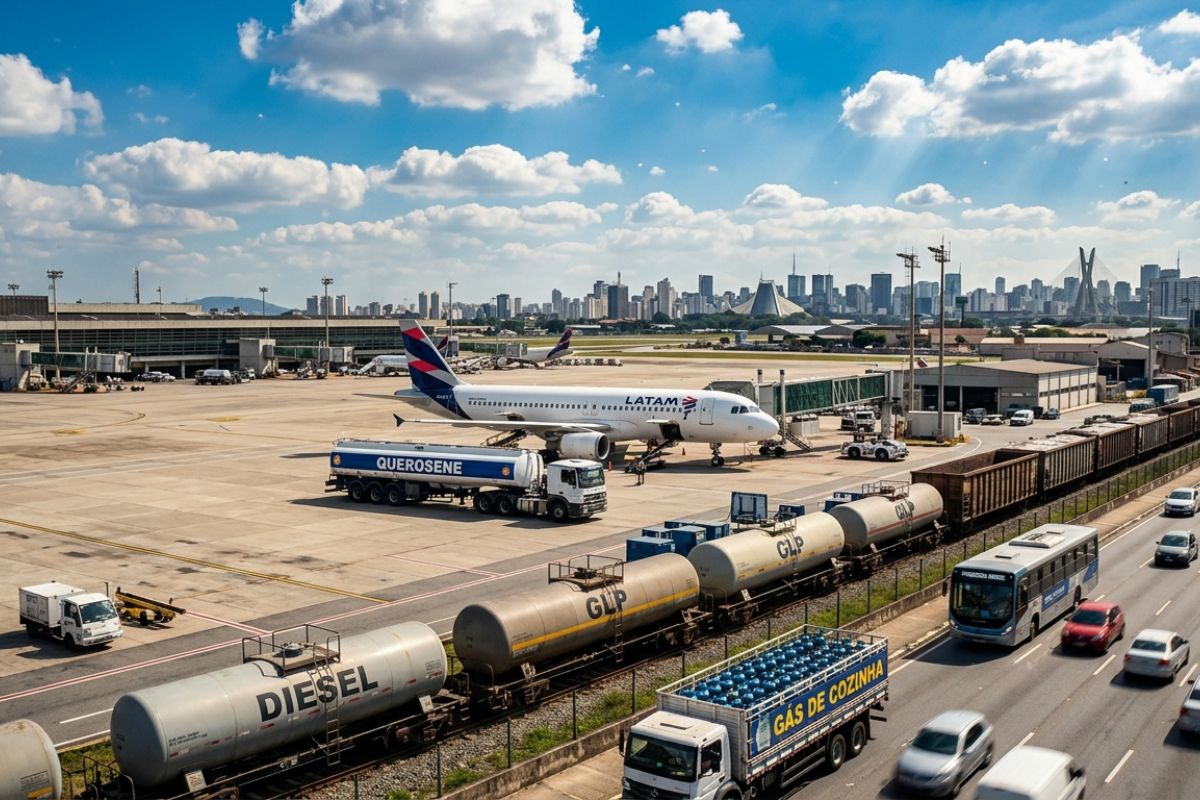
Package against fuels includes zero federal tax on QAV, credit lines with Union risk, and measures for diesel and cooking gas amid crisis pressure
The federal government announced, on this Monday (4/6), a package to contain the effects of the Iran war on fuel prices in Brazil, with a direct focus on the tax charged on aviation kerosene. The bet is simple: reduce costs for companies and try to hold back the rise in airfares.
In addition to the zero tax on QAV, the plan includes billion-dollar credit for the aviation sector, postponement of navigation fees, and a set of measures for diesel and cooking gas, expanding the package’s reach beyond aviation.
What changes in the aviation kerosene tax
The government has eliminated the PIS and Cofins rates on aviation kerosene, known as QAV. The estimate released is a savings of R$ 0.07 per liter of the fuel.
-
Buying a car may suspend Bolsa Família in 2026 and trigger automatic government oversight.

-
Contactless payments in 2026 soar in Brazil, exposing new invisible fraud gaps and forcing users to double their security precautions with contactless cards.

-
Everyone has started talking about the end of the minimum retirement age in Brazil — but has this “silent change” really happened or are we facing one of the biggest recent rumors about the INSS?
-
The true reason behind the Mercosur and European Union agreement is not in supermarkets or factories but rather buried in Brazilian soil in the form of rare earths and strategic minerals that the entire world desperately needs for the future.
The measure will be detailed in a provisional measure that will be published in the coming days. In practice, the goal of the lower tax is to cut part of the fuel cost that weighs on the companies’ finances.
Why the tax on QAV is at the center of the fare fight
QAV is one of the main costs for airlines and, according to Abear, has come to represent about 45% of operational expenses after a price adjustment last week.
With this weight, any change in the tax on kerosene becomes an attempt to contain the pass-through to the consumer. When fuel prices rise, airfare usually follows, and the government tries to break this effect by reducing the federal tax burden.
Billion-dollar credit and cash relief for companies
The package did not stop at the tax relief. Two lines of credit for the aviation sector were announced.
The first can reach R$ 2.5 billion per company, focusing on financial restructuring. The funds will come from the National Civil Aviation Fund and will be operated by BNDES or authorized institutions.
The second line will have R$ 1 billion available for working capital, with a term of up to six months. The conditions will be defined by the National Monetary Council, with risk assumed by the Union, reinforcing the emergency nature of the package.
Postponement of air navigation fees enters the account
Another measure planned is the postponement of the payment of air navigation fees. Charges for April, May, and June will be settled only in December.
The design is to relieve cash flow in the short term, along with the zero tax on QAV and the credit lines, to try to prevent an even greater escalation in airfare prices.
Diesel: subsidy, incentive reinforcement, and tax on biodiesel
The package also includes actions to contain the rise in diesel prices. Among the announced measures are:
Subsidy of R$ 1.20 per liter for imported diesel, with participating states covering half and the Union paying the rest
New subsidy of R$ 0.80 per liter for national diesel, added to a previous incentive of R$ 0.32 per liter
Estimated cost of R$ 3 billion per month, with an initial term of two months, extendable for another two
PIS and Cofins eliminated on biodiesel, with an estimated impact of R$ 0.02 per liter
Here, the government also uses the tax as a tool, combining tax relief and subsidy to try to reduce pressure on the final price.
Cooking gas: subsidy to equalize imported and national
For LPG, the package provides a subsidy of R$ 850 per ton of imported cooking gas, with a total cost of R$ 330 million.
The goal is to equalize the price of the imported product with the national one, in an attempt to reduce pressure on low-income families, within the same logic of alleviating costs and reducing the effects of the crisis, including through tax and compensations.
Why the government targets tax and fuels now
The rise in fuel prices six months before the elections worries the Executive, and the package was presented as a response to the external shock. Last month, according to the base, the government had already eliminated federal taxes on diesel and increased oversight against abusive price hikes.
Now, with the zero tax on kerosene and billion-dollar credit for the aviation sector, the strategy is to attack critical costs, try to hold back transfers, and buy time with short-term measures.
Do you think that eliminating the tax on kerosene can really curb airfare prices, or will companies absorb the savings without passing it on to the consumer?







Seja o primeiro a reagir!