





 Portuguese
  English
  Spanish
  4 min of reading
  0 comments


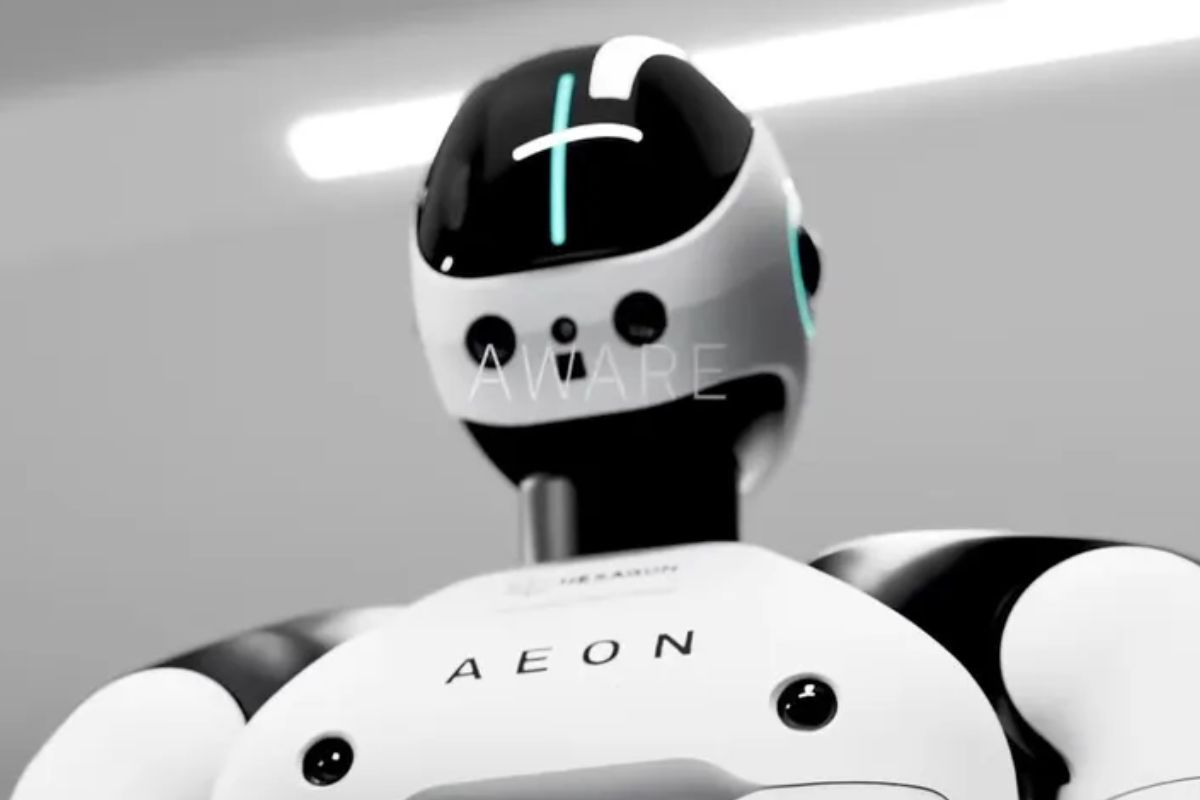
While Tesla promises the Optimus for $20,000 “soon” and Boston Dynamics charges millions for the Atlas, Chinese Unitree Robotics begins to export a functional humanoid for the price of an entry-level motorcycle in Brazil
There is an invisible barrier that has always prevented humanoid robotics from leaving billion-dollar laboratories and reaching the rest of the world. It’s not the technology. It’s the price. The R1 from Unitree Robotics has just broken that barrier. With a starting price of $4,900, equivalent to about R$ 25,000, this Chinese humanoid robot has started being sold in China and is now preparing to reach the United States, Europe, and Asia in a global version.
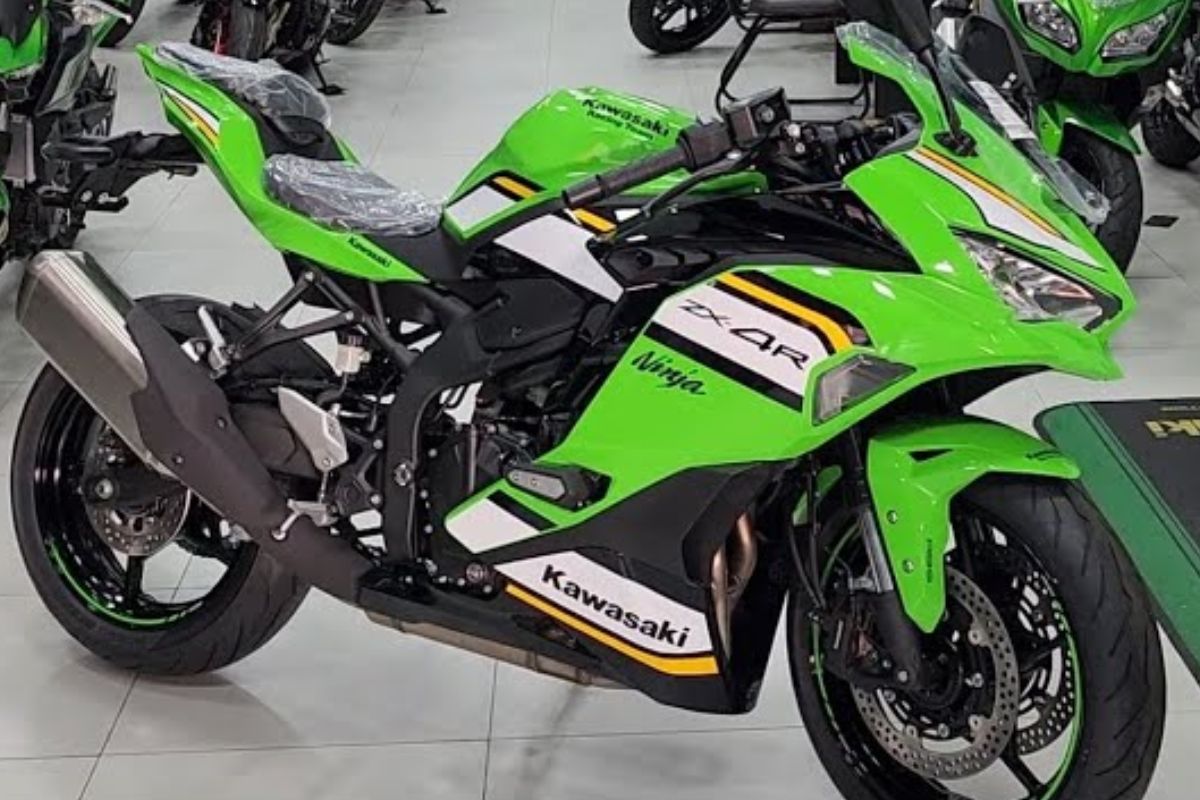
To put it in perspective: $4,900 is less than an iPhone 16 Pro Max in the United States. It’s less than a Kawasaki Ninja 300 in Brazil. And it’s a fraction of what any other functional humanoid robot costs on the planet.
What exactly does the R1 do for this price?

The R1 is 1.2 meters tall, weighs between 25 and 27 kg, and has 26 joints that allow movements that, five years ago, would have seemed like science fiction in this price range.
-
NASA is building a space telescope to find killer asteroids before they hit us, and the unofficial mission emblem features a T-Rex screaming at the sky with two words: never again.

-
Ten undergraduate students received an astronomy homework assignment, began sifting through data on the university’s computer, and ended up discovering the oldest star ever recorded in the universe, a cosmic immigrant that formed shortly after the Big Bang and was wandering alone towards the Milky Way.

-
Scientists reveal that Saturn’s rings may have formed after the destruction of a moon, and a study indicates that the planet’s bright structure is only 100 million years old.

-
A Brazilian who does not work at any space agency calculated a round trip route to Mars in just 7 months using asteroid trajectories as cosmic shortcuts, and the study was accepted by one of the most prestigious scientific journals in the world.

It runs. Kicks. Gets up on its own after falling. And does flips.
Not clumsy prototype flips. Complete flips, with stable landings, reminiscent of a young gymnast in a school competition. Unitree’s videos caused skepticism on the internet because many people thought they were made with computer graphics. They weren’t.
The system includes voice and image recognition, allowing basic interactions with humans and the environment. It identifies objects, responds to commands, and can be programmed to execute customized movement sequences.
Why is it so much cheaper than everyone else?
The answer lies in Unitree’s strategy. While companies like Tesla, Boston Dynamics, and Figure invest billions trying to create the perfect robot, Unitree focused on creating the possible robot.
The R1 was not designed to replace workers in factories. It was not intended to fold clothes in your home. It is a development platform. A tool for those who want to program, test, and create applications with humanoid robotics without needing a million-dollar budget.
The company achieved the low price by combining three factors: lighter composite materials, simplified modular design, and Chinese production scale. The same logic that made China dominate the market for drones, electric scooters, and solar panels is now being applied to humanoid robots.
The previous model from Unitree, the G1, cost $16,000. Before that, the H1 sold for $90,000. In less than two years, the company reduced the entry price by 94%. From $90,000 to $4,900. No other company in the world has done anything like this in this segment.
The competition map that the R1 is redrawing
To understand the impact, just look at what the rivals charge:
The Tesla Optimus from Elon Musk is expected to cost around $20,000 when (and if) it hits the market. The Atlas from Boston Dynamics, a reference in advanced robotics, costs millions of dollars and is not sold to the public. The Neo from 1X, which promises to be a home assistant, is in pre-sale for $20,000, with a monthly subscription of $499. The models from the Chinese Agibot are around $26,000.
The R1 costs less than a quarter of the cheapest competitor. It’s not a marginal difference. It’s a category disruption.
What changes with the global version?
Until now, the R1 was only sold in China. The international expansion, according to market information, is expected to happen through online sales platforms, with distribution to the United States, Japan, Singapore, and European countries.
There is still no official confirmation of international prices. It is likely that taxes and logistics will raise the final value in the destination markets. But even with a 30% to 50% increase, the R1 would still be the cheapest functional humanoid available outside of China.
The potential impact is enormous. Universities, startups, research labs, and even technical schools that could never afford a humanoid robot now have a real option. Independent developers working with artificial intelligence gain a physical platform to test algorithms that previously only existed in simulation.
What it still does not do (and why that does not matter so much)
The R1 does not clean the house. It does not cook. It does not take care of the elderly. It does not do anything that science fiction movies promise about domestic robots. Its battery lasts between one and two hours. Its movements, although impressive, are still limited compared to a human.
But this list of limitations becomes less relevant when you understand the true role of the R1. It is not the final product. It is the tool that will allow thousands of people around the world to start building the final product.
Every developer who buys an R1 and programs a new skill is contributing to an ecosystem that is growing exponentially. The same logic that transformed the smartphone from an expensive device into a universal platform can happen with humanoid robots. And the R1, at the price of a premium cell phone, could be the trigger.
Unitree did not create the robot that will change the world. They created the robot that will allow other people to change the world. And they are charging less for it than most Brazilians spend on a used car.
With information from Canaltech and Unitree Robotics.








Seja o primeiro a reagir!