





 Portuguese
  English
  Spanish
  4 min of reading
  1 comment


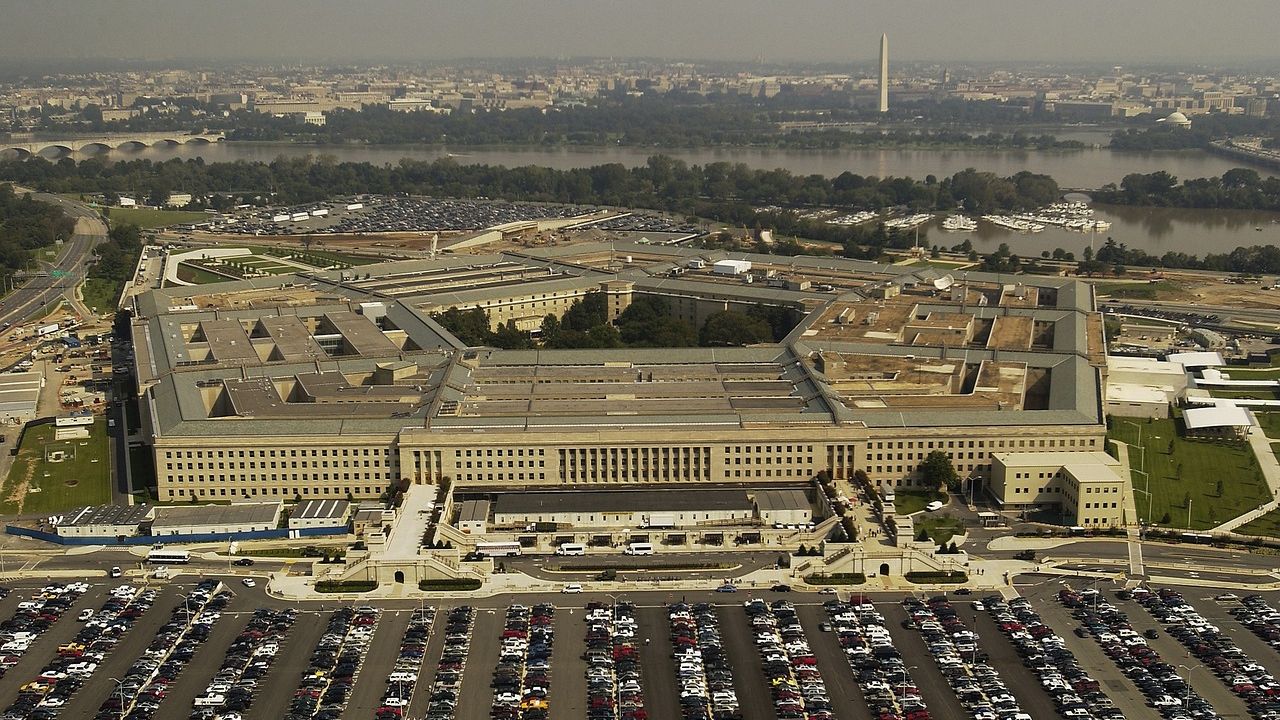


Built During World War II, the Pentagon Combines Numbers, Engineering Choices, and Administrative Functions That Explain Its Scale and Its Strategic Role in the United States, Combining Unusual Physical Dimensions, Planned Internal Circulation, and Centralization of Defense Decisions in a Single Complex.
With about 28 kilometers of corridors and approximately 600 thousand square meters of built area, the Pentagon, in Arlington, Virginia, has housed the headquarters of the United States Department of Defense since World War II.
The building was officially dedicated on January 15, 1943 and concentrates, in a single complex, administrative and strategic activities of the U.S. Armed Forces.
Situated on the opposite bank of the Potomac River, just minutes from Washington, D.C., the building is part of the metropolitan area of the federal capital and is connected to the public transportation network.
-
He started running at 66 years old, broke records at 82, and is now a subject of study for having a metabolic age comparable to that of a 20-year-old, in a case that is intriguing scientists and inspiring the world.

-
Oldest tree on the planet reappears after 130 years of searches: Wattieza, 385 million years old, was 10 meters tall and had no leaves or seeds; Gilboa fossils in New York solved the mystery in 2007.

-
A 48-square-meter house assembled in hours with 4,000 bricks made of recycled plastic that does not absorb moisture, has natural thermal insulation, and costs less than 90,000 reais in a complete kit.

-
Luciano Hang revealed that Havan’s air fleet has already accumulated more than 20,000 landings, 10,000 flight hours, and 6 million kilometers traveled, and he says that without the planes, the company would never have grown so quickly.


Daily, thousands of military personnel, civil servants, and service providers move through its facilities, making it one of the largest continuously operating administrative centers in the country.
Origin of the Pentagon Shape and Design Decisions
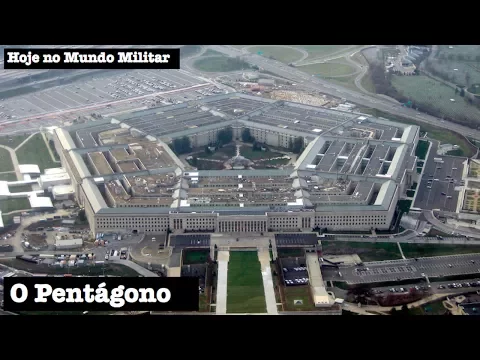
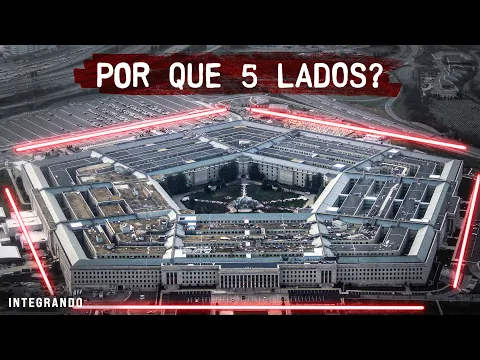
The five-sided shape, which has become associated with the building’s identity, was not conceived as a symbolic or aesthetic choice.
Historical records indicate that the initially selected land for construction had an irregular outline resembling a pentagon, defined by existing roads.
Even after the change to the final site, the design was maintained to avoid delays in a context of urgency imposed by the war.

Moreover, the design met technical requirements of the period.
The need to save steel, a resource primarily directed to the war industry, led engineers to opt for a more horizontal construction, with extensive use of reinforced concrete.
This solution allowed for accelerated construction and adherence to the timeline established by the U.S. government.
Corridors, Concentric Rings, and Internal Circulation
The internal organization of the Pentagon follows a model of five interconnected concentric rings linked by radial corridors.
According to institutional information and studies about the building, this configuration reduces travel time between different sectors, even in a large-scale structure.
Frequently cited estimates indicate that the journey between two internal points can be made in a few minutes, depending on the route.
Experts in architecture and administrative planning highlight that the rings and rays system facilitates navigation and better distributes the flow of people, avoiding long linear corridors without circulation alternatives.
Dimensions of the Building and Number of Employees
The total area of the Pentagon is commonly expressed as about 6.5 million square feet, a figure that corresponds to approximately 600 thousand square meters.
Part of this area is designated for offices, while the remainder houses corridors, technical areas, and support spaces.
As for daily occupancy, the data varies depending on the methodology used.
Some sources indicate about 23 thousand military and civilian personnel working in the complex, while other estimates include service providers and suggest higher numbers.
The building’s administration does not release a single definitive count, which explains the discrepancy between the available surveys.
The structure has five floors above ground, as well as underground levels and an open central courtyard.
Together, the corridors reach approximately 28 kilometers in length, a direct result of the repetition of the concentric rings across several floors.
Internal Infrastructure and Daily Functioning
To accommodate the routine of thousands of people, the complex maintains internal services geared towards everyday work.
There are dining options, banking services, and other operational supports, in addition to direct connection with the regional subway system.
According to analyses of the building’s functioning, this infrastructure helps to reduce external travel and ensure administrative continuity.
The modular logic of the design also allows for internal reorganizations over time, adapting spaces as institutional and operational changes occur.
Accelerated Construction During the War
The construction of the Pentagon was carried out at a pace considered fast for the standards of the time.
Initiated in 1941, it advanced in overlapping stages, with parts of the building being occupied before full completion.
Historical documents indicate that the construction site operated with a large number of workers and continuous shifts.
In the construction process, some of the materials used came from the local area.
Records show that sand and gravel were taken from the bed of the Potomac River and processed for the production of concrete used in the structure, reducing logistical costs and accelerating the supply of materials.
The Debate About the Title of Largest Office in the World
The Pentagon is often mentioned in rankings of large administrative buildings, but its exact position varies according to the criteria used.
Some rankings describe it as the largest low-rise office building in the world, while others place it among the largest when considering the total built area.
Experts in architecture and urban planning emphasize that comparisons of this type depend on specific parameters, such as usable area, building typology, and predominant function.
Therefore, there is no single consensus that unambiguously positions it as “the largest office on the planet” across all possible criteria.
Nonetheless, the building remains one of the primary examples of large-scale administrative centralization, gathering command, planning, and management of U.S. defense in a single location.








Una mala copia de otro artículo.
El área del Pentágono es 600 MIL metros cuadrados….