





 Portuguese
  English
  Spanish
  4 min of reading
  0 comments


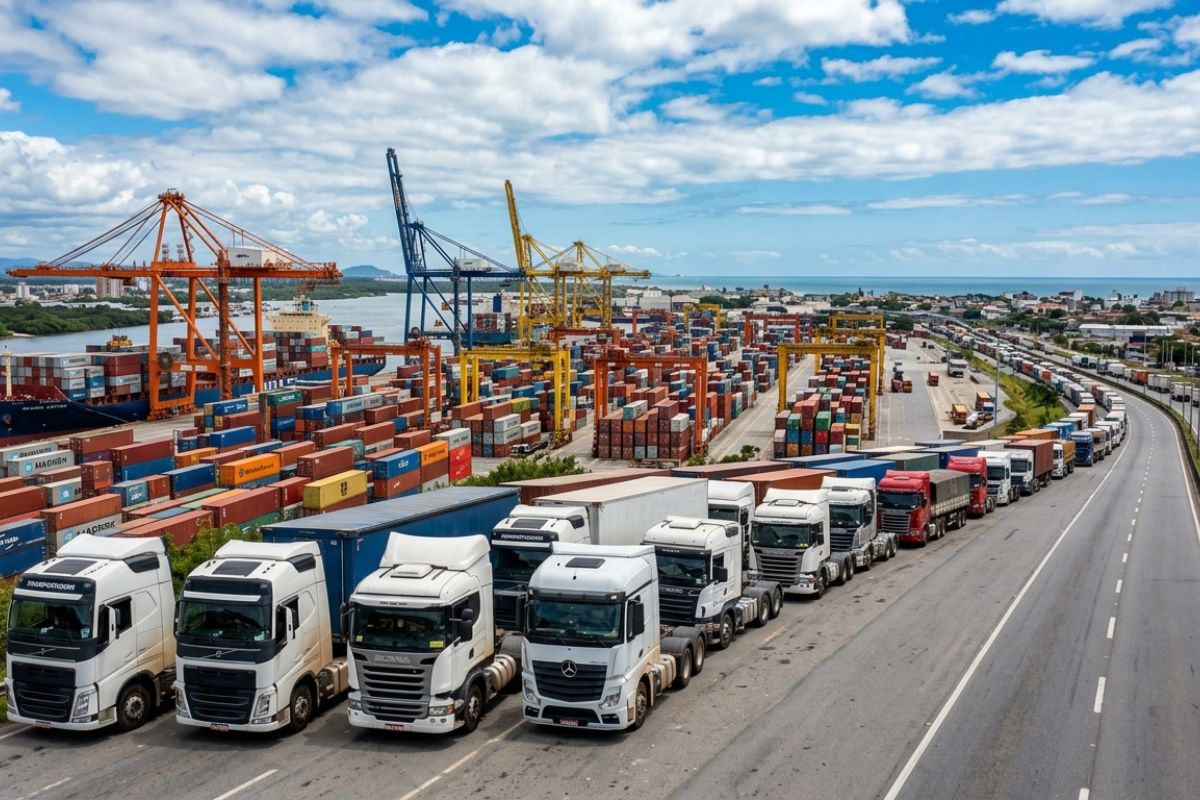
The lack of truck drivers is advancing in the country, affecting cargo transportation and already causing impacts in the region, with hiring difficulties, parked vehicles, and risk to delivery deadlines
The lack of truck drivers is already starting to impact cargo transportation across the country, with direct repercussions in our region. The scenario worries companies because it makes it difficult to meet the high demand for trips, reduces the capacity for cargo flow, and may compromise delivery and supply deadlines in the coming months.
With no trucks circulating on the roads, Brazil’s logistics loses momentum, as road transport sustains the delivery of goods and also the movement of cargo arriving at ports. In the Itajaí region, the issue gains weight because the Itajaí port complex depends on the fluidity of this chain, and the sector reports that finding labor, especially drivers, has become a bottleneck.
Lack of truck drivers becomes a national bottleneck and affects the logistics of Itajaí

The problem is described as a growing difficulty in keeping the fleet running. Companies in the transport sector report that the lack of truck drivers is already interfering with the pace of operations and route servicing, including those connecting industries, distribution centers, and port terminals.
-
Petrobras is about to transform a forgotten city in the far north of Brazil into the capital of oil: Oiapoque is already feeling the effects even before the first drop of oil comes out from the seabed.

-
The Economist says that Brazil has a secret weapon in the oil war during this crisis: ethanol, biodiesel, and flex-fuel vehicles. With Petrobras holding costs, fuel prices are rising 10% to 20% here, compared to 30% to 40% in the USA.
-
Unilever is negotiating the sale of Hellmann’s, Knorr, and its entire food division in a deal that could reach R$ 186 billion to transform into a company focused exclusively on beauty and personal care.

-
China, Brazil, and India together control the largest rare earth reserves on the planet and are now at the center of a geopolitical dispute that could determine who will dominate technology and the global economy in the coming decades.


In practice, the shortage of drivers does not only create a punctual delay. It pressures the entire logistics schedule, increases the risk of non-compliance with deadlines, and raises concerns about supply during peak demand periods.
88% of companies report hiring difficulties
A survey cited in the source, attributed to the National Association of Cargo Transport and Logistics, indicates that 88% of companies face hiring difficulties.
The data reinforces that the lack of truck drivers is not an isolated case in one region, but a movement spread across the country.
The immediate effect of this difficulty appears in fleets with vehicles not circulating, a scenario that reduces the service capacity of transport companies and can stall essential stages of cargo transport.
Average of eight parked trucks raises alarm in the sector
Among the distributors claiming to have vehicles parked due to a lack of professionals, the data indicates an average of eight parked trucks.
This number is treated as a warning sign because a parked truck means idle capacity and loss of operational response precisely when demand rises.
Moreover, the same cited survey indicates that the lack of these professionals is the second leading cause limiting the growth of the sector in Brazil, identified by 28% of entrepreneurs. In first place are difficulties in the domestic market, mentioned by 40%.
Why are drivers leaving the roads
Representatives from the sector and the union in the region point to a combination of factors behind the lack of truck drivers.
Among them, the perception that truck drivers do not have a salary considered worthy of the profession, in addition to challenges related to the work environment.
Another recurring point is safety. The data mentions thefts and robberies of trucks, which drives professionals away from the roads and increases the preference for jobs within the city or the municipality, where the driver feels safer.
Safety, road conditions, and the difficulty of stopping to rest
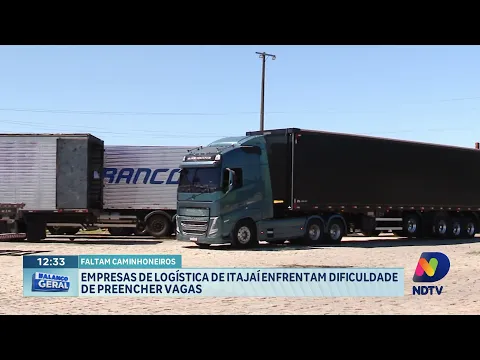

The data also points out that the condition of the roads is part of the problem package, but safety is described as the central factor for many professionals. Additionally, there is the practical difficulty in fulfilling the mandatory rest.
There is mention of the requirement for an 8-hour break and the lack of stopping places. According to the cited reports, many gas stations do not allow parking, creating an operational and human impasse because the driver needs to stop but cannot find the structure to do so.
Companies seek benefits and open space for training
On the companies’ side, the reaction has been to try to generate benefits and open flexible entry points. A logistics manager cited in the source explains that the company is initially selecting for a scale coverage role, with differences related to the absence of a designated fixed truck, and that there is a project to expand the fleet with new trucks this year, which increases the need for drivers.
The source also mentions initiatives to accept people without experience, offering internal training and opening space for the driver’s first job as a truck driver.
Still, the challenge remains: the market mostly needs professionals with experience, which makes replacement slower.
What changes in deadlines and supply from now on
With the lack of truck drivers persisting, the trend is for greater pressure on deadlines, especially on long routes and in logistics corridors related to export and import.
In the Itajaí region, where there is industrial growth and foreign trade movement, the scarcity can stall part of the flow if the transport capacity does not keep up with demand.
In the short term, the most cited risk is the formation of bottlenecks, with cargo waiting for drivers, parked trucks, and successive rescheduling.
In the medium term, the sector expresses concern about the sustainability of operations if safety, stopping structure, and the attractiveness of the profession do not improve.
In your city, has the lack of truck drivers already affected deliveries, freight, or cargo deadlines? Share in the comments.








Seja o primeiro a reagir!