





 Portuguese
  English
  Spanish
  4 min of reading
  0 comments


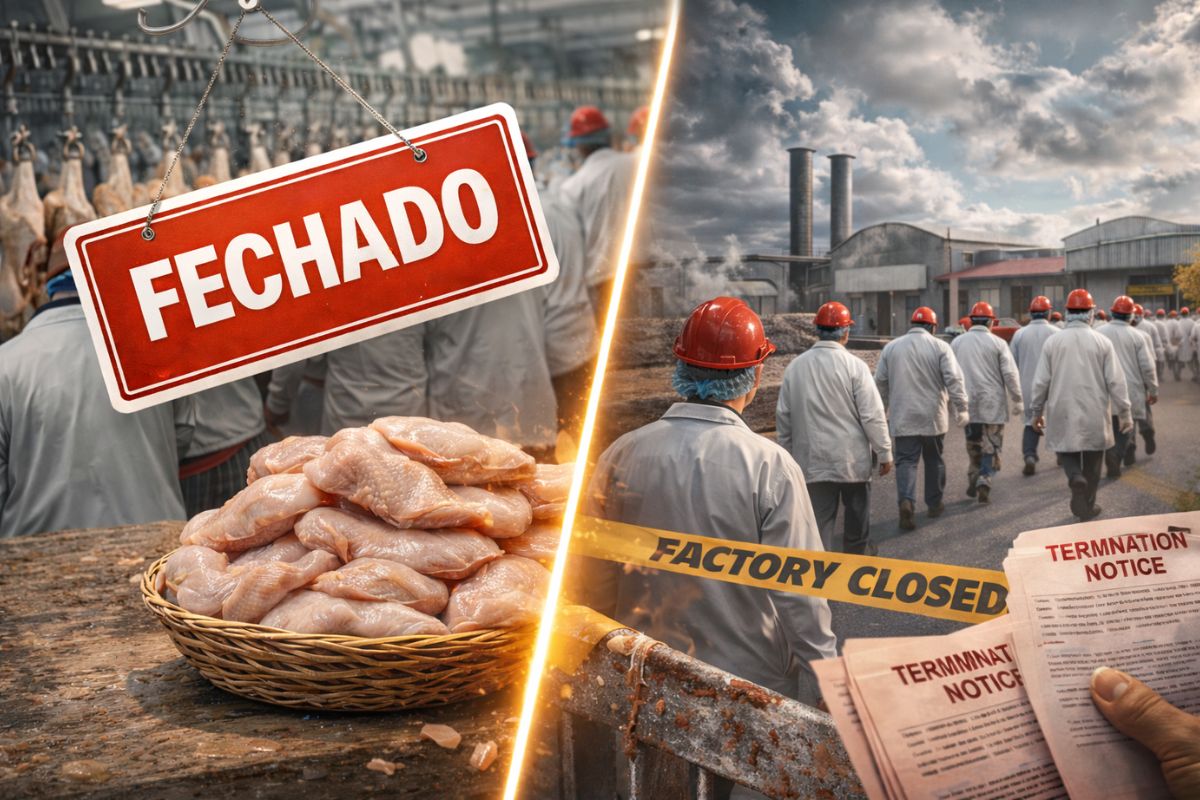
The largest chicken processor in the world, Tyson Foods, announced the closure of the plant in Rome, Georgia, with 168 layoffs just two months after cutting 3,200 jobs by closing the Lexington slaughterhouse in Nebraska, in a sequence that exposes the loss of contracts and the crisis in the meat sector.
Tyson Foods, the largest chicken processor in the United States and one of the largest protein companies in the world, announced on March 26 that it will close another plant, this time in Rome, Georgia. The facility, operated by the subsidiary The Hillshire Brands Company, will cease operations on May 31 with the layoff of 168 employees. According to the company, the loss of contracts motivated the closure. The decision was communicated to the city mayor and the Georgia Department of Labor.
What makes this announcement particularly concerning is that it is not isolated. Just two months earlier, in January, the largest chicken processor in the U.S. had closed its slaughterhouse in Lexington, Nebraska, cutting about 3,200 jobs at once. According to the portal ndmais, the sequence of closures in such a short time indicates that Tyson Foods is undergoing a restructuring that goes beyond a one-time adjustment; it is a reorganization that affects entire communities and reveals structural problems in the American meat sector.
What is behind the series of closures by the largest chicken processor

Tyson Foods justified the closure of the Rome plant with the loss of contracts, a straightforward explanation that points to a concrete business problem.
-
‘Theory of the Madman’ is the strategy that explains why Trump threatened to end Iran and hours later offered a two-week truce as if nothing had happened.

-
Oil secures a larger drop, exports advance in March, and Brazil ends the month with a surplus of $6.4 billion despite the strong rise in imports.

-
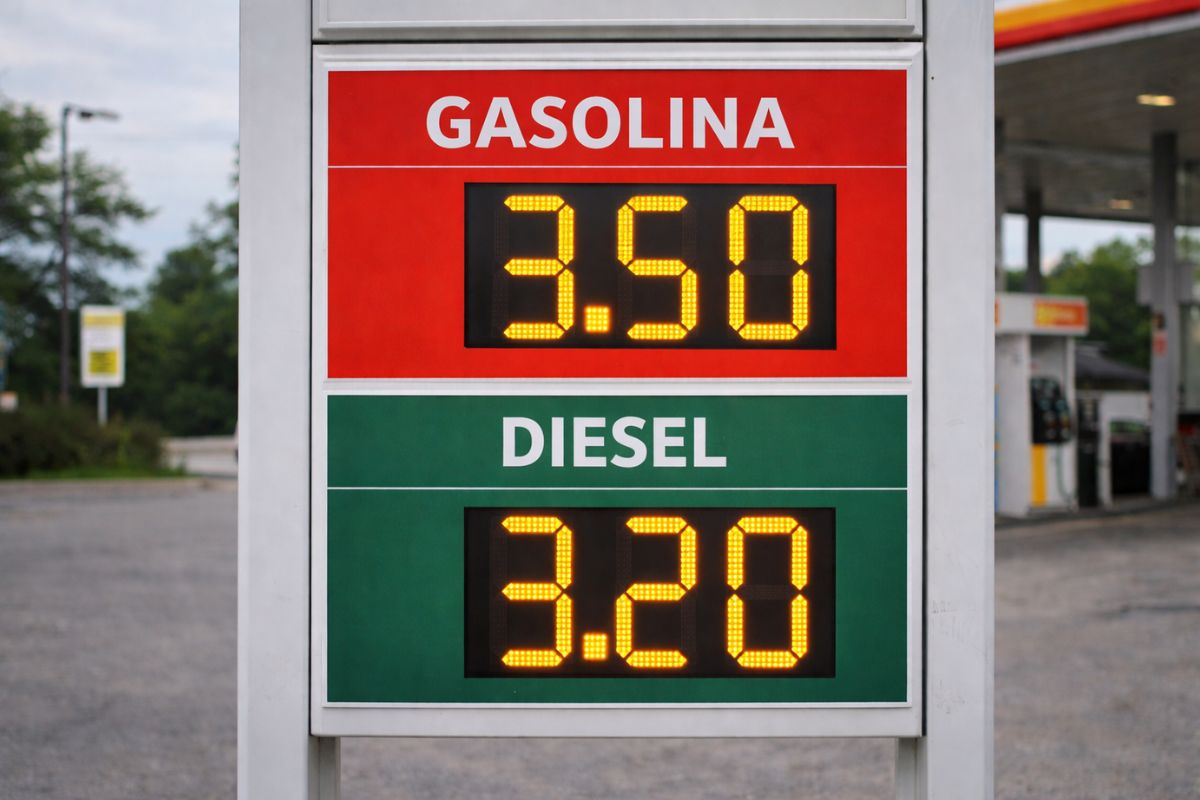
New fuel prices were announced following government intervention, and the price of gasoline surprised those who expected a significant drop in the amount charged at Brazilian gas stations.
-
Global trade hit a record and surpassed $35 trillion in 2025, but one-third of the growth came from a single sector that did not exist on a large scale five years ago, and the countries that profited the most were not the United States or China, but Taiwan, South Korea, and Southeast Asia, which have become the heart of the AI revolution supply chain.

When the largest chicken processor in the country loses contracts to the point of closing plants, it signals that demand is changing or that competitors are offering prices that Tyson cannot match.
In an industry where margins are already historically tight, losing a large customer can make an entire facility unviable.
The closure of the Lexington slaughterhouse in November 2025 had another stated motivation: the crisis in beef. That facility, in operation since 1990, processed beef at a time when the American herd shrank and raw material costs rose.
The largest chicken processor in the world does not only operate with poultry; Tyson Foods operates in multiple proteins, and the crisis in beef has contaminated the operation as a whole, forcing drastic decisions that affect both the chicken and beef lines.
The impact of layoffs on communities that depend on the largest chicken processor
For the towns where the plants close, the impact is devastating. In Lexington, Nebraska, 3,200 jobs disappeared in January in a small town where the Tyson plant was one of the largest employers.
In Rome, Georgia, the 168 employees who will lose their jobs by May represent entire families who depended on those wages to pay bills, rent, and food.
The largest chicken processor in the U.S. reported that there will be no possibility of relocation for the employees in Rome, regardless of whether they are unionized or not.
The WARN Act, the American federal law that regulates mass layoffs, requires notification at least 60 days in advance, which Tyson claims to have complied with. But for those receiving the news that they will lose their jobs in two months, the legal timeframe is little consolation. The company stated it hopes to complete the closure “with the least disruption possible for employees, their families, and the community.”
What the closures reveal about the crisis in the American meat sector
The sequence of closures by the largest chicken processor in the country does not happen in a vacuum. The American meat sector faces a combination of pressures that have accumulated in recent years: declining cattle herds, rising feed costs, consumers migrating to cheaper alternatives, and increasingly fierce international competition.
For companies like Tyson Foods, which operates on a massive scale, any fluctuation in the balance between production costs and selling prices can turn a profitable plant into an operational loss.
The largest chicken processor in the world was founded in 1935 and built an empire that encompasses chicken, beef, pork, and prepared foods.
But the size that was once an advantage may now be a vulnerability: maintaining dozens of plants spread across the United States requires a constant volume of contracts, and when those contracts disappear, the bigness turns into an unsustainable fixed cost.
The series of closures suggests that Tyson is recalibrating its operation for a changed market and that the era of continuous growth in the American meat sector may be reaching a turning point.
What do you think about the crisis affecting the largest chicken processor in the U.S.? Could this affect meat prices in Brazil? Leave your opinion in the comments.








Seja o primeiro a reagir!