





 Portuguese
  English
  Spanish
  5 min of reading
  0 comments


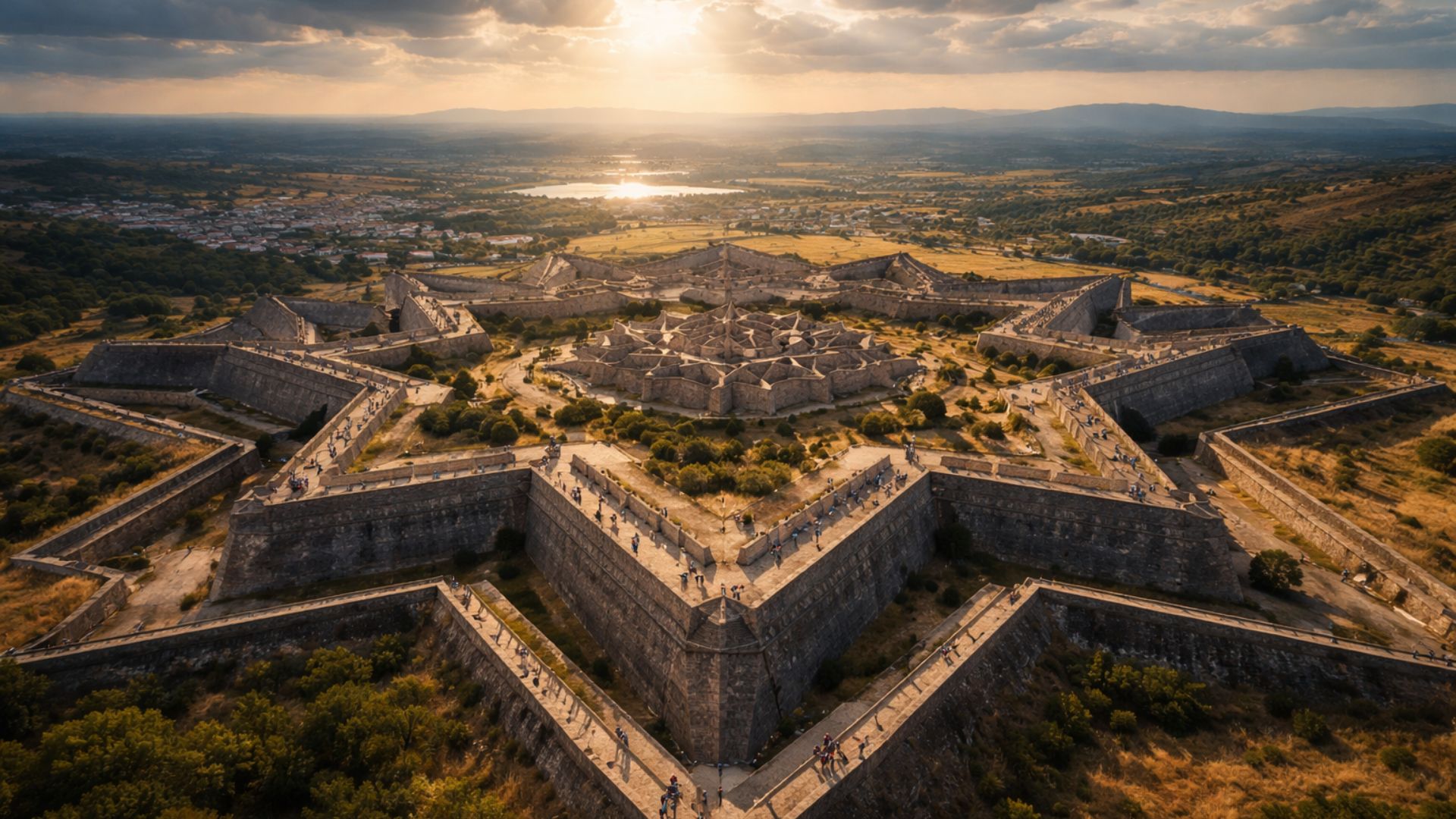
Monumental military structure on the European border reveals advanced engineering, a city shaped by centuries of war, an integrated defensive system with forts and an aqueduct, and international recognition that places Elvas among the greatest fortified heritage sites in the world.
On the border between Portugal and Spain, Elvas has established itself as one of the most important military landscapes in Europe.
The Alentejo city, located northeast of Évora, features a defensive system that UNESCO classifies as the largest earthen bastioned complex in the world and the largest preserved system of dry moats, with star-shaped walls, prominent forts, and an aqueduct crucial for withstanding prolonged sieges.
International recognition came on June 30, 2012, when the complex was inscribed on the World Heritage list.
-
USS Gerald R. Ford: the floating city of $13 billion where 5,000 sailors serve 17,000 meals a day, sleep in stacked bunks, take 10-liter showers, and keep 75 fighter jets ready.

-
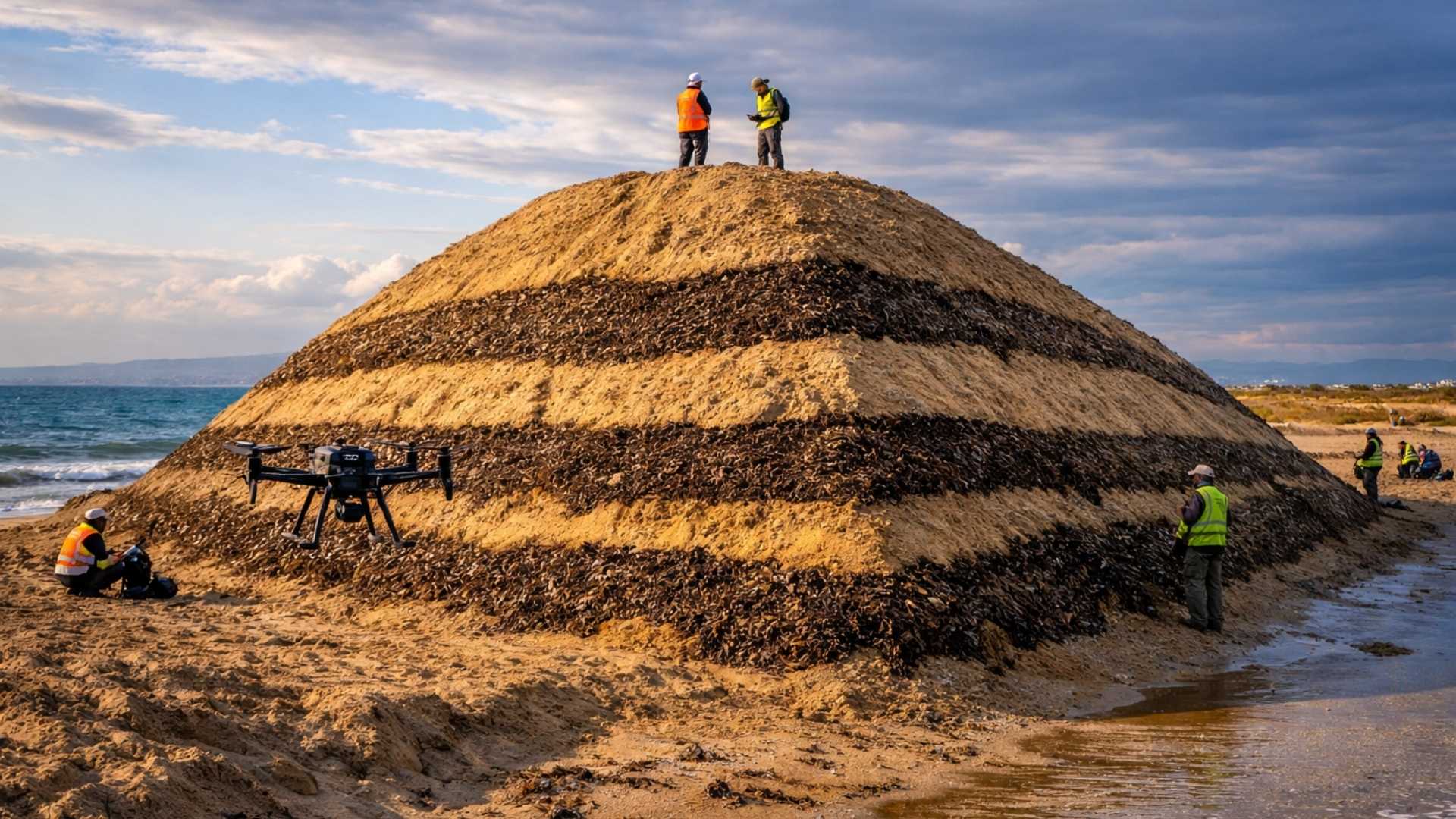
Spain surprises the world by erecting 62 artificial dunes, mixing sand with natural remains of posidonia, and causing the structure to lose only 1.4% of its volume in 1 year.
-
Meta and YouTube condemned for addiction to social media: ruling links the operation of the platforms to the worsening of anxiety and depression.

-
For just 96 dollars and with a 3D printer, an amateur created a prototype of a homemade guided missile with GPS, camera, and Wi-Fi tracking system, and this raised the debate about printed weapons to a frightening level.


Fortified system of Elvas and strategic importance
The geographical position explains the scale of this engineering.
Elvas guarded a key passage between Lisbon and Madrid and, therefore, became a central piece of Portuguese defense, especially after the Restoration of Independence in 1640.
It was in this context that the city underwent a profound transformation, with successive works between the 17th and 19th centuries to adapt the fortress square to the demands of a war increasingly marked by artillery and sophisticated siege techniques.
What we see today is the result of this evolution.

The perimeter of the system varies between eight and ten kilometers, according to Portuguese heritage bodies, and the protected area reaches about 300 hectares.
The fortified mesh is not limited to the main walls.
It articulates the historic center, military structures, covered paths, external forts, and observation points designed to exploit the local topography.
Viewed from above, the city displays the star geometry that has become its most recognized image.
Military engineering and star-shaped architecture
UNESCO highlights that the fortification of Elvas represents the best surviving example of the so-called Dutch school of fortifications.
The design was associated with the Dutch Jesuit João Piscásio Cosmander, who applied military engineering theories then circulating in Europe to the irregular relief of the city.
The result was a defense system designed to absorb artillery impacts, hinder enemy advances, and enhance visual control over the surrounding landscape.
This logic transformed Elvas into an international reference for the study of modern military architecture.

The site inscribed as World Heritage includes seven main components.
Included in this set are the historic center, the Aqueduct of Amoreira, the Fort of Santa Luzia with the covered path that connects it to the city, the Fort of Graça, and the outposts of São Mamede, São Pedro, and São Domingos, also referred to in part of the documentation as the Piety.
Beyond the scale, the value of the complex lies in the integrated reading between the city, walls, and external positions, something that allows understanding how border defense shaped the urban growth of Elvas over the centuries.
Strategic forts and territorial defense
Among the military structures, the Fort of Santa Luzia is one of the clearest examples of 17th-century Portuguese defensive architecture.
The Fort of Graça, built in the 18th century at a high point north of the city, responds to a later stage of military evolution, when the range of artillery required broader and more dominant positions.
The peripheral forts completed this design by enhancing surveillance and reducing vulnerabilities in sensitive areas of the terrain.
Together, these constructions help explain why Elvas was called the “Queen of the Border.”
Aqueduct of Amoreira and supply during sieges
If the fortification brought fame to the city, the survival of the urban core depended on another monumental element.
The Aqueduct of Amoreira, approximately seven kilometers long and with 843 arches, ensured the water supply and was pointed out by UNESCO as a key piece for the square to withstand long sieges.
The work began in the 16th century and was completed in the early 17th century.

In addition to its practical function, it became one of the strongest visual landmarks of Elvas and the Alentejo landscape itself, linking civil infrastructure and military strategy in the same structure.
Historic center, churches, and cultural heritage
Within the walls, the city preserves layers much older than the great military reform.
UNESCO documentation records traces from the 10th century and describes the historic center as the result of three successive walled cities built between the 10th and 14th centuries, later incorporated into the large fortress square of the Restoration War.
This historical accumulation appears in the castle, in sections of earlier walls, in doors, arches, and civil and religious buildings that continue to organize circulation through narrow and irregular streets.
The religious landscape also occupies a prominent place.
Official sources from Elvas compile a broad inventory of churches, convents, and buildings linked to ecclesiastical life, including the old Cathedral of Our Lady of the Assumption, the Convent of São Domingos, and other properties that span Gothic, Manueline, Renaissance, Mannerist, and Baroque periods.
Instead of competing with the military image of the city, this heritage helps to show how a war square also functioned as a space for residence, worship, administration, and sociability.
World heritage and historical tourism in Elvas
This combination of defense, supply, and urban life explains why Elvas often sparks interpretations that go beyond conventional tourism.
The title granted by UNESCO refers not only to the size of the walls or the visual impact of the star-shaped layout.
The international body values how the complex expresses changes in warfare techniques, the territorial ambitions of European states, and the adaptation of the city to these disputes.
In other words, Elvas is not just a monumental fortress: it is the material record of a border in permanent tension.
Today, with military uses replaced by visitation, Elvas functions as a large open-air urban archive.
The visitor traverses bastions, moats, forts, churches, and ancient streets without losing sight of the coherence of the whole, something rare in defensive systems of this scale. Still, the fascination of the place does not depend solely on its grandeur.
It also arises from the contrast between the strategic rigidity of the walls and the daily life that continued to develop within them, preserving an entire city shaped by war, yet legible in the present as historical heritage.






Seja o primeiro a reagir!