





 Portuguese
  English
  Spanish
  5 min of reading
  0 comments


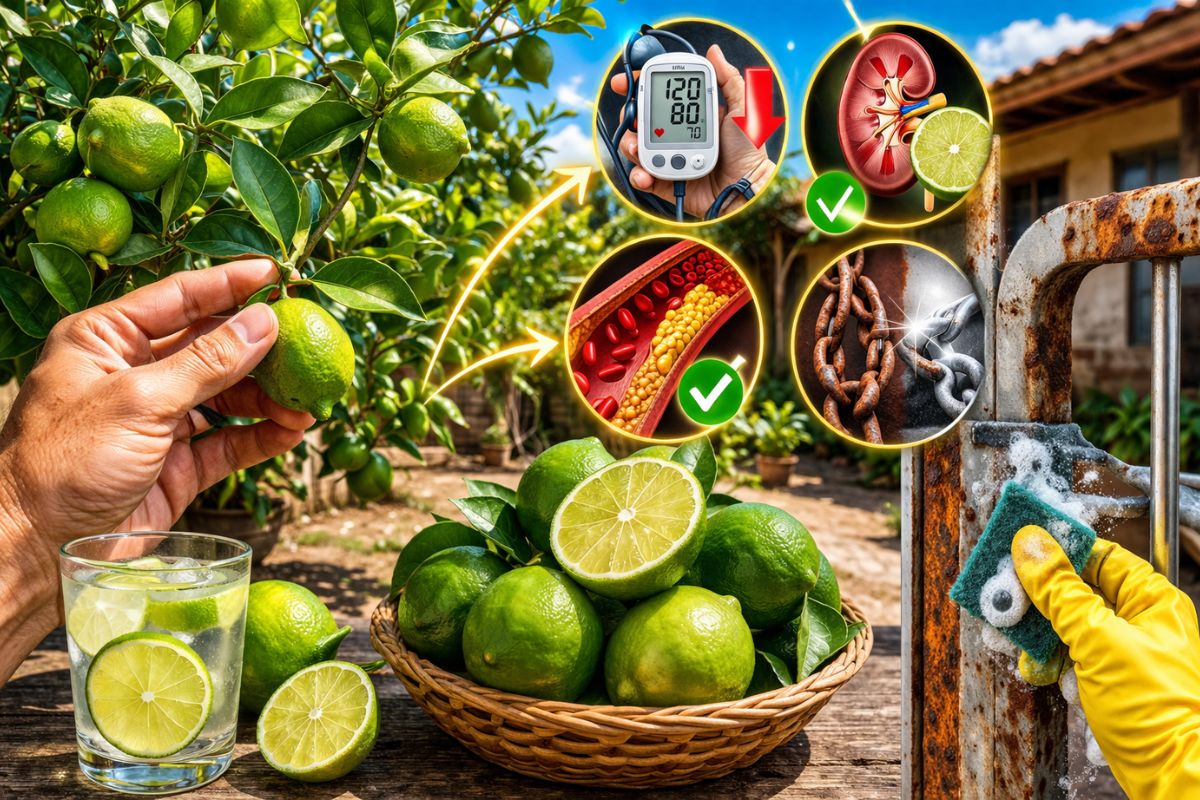
This lemon known as caipira clove or rose is a hybrid that emerged from the crossbreeding between cidra and sour tangerine in Asia and was brought to Brazil by colonizers in the 16th century and today it grows spontaneously in backyards with health benefits proven by studies from USP and research in Japan.
It grows on its own in backyards, is ignored by many people, and has so many names that each region of Brazil calls it differently. The clove lemon, also known as caipira lemon, pink lemon, galego lemon, china lemon, devil lemon, horse lemon, or vinegar lemon is probably the most underestimated citrus in the country. But this lemon that most treat as a backyard plant hides properties that range from lowering blood pressure to preventing kidney stones, controlling cholesterol, and even removing rust from tools.
The most surprising thing is that these benefits are not just folk wisdom. A study conducted at USP identified that limonene, a bioactive compound present in this lemon, helps reduce fat accumulation, cholesterol, triglycerides, and glucose in the body. Another study, conducted with 100 women in Japan, concluded that the daily intake of this lemon juice, associated with walking, was effective in reducing high blood pressure. This is not just any backyard fruit; it is a natural pharmacy that most people have within reach without knowing.
Where this lemon came from and why it grows everywhere in Brazil
The clove lemon is a hybrid believed to have emerged from the crossbreeding between cidra and a species of sour tangerine on the Asian continent.
-
Sitting on the sidewalk at the end of the afternoon: the simple habit that brought neighbors together, slowed down the routine, and reveals why social interaction was stronger before the digital age.

-
Daughter of a public servant, a young woman from MA turns her fight for the environment into a victory and secures a full scholarship at a university in the USA.

-
Psychology explains why the generation that grew up in the 60s and 70s became so tough but still struggles to ask for help even when they are drowning, and the cost of this is extremely high.

-
In the midst of one of the most arid regions on the planet, circles of up to 1 km appear in southeastern Libya as visible marks from space and reveal giant farms that pump fossil water hidden beneath the desert for thousands of years.

It was introduced to the Americas by Spanish and Portuguese colonizers in the 16th century and found in the Brazilian tropical climate the ideal conditions to spread. Today, this lemon is classified as an invasive exotic plant; it has even invaded areas of native forest because birds consume its fruits and disperse the seeds in the forest.
This ability to grow spontaneously is what makes this lemon so popular in backyards. It does not require special care, does not need constant irrigation, and produces fruits abundantly.
In professional citrus cultivation, it is used as a rootstock for other citrus species due to its extreme resistance, hence one of its popular names: horse lemon. The same resistance that makes it an “invader” from an environmental point of view is what makes it a reliable plant from an agricultural perspective.
The health benefits of this lemon that science has already proven
The clove lemon is rich in bioactive compounds, substances that the plant produces naturally as a defense against herbivores and for healing damage. The interesting thing is that these same compounds act in the human body performing therapeutic activities.
The lemon has antioxidant action that combats free radicals, preventing diseases and premature aging, and has excellent levels of vitamin C that stimulate the production of defense cells and strengthen immunity.
For kidney health, the juice of this lemon increases the excretion of citrate in urine, which inhibits the formation of kidney stones. The lemon also has hepatoprotective action, stimulates detoxification, and regenerates liver and pancreas cells.
Limonin, another compound isolated from the fruit, inhibited the growth of tumor cells in laboratory tests. And nomilin, present in the pulp, demonstrated the ability to improve bone density, potentially aiding in the prevention of osteoporosis. It is a lemon that acts on multiple fronts of health at the same time.
What this lemon does for cholesterol, high blood pressure, and metabolic control
The study conducted at USP with limonene, a bioactive compound abundant in this lemon, showed concrete results in metabolic control.
The substance helps reduce body fat accumulation, cholesterol levels, triglycerides, and glucose, in addition to assisting in the production of digestive and pancreatic enzymes. For those living with metabolic syndrome or needing to control these indicators, the juice of this lemon can be a complementary ally.
Regarding blood pressure, the evidence comes from Japan. A study with 100 women demonstrated that the daily consumption of this lemon juice, combined with regular walking, effectively reduced high blood pressure.
The result does not mean that lemon replaces medication but indicates that incorporating it into the diet, along with healthy habits, contributes to hypertension control. In addition to these benefits, the clove lemon has anti-inflammatory and antimicrobial action and improves short-term memory due to the pantothenic acid and choline present in its composition.
The practical uses of this lemon that go beyond the kitchen


In cooking, this lemon is the star. It is the lemon of classic lemonade and traditional caipirinha. Many people use it to marinate meats and fish instead of vinegar; the acidity softens the proteins, helps the seasonings penetrate the food, and reduces the strong smell of fish.
When fully ripe, this lemon is even less acidic than the Tahiti lemon sold in markets, which surprises those who have never tried it in this condition. Some people make syrup with the peel.
But the uses go beyond the kitchen. This lemon is excellent for neutralizing rust on tools and metal parts; just rub the fruit over the rusty surface, and the result lasts for months without the need to remove the residue.
In household cleaning, it works as a natural grease remover, replacing chemical products in various situations. The lemon that many people consider “weeds” in the backyard solves problems in the kitchen, health, and even in the garage.
Do you have this lemon in your backyard? What name do you know it by in your region? Tell us in the comments; the list of popular names is huge, and there’s always a new one.








Seja o primeiro a reagir!