





 Portuguese
  English
  Spanish
  6 min of reading
  1 comment



The Union Between Brahma and Antarctica in 1999 Gave Rise to Ambev, Dominating the Beer Sector and Consolidating One of the Largest Business Powerhouses in Latin America.
Merging Brahma and Antarctica: Until the late 1990s, the beer market in Brazil was dominated by two historic brands: Brahma and Antarctica. Declared rivals, with century-old legacies and fierce competition for consumers, shelves, and TV commercials, the two companies seemed destined to compete until the end of time.
But, in a surprising move, these two giants joined forces. In 1999, the merger between Brahma and Antarctica gave rise to Ambev (Companhia de Bebidas das Américas), a new company that forever transformed the beverage sector in Brazil — and later, the world.
How Did This Merger Between Brahma and Antarctica Happen? Why did two of the industry’s biggest rivals decide to unite? And how did Ambev become one of the largest empires of modern Brazilian capitalism?
-
He started running at 66 years old, broke records at 82, and is now a subject of study for having a metabolic age comparable to that of a 20-year-old, in a case that is intriguing scientists and inspiring the world.

-
Oldest tree on the planet reappears after 130 years of searches: Wattieza, 385 million years old, was 10 meters tall and had no leaves or seeds; Gilboa fossils in New York solved the mystery in 2007.

-
A 48-square-meter house assembled in hours with 4,000 bricks made of recycled plastic that does not absorb moisture, has natural thermal insulation, and costs less than 90,000 reais in a complete kit.

-
Luciano Hang revealed that Havan’s air fleet has already accumulated more than 20,000 landings, 10,000 flight hours, and 6 million kilometers traveled, and he says that without the planes, the company would never have grown so quickly.


This article will help you understand the origin of this historical transformation, the behind-the-scenes of the merger, the characters behind the deal, and how the new company conquered global markets, forever marking Brazil’s name in the history of the sector.
The Rival Giants: Brahma and Antarctica Before the Merger


The Brahma Brewery was founded in 1888 in Rio de Janeiro by Joseph Villiger, a Swiss immigrant. Over time, it became a symbol of Rio’s bohemian culture and quality beer. During the 20th century, Brahma established itself as one of the most consumed brands in the country, famous for iconic campaigns like the “Ih, opened!” and for popular slogans.
Meanwhile, the Antarctica Paulista Company emerged shortly after, in 1885, in São Paulo, focusing on non-alcoholic beverages and soft drinks. The company soon began producing beer and aggressively expanded, becoming a direct rival of Brahma in the following years.
For decades, the two engaged in a silent — and sometimes overt — war for the national market. They competed for awards, events, artists, distributors, and consumers. Advertisements in the 80s and 90s represented this rivalry well: the dispute was about who sold more, who was more traditional, more Brazilian, more popular.
By the late 1990s, Brahma controlled about 30% of the national beer market, while Antarctica had 26%. The market was becoming increasingly competitive, with threats coming from abroad, especially from Interbrew and Heineken, which were beginning to take their first steps in Brazil.
It was in this context that the idea of an unlikely — and strategic — union emerged.
The Long-Term Vision and the Behind-the-Scenes of the Union
The main architect of the merger was Jorge Paulo Lemann, the Brazilian billionaire who had already acquired control of Brahma in 1989, alongside his partners Carlos Alberto Sicupira and Marcel Telles, through the investment firm GP Investimentos.
With aggressive, meritocratic, and results-oriented management, the trio implemented a silent revolution at Brahma: they cut costs, professionalized operations, and began using clear targets to measure performance. The company’s profits soared — and drew market attention.
The group had a clear vision: Brazil needed a company strong enough to compete with international giants. The rivalry with Antarctica consumed resources and hindered external growth. The solution? Join forces.

The negotiation was long, discreet, and filled with challenges. Antarctica was still controlled by a more traditional group, linked to the São Paulo business elite. Convincing the partners that the merger was the best option was not an easy task. But the economic argument prevailed: together, they would have 56% of the national beer market and could aim high in the international market.
In July 1999, the merger was officially announced. Ambev — Companhia de Bebidas das Américas was born.
The Birth of Ambev: A New Brazilian Empire Is Born
Ambev was born from the union of the industrial, logistical, administrative, and commercial operations of Brahma and Antarctica. It was the largest merger ever recorded in the beverage sector in Brazil up to that point.
At first, the name sounded strange. Many consumers did not understand what Ambev was, where its brands were, and if the beers would change. But internally, the company grew at an impressive speed.
With a gigantic structure, the new company began operating with over 90 factories, 30 distribution centers, and a presence in 16 countries in Latin America. It was the largest brewery in South America — and one of the largest in the world.
The management of Ambev was marked from the start by the philosophy of extreme efficiency, borrowed from models like GE and McKinsey, but with a Brazilian accent. Employees were evaluated based on rigid targets, the internal culture valued those who delivered results, and operational costs were cut to the limit.
At the same time, the company invested heavily in marketing and innovation. It maintained the brands Brahma and Antarctica in the market, with their own identities, but under the same umbrella. It launched new products, optimized distribution, and increased profit margins.
The market responded with enthusiasm. Ambev’s shares quickly appreciated. The company became a symbol of the new Brazilian capitalism: bold, aggressive, international.
The International Expansion: From Brazilian Company to the Largest in the World
With the success of the merger in Brazil, Ambev decided to take an even bigger step: conquer the international market.
In 2004, the company made a historic leap by merging with the Belgian Interbrew, owner of brands like Stella Artois and Beck’s. The merger created InBev, at the time the largest brewery in the world by volume of production.
The trio Lemann, Sicupira, and Telles began to control, through strategic holdings, a significant share of the new global company. But it was still not the end of the line.
In 2008, InBev acquired Anheuser-Busch, the American giant that owns Budweiser, for US$ 52 billion — one of the largest acquisitions in beverage sector history. From this union, AB InBev was born, a global conglomerate that today controls about 25% of all beer production in the world.
Ambev, which started as a merger between two Brazilian companies, became the South American subsidiary of the largest brewery on the planet. An impressive journey that transformed business vision in Brazil and influenced global capitalism.
And What Happened to the Brands Brahma and Antarctica?
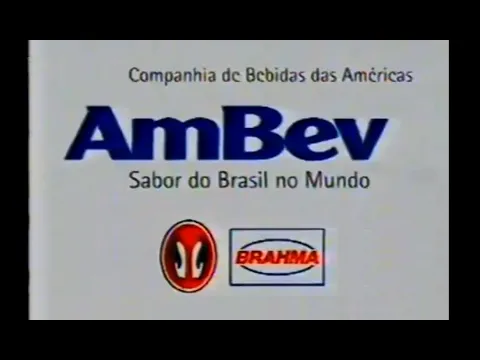
Unlike other mergers where a brand disappears, Ambev decided to keep the brands Brahma and Antarctica active, with distinct identities.
Brahma began to be seen as a symbol of Brazilian identity, tradition, and authenticity, focusing on a more popular audience. It received investments in grand campaigns, such as sponsorship of the Brazilian National Team, and remained among the best-selling beers in the country.
Antarctica, in turn, was repositioned as the “beer of the people”, with a focus on regions like the North and Northeast and a strong presence during Rio’s carnival. It also retained iconic products like Guaraná Antarctica, which continues to be the market leader among Brazilian soft drinks.
Other brands emerged within the group: Skol, Bohemia, Becks, Budweiser, Corona, Original, and many others became part of the company’s portfolio.
In other words, Ambev did not erase the brands that originated it — on the contrary, it used their strength to build an empire with a diversified and segmented portfolio.
The Merger That Changed Brazil — and the World
The merger between Brahma and Antarctica was not just a business move. It was a landmark in the history of Brazilian capitalism, a turning point that showed how national companies could think big, compete globally, and redefine entire sectors.
The creation of Ambev led to one of the largest breweries on the planet, paved the way for international acquisitions, transformed the way Brazilians think about management, meritocracy, and corporate culture — and inspired hundreds of other companies.
Today, Ambev is much more than Brahma and Antarctica. It is synonymous with operational efficiency, beverage innovation, and international presence. And it all started with an unlikely decision: to unite two historic rivals to build something greater than either could do alone.
The story of Ambev proves that, in the business world, sometimes it’s necessary to set rivalries aside to transform the market — and make history.








Muito bacana