





 Portuguese
  English
  Spanish
  5 min of reading
  0 comments


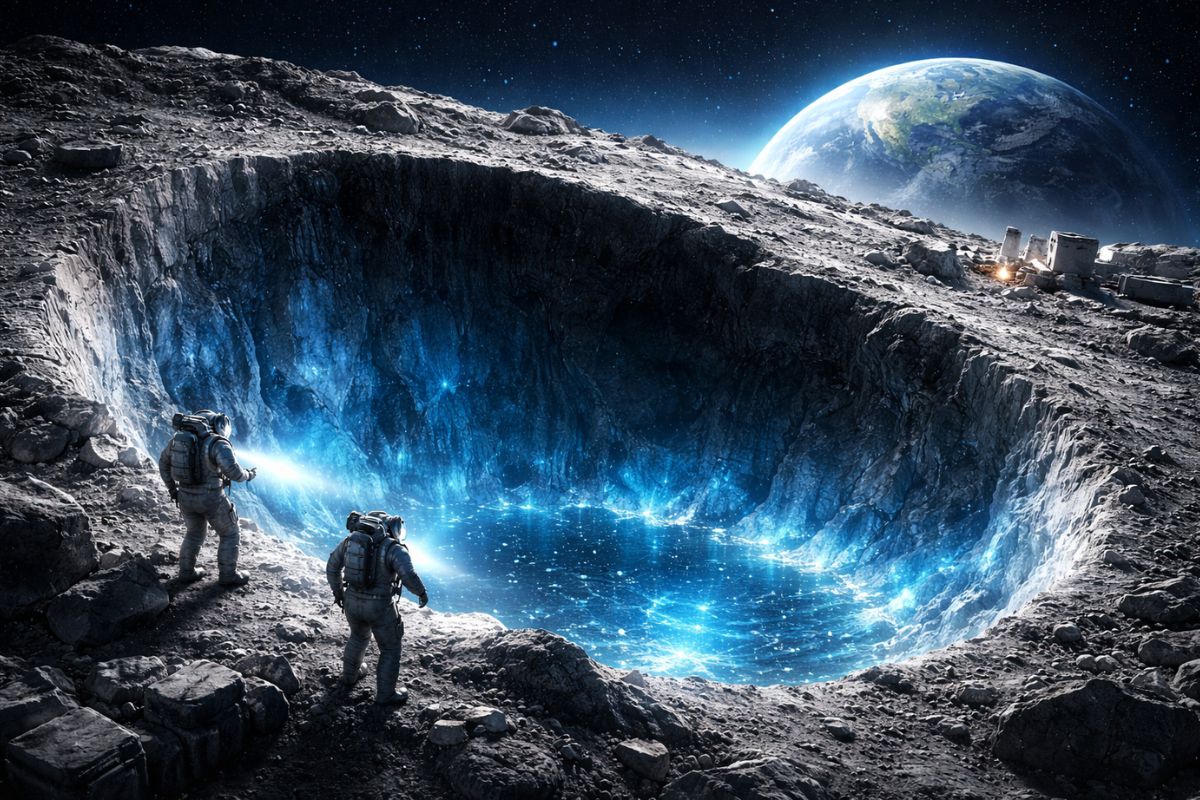
The study reveals that the Moon’s ice did not arrive at once from a comet impact but accumulated slowly over up to 3.5 billion years in craters that never received sunlight and are now priority targets for crewed missions like Artemis that could use this water as a strategic resource.
One of the greatest mysteries about the Moon has just received an answer. An international study published this Tuesday (7) in the journal Nature Astronomy reveals that the frozen water found in lunar craters did not originate from a single event like the impact of a large comet, but has been accumulating slowly over up to 3.5 billion years. The oldest craters on the Moon, especially near the south pole, are precisely those that concentrate the most ice, indicating a continuous process of water deposition over time. This discovery helps explain why the ice is not evenly distributed across the lunar surface, a question that has intrigued scientists for decades.
The implication goes far beyond geology. The frozen water on the Moon can be melted for human consumption, converted into oxygen for breathing, and transformed into rocket fuel using hydrogen and oxygen, enabling longer and cheaper missions. Knowing where this ice is concentrated and how it formed is strategic information for programs like NASA’s Artemis, which plans to send astronauts to the Moon’s south pole in the coming years. The study transforms dark craters of scientific mystery into concrete targets for exploration.
How scientists discovered that the Moon’s ice is billions of years old

To investigate the irregular distribution of ice on the Moon’s surface, researchers crossed two sets of data.
-
Pirita, the “fool’s gold,” deceived prospectors for centuries and today helps science uncover the origin of Earth’s magma.
-
The largest volcanic event in Earth’s history may have changed everything beneath the Pacific: a study shows that eruptions 110 to 120 million years ago reshaped the oceanic plate of the Ontong Java Plateau, the largest oceanic plateau on the planet.
-
The world’s largest acid geyser awakens in Yellowstone and reaches record heights after years of dormancy.
-
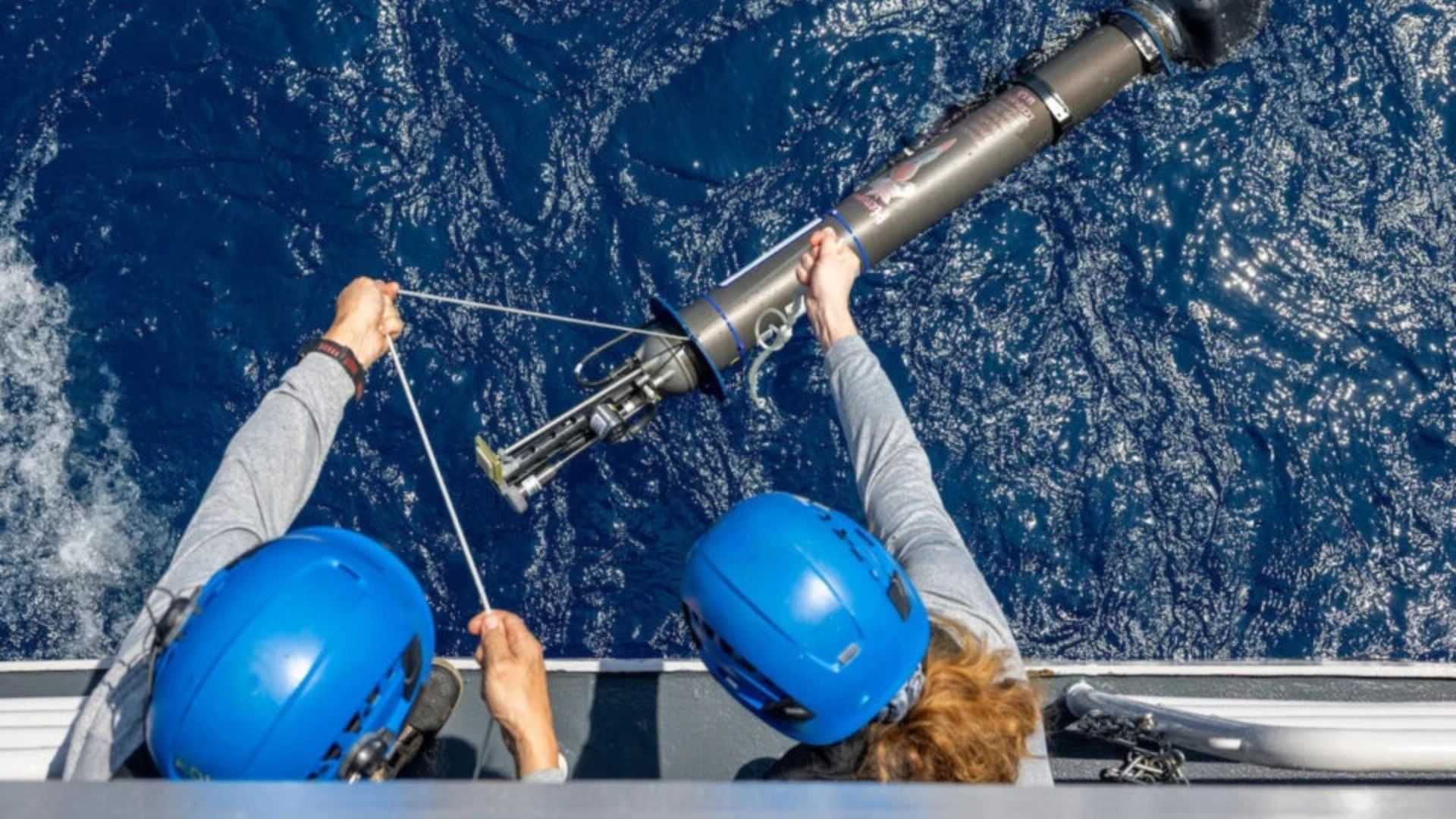
Tiny robots reveal the hidden chemistry of the depths and uncover secrets of low-oxygen dead zones in the ocean.
The first came from instruments on the Lunar Reconnaissance Orbiter, launched in 2009, which mapped surface temperatures with unprecedented accuracy. The second was generated by computational simulations of crater evolution throughout the Moon’s history, reconstructing which regions have been in permanent shadow and for how long.
The result revealed a clear pattern. The older a crater is and the longer it has remained in shadow, the more likely it is to concentrate ice.
“It seems that the oldest craters on the Moon also have the most ice. This suggests that water has been accumulating continuously for up to 3 or 3.5 billion years,” stated Paul Hayne, a planetary scientist at the University of Colorado. This conclusion weakens the hypothesis that all the water arrived on the Moon at once.
Where did the water that is frozen on the Moon come from
Although the study does not identify a single origin, it suggests that the Moon’s water may have multiple sources that contributed over billions of years. Ancient volcanic activity may have released water from the Moon’s interior to the surface. Impacts from comets and asteroids rich in ice brought water from outside.
And solar wind—a constant flow of particles from the Sun—may have provided hydrogen atoms that, when reacting with oxygen present on the surface, formed water molecules.
The combination of these sources explains why the Moon’s water is not concentrated in a single point, but spread across various craters with different intensities.
The decisive factor is not where the water came from, but where it ended up, and the “cold traps” near the Moon’s poles—deep craters that never receive sunlight and maintain extremely low temperatures—are the natural reservoirs that preserved this ice for billions of years. The permanent darkness that makes these craters invisible is exactly what protected the water.
Why are the south pole craters of the Moon so important for future missions
The Moon’s south pole concentrates the oldest and deepest craters of the satellite and, according to the study, those that hold the most ice.
The Haworth crater, for example, may have been in permanent shadow for over 3 billion years, making it one of the most promising candidates for storing large amounts of ice on the Moon. It is precisely this region that programs like Artemis plan to explore.
Frozen water transforms the Moon’s south pole from a point of scientific interest into a strategic resource for space exploration. Melted, it provides drinking water.
Decomposed by electrolysis, it generates breathable oxygen and hydrogen that can be used as rocket fuel. This means that a lunar base at the south pole could produce its own supplies instead of transporting everything from Earth, reducing costs and enabling long-duration missions that are currently prohibitively expensive.
What is still left to discover about the Moon’s water
Despite the progress, researchers emphasize that the definitive answer about the origin and exact amount of water on the Moon still depends on direct analyses. “This question will only be resolved with the study of samples,” stated the lead author, Oded Aharonson, from the Weizmann Institute in Israel.
So far, everything science knows about lunar ice comes from orbital measurements and models—no sample has been directly collected from a permanently shadowed crater.
New instruments are already being developed to change this. One of them, expected to be sent to the Moon’s south pole starting in 2027, should map more precisely where the ice is concentrated and in what quantity.
The definitive confirmation may come when scientists manage to collect or bring back to Earth samples from these craters that have remained in darkness for billions of years. The Moon has held water since before the existence of any complex life forms on Earth, and now humanity is just a few years away from finally going to retrieve it.
Did you know that the Moon has frozen water for billions of years? Do you think this could enable permanent lunar bases?






Seja o primeiro a reagir!