





 Portuguese
  English
  Spanish
 5 min of reading
  8 comments


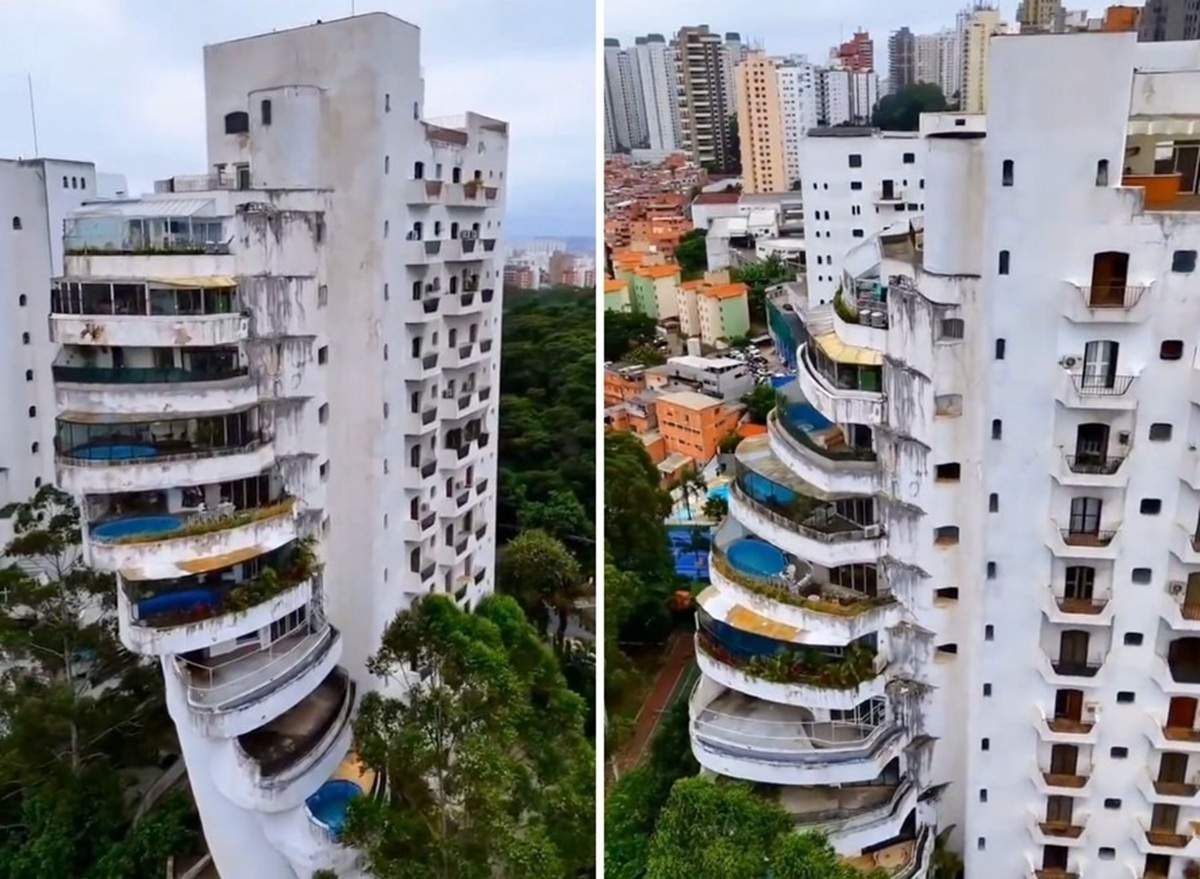


Built in 1979 in Morumbi, the Penthouse promised absolute luxury with 400 sq m apartments and pools on the balconies, but today symbolizes decadence and inequality next to Paraisópolis.
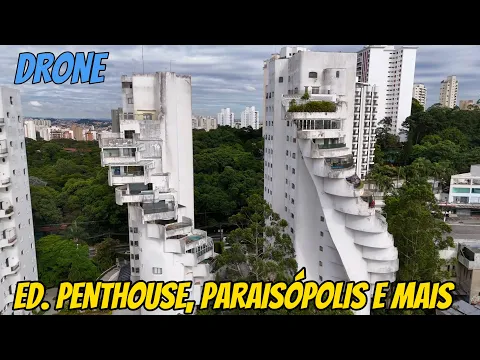
Located in Morumbi, the Penthouse building became an icon in school books, news reports, and even soap operas, precisely for embodying one of the greatest urban contrasts in Brazil: the encounter between luxury and poverty, side by side, separated only by a wall.
Inaugurated in 1979 to be the address of São Paulo’s elite, the building has gone through decades carrying a stigma: from a symbol of ostentation, it transformed into a living example of the decline of luxury real estate and, at the same time, a showcase of social inequality in the capital city.
The Conception of an Architectural Icon
In the 1980s, the Penthouse was launched as a reference of modernity.
-
These living root bridges and ladders are over 700 years old and help indigenous people survive in one of the rainiest regions in the world.

-
From sertanejo star to international investor: Ana Castela invests millions in a mansion in the USA, creates a themed accommodation in Orlando, and shows that the “boiadeira” also wants to grow away from the stage.

-
The 10 most stunning motorhomes in the world: a $3 million trailer with a rooftop nightclub and garage for a Ferrari, “palaces on wheels” with Italian marble, private cinema, and five-star hotel luxury for billionaires.
-
Trump wanted to spend $400 million on the White House, but the courts prohibited the million-dollar construction.


With only 13 apartments, each nearly 400 sq m, the project stood out for unusual elements for the time: balconies with private pools, arranged at angles that ensured sunlight throughout the entire day, 80 sq m suites with marble bathtubs, and spacious living rooms to host guests.
Advertisements described it as a masterpiece of modern architecture.

Its imposing nature soon drew attention, and the building became a highlight in school geography books, used as an example of unequal urbanization.
Around it, however, the landscape was changing quickly: Paraisópolis grew as a neighboring community, further amplifying the contrast.
The Contrast with Paraisópolis
At the inauguration, the surroundings of the building were marked by green areas and agricultural sites. Paraisópolis, at that time, was just a small rural nucleus.
In the following decades, however, the community transformed into one of the largest favelas in the city, now housing around 100,000 people.
The photo from 2002 that circulated in reports and educational materials solidified the image: on one side, private pools on the balconies; on the other, simple brick houses. The urban dividing line was merely a wall.
Residents of the Penthouse report that the arrival of the favela in the surroundings brought impacts: loud music at parties, a sense of insecurity, and a significant drop in market value of the apartments.

The Penthouse on Television
The popularity of the building wasn’t limited to the pages of books. In 1995, the building gained national prominence by being used as an external set for the soap opera “The Next Victim”, by Silvio de Abreu, one of the biggest hits of TV Globo in the 1990s.
In the plot, the Penthouse represented the home of the “Beautiful One from Morumbi“, character Helena, played by Natália do Vale. The interior was filmed in a studio, but the external image of the building reinforced its aura of exclusivity.
The success of the soap opera, which averaged 47 points in the Ibope ratings, amplified the fame of the building and solidified it as the aspirational address for São Paulo’s elite.
The new opening of the soap opera “Vale Tudo”, which premieres on TV Globo, highlights the Penthouse building as a symbol of Brazil’s socioeconomic inequality, contrasting with the neighboring community of Paraisópolis.


The Beginning of Decadence
The turn of the century brought new chapters for the Penthouse. What was once a status symbol began to accumulate debts and maintenance problems.
Delinquency among residents grew, the condominium management failed, and signs of wear began to multiply: leaks, cracks, dirty pools, vegetation overtaking balconies, and deteriorated common areas.
Only eight of the 13 apartments remain occupied, with a total of 18 residents. In contrast to the luxurious halls and suites, tall grass and stained paint reveal abandonment.
In the past, each apartment was valued at nearly R$ 1 million. Today, there have been cases of sales for R$ 500,000 and even auctions with no bidders, even with prices below R$ 450,000.
Million-Dollar Debts and Legal Proceedings
A large part of the decadence is linked to financial problems.
- Delinquency: six of the thirteen units have debts exceeding R$ 1.5 million in overdue property taxes, in addition to over R$ 500,000 in overdue condominium bills.
- Legal Proceedings: in the 1990s, the administration faced dozens of lawsuits against delinquent residents. One businessman accumulated more than R$ 400,000 in debts, generating over 50 lawsuits. Another apartment reached R$ 600,000 in debts, and the resident was investigated during the Lava Jato operation.
The result is a snowball effect: with fewer compliant residents, the condominium fees increased, further deterring potential buyers and making it harder for those who paid on time to remain.

The Devaluation of Properties
Despite the large living rooms, suites with marble bathtubs, and winter gardens, the properties lost value. A report from Domingo Espetacular showed that some apartments were even advertised for just R$ 1,500 in rent.
However, the condominium cost, above R$ 5,000, combined with property tax debts of R$ 600,000, deterred any interested parties.
The mismatch between the internal luxury and external abandonment highlights the difficulties of maintaining an exclusive enterprise amid management issues and delinquency.
The Penthouse exemplifies the effects of poor administration in luxury condominiums. Among the main reported problems are:
- Lack of Financial Resources: without regular payment of fees, the condominium cannot afford basic maintenance.
- Inadequate Maintenance: leaks, structural failures, and deteriorated common areas are direct consequences.
- Devaluation of Units: the image of decay drives prices down and attracts fewer buyers.
- Legal Problems: chronic delinquency generates long and costly lawsuits, further burdening the administration.
- Affected Quality of Life: residents deal with broken elevators, unused pools, and common areas in poor condition.
These combined factors transformed a building designed to be a symbol of exclusivity into a portrait of the failure of collective management.
The Present and the Future
Despite the difficulties, the manager — one of the oldest residents — argues that there is no decadence, but rather many vacant units.
According to her, hiring a professional manager helped improve the financial situation, and there are plans to revitalize the lobby, facade, and common areas.
The atmosphere among the few residents is one of tranquility: with only 18 people living there, the building operates in silence, almost empty.
Meanwhile, next door, Paraisópolis continues to grow, with residents organized in search of infrastructure, dignified housing, and integration with the rest of the cityofe.
A Portrait of Inequality
The Penthouse Building has completed over four decades as a landmark of São Paulo’s contradictions.
Planned as a symbol of wealth, it became an example of urban inequality. On one side, private pools, luxurious suites, and winter gardens; on the other, a community that struggles daily for asphalt, sanitation, and dignity.
The image that adorned books, reports, and soap operas remains current: the meeting of two worlds, separated only by a wall, yet united by the same landscape.








A solução é comprar todos os imóveis da Paraisopolis fronteiriças, até 100 metros da avenida.
Custa caro e difícil, o custo deve englobar os três edifícios, proporcional.
Depois, limpar tudo e transformar em parque, com muitas árvores 🌳.
Com certeza a valorização virá.
As dívidas, negociadas.
Vamos taxar os mais ricos, o slogan da esquerda, a decadência de um país vem de cima e vem descendo, o começa de ditaduras, só quem tem dinheiro são os que alinham com os políticos de onde é o único lugar que sai dinheiro o resto passa fome
Que viagem na maionese! Falou nada com nada!
Deve ser um rico falido
Ou um que não aguentou pagar as despesas do luxo. Deu o fora e deixou dividas impagáveis.
Ou um pobre de direita metido a ****.kkkk
Enfim, o estado é prefeitura deviam numa parceria transformar este elefante em aptos populares ou derrubar os muros e emendar com a comunidade de Paraisopolis.
Porque jamais pagaram estas dívidas.
Isto só aconteceu
porque tem rico fake, come pelanca e arrota caviar.
O que o IRF para os ricos tem haver. Nem existia qdo construíram este elefante.
O Brasil tá cheio de pobre defendendo rico, a falta de estudo e conciencia de classe é muito grande.
Quanta **** em um só comentário.
Calma Pobre, quando fala de taxar rico é quem ganha 100k por mês em dividendos, quem mora no Morumbi é só um classe média Premium.
Bebeu metanol?