





 Portuguese
  English
  Spanish
  4 min of reading
  0 comments


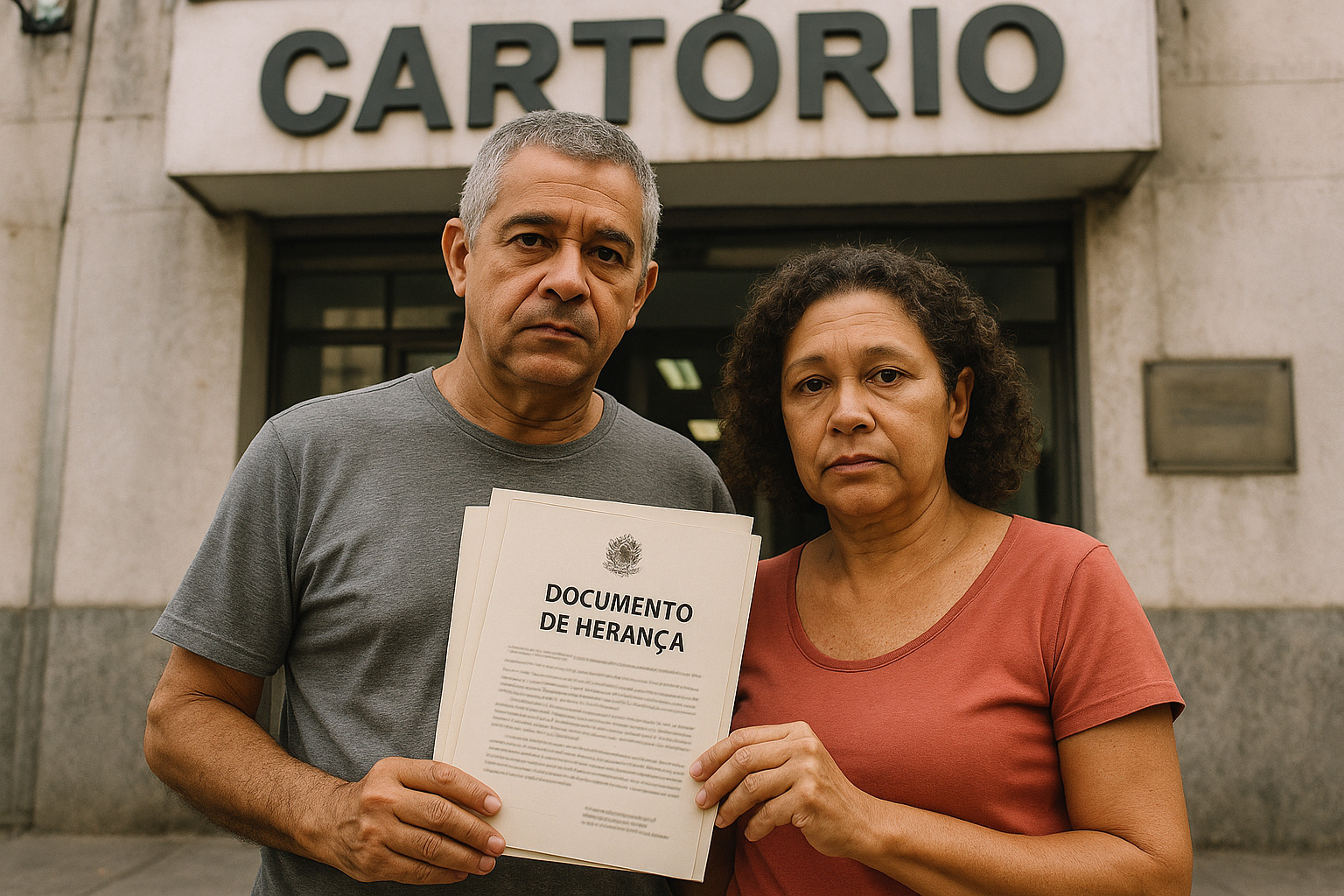
Proposal under discussion in the Senate changes family rules, reduces inheritance rights, and raises intense debates about asset protection, modern relationships, and legal security in the country
The debate about the new Civil Code in Brazil gained momentum after the proposal was presented by Senator Rodrigo Pacheco (PSD-MG), bringing profound changes that could directly impact millions of couples across the country. Among the most controversial points are the creation of the so-called “express divorce” and the possibility of losing inheritance rights for spouses and partners, which has generated intense discussions among legal experts and specialists.
The information was disclosed by “Gazeta do Povo”, according to a public hearing held this Thursday (26), which brought together specialists to discuss changes in family law and inheritance. The meeting highlighted relevant concerns about the social and legal impact of the proposed changes.
Changes in inheritance may reduce rights of spouses in Brazil
First of all, one of the most significant changes in the proposal involves the order of preference in inheritance. Currently, spouses and partners share assets with children in certain situations. However, with the new proposal, they would be downgraded to third place, falling behind children and parents.
-
Banco do Brasil sues famous influencer for million-dollar debt and intensifies debate on delinquency, risks of seizure, and direct impact on Gkay’s credibility.

-
The Senate approves a bill that criminalizes misogyny, hatred, or aversion towards women, and includes the crime in the Racism Law with a penalty of up to 5 years.

-
Chamber Approves Bill That Allows Pepper Spray for Women Over 16 and Imposes Strict Rules for Purchase, Possession, and Use as Self-Defense

-
Chamber Approves Law to Combat Leucaena, Fast-Growing Plant That Dominates Land and Threatens Native Species in Various Regions of the Country


In practice, this means that in a marriage under the separation of assets regime, if one partner dies without leaving a will, the entire inheritance could be exclusively allocated to the children — leaving the surviving spouse with no participation.
Moreover, the proposal also suggests removing the status of necessary heirs from spouses and partners. Thus, if there are no living children or parents, the deceased could allocate 100% of the estate to third parties through a will, without the obligation to reserve the current minimum of 50% for the surviving partner.
Another relevant point is the unprecedented possibility of early renunciation of inheritance. That is, upon entering into marriage or stable union, the couple could sign a prenuptial or cohabitation agreement waiving their inheritance rights in advance — something that is currently not allowed by existing legislation.
“Express divorce” could accelerate separations and change relationship dynamics
In addition to the property changes, the proposal also brings a significant transformation in the process of dissolving marriages. The so-called “express divorce” would allow one of the spouses to request separation extrajudicially, without the need for the other’s consent.
Moreover, the text even provides for the dissolution of the marital partnership without formalities, requiring only the separation of bodies. This flexibility, according to proponents of the proposal, aligns with the evolution of modern relationships, making processes faster and less bureaucratic.
However, despite the possible advantages, experts warn of significant risks. Lawyer Regina Beatriz Tavares da Silva, with 45 years of experience in family law and president of ADFAS, harshly criticized the measure, arguing that the speed could harm especially women who are financially dependent on their partners.
According to her, situations such as the immediate loss of benefits — like health insurance — could occur without sufficient time for personal and financial reorganization. Still, Regina acknowledges that men can also be affected, especially when the initiative comes from the woman.
Experts disagree on the impact on women and modern families
On the other hand, some see positive points in the proposal. Lawyer Ana Luiza Maia Nevares, academic director of IBDFAM/RJ, highlighted that the project brings important advances, such as the provision for compensation for domestic and family care — a role historically performed by women.
However, she also warns that this measure could lead to an increase in litigation, as it will be necessary to discuss values and prove contributions within the family dynamic.
Furthermore, Nevares argues that the exclusion of women from inheritance should be done with caution. For her, the ideal would be to allow early renunciation but ensure that, in the absence of this formal decision, the spouse remains a necessary heir — avoiding unpleasant surprises after death.
Meanwhile, lawyer and professor Mário Luiz Delgado, who holds a doctorate from USP and is one of the authors of the text, argues that the changes reflect the new social reality. According to him, the traditional model of marriage — lasting and indissoluble — no longer represents the majority of cases.
Indeed, the so-called “blended families” have become increasingly common, with people who already have children from previous relationships. In this context, Delgado argues that it would not be fair for a new partner to have priority in inheritance simply for being in the relationship at the time of death, even if for a short time.
Critics point to the risk of “social experiments” in family law
Despite the justifications, the proposal also faces strong resistance. Some legal experts believe that the changes represent a departure from the traditional values of Brazilian society.
Andrea Hoffman, executive president of the Isabel Institute, argued that the Senate should preserve the foundations of the family as the basis of society. According to her, it is essential to maintain special protection for the so-called “natural family.”
In the same vein, Professor Giordano Bruno Soares Roberto from UFMG criticized the proposal, classifying it as a series of “social experiments.” He advocates for the shelving of the project, arguing that it is necessary to preserve legal achievements consolidated over generations.
Finally, the general rapporteur of the committee of jurists, Flávio Tartuce, emphasized that the facilitation of divorce could be an important tool, especially for women in abusive relationships, offering a quicker and safer exit.









Seja o primeiro a reagir!