





 Portuguese
  English
  Spanish
  5 min of reading
  0 comments


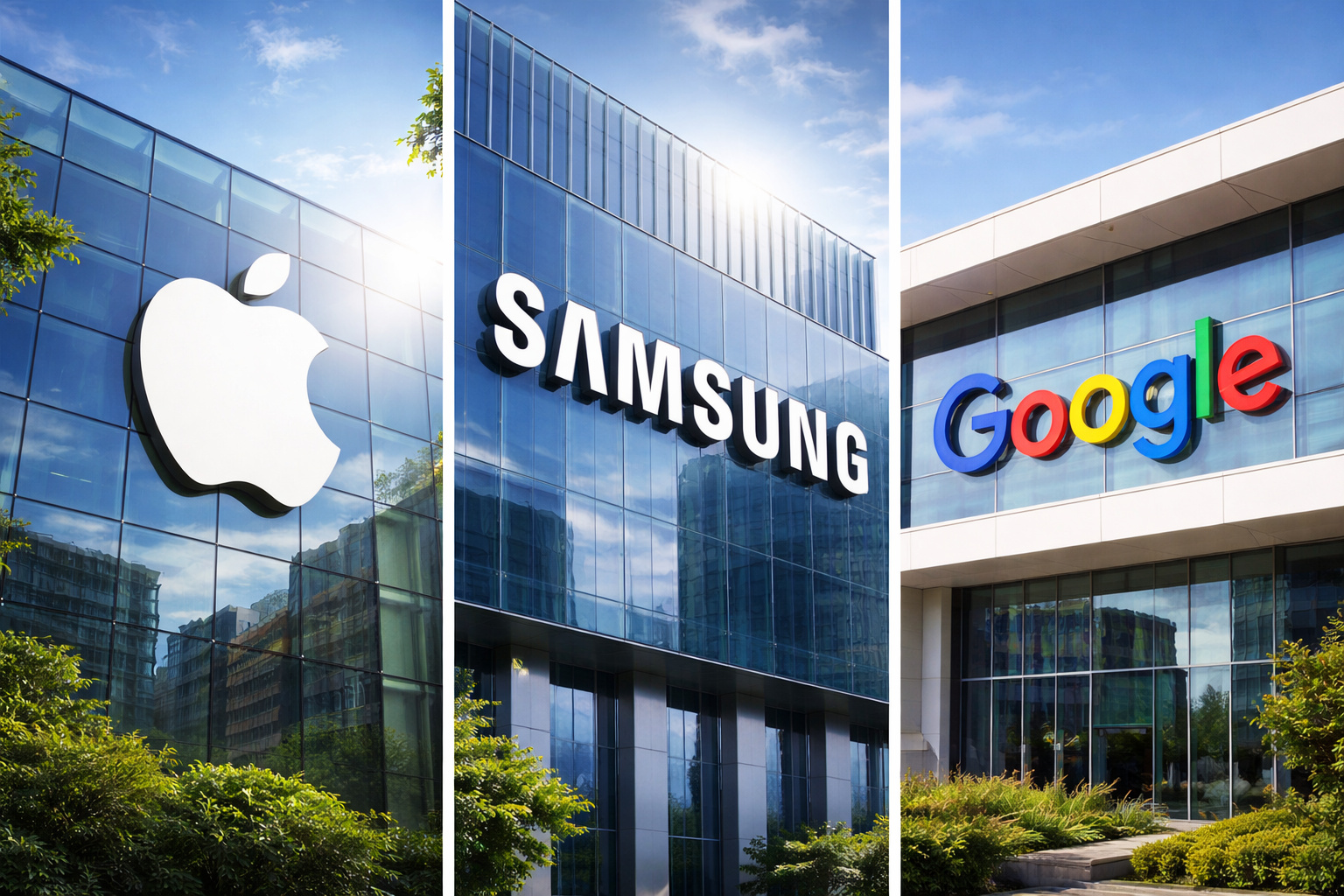
Apple, Samsung, and Google advance in the integration of artificial intelligence in cell phones and appliances, changing the role of devices in daily life.
In 2025, the leading technology companies in the world, such as Apple, Samsung Electronics, and Google, began to adopt a new strategy that redefines the role of electronic devices in everyday life. Instead of just launching new hardware, these companies started to integrate generative and contextual artificial intelligence directly into the operating systems of cell phones, watches, and connected appliances. According to official announcements made at global events such as Galaxy Unpacked and WWDC, as well as statements published by the companies themselves, AI has ceased to be a secondary resource and has become central to the user experience.
The most impactful data from this transformation is that devices are no longer solely dependent on applications and are beginning to perform tasks autonomously, interpreting context, behavior, and user intent in real time. This change marks the beginning of a new phase in consumer technology, where software anticipates actions instead of merely reacting to commands. This movement is occurring simultaneously across different product categories, indicating that it is not an isolated trend but a structural reorganization of the industry.
Artificial intelligence ceases to be an isolated function and begins to command the system
Historically, artificial intelligence in devices was limited to specific functions, such as voice assistants or simple usage-based suggestions. Starting in 2025, this logic began to change. Companies like Samsung and Google started to integrate AI directly into the operating system, allowing it to operate transversally across all functions of the device.
-
For the first time in over 50 years, a human has photographed the entire Earth from deep space on the way to the Moon, and the image captured by Commander Reid Wiseman is already being called historic by NASA.

-
Under the island of Mauritius, in the middle of the Indian Ocean, scientists found fragments of continental crust that are up to 3 billion years old, remnants of a sunken microcontinent that was once connected to Madagascar and India.

-
Sonar and geological mappings revealed, 1,000 km from Portugal, an underwater system of 500 km that rivals the Grand Canyon, with deep canyons and valleys sculpted on the Atlantic floor, formed 37 million years ago when tectonic plates tore the ocean like a “zipper” during the separation between Africa and Europe.

-
Solution for plastics: understand how the cockroach emerges as an ally against pollution and drives innovative sustainability pathways with real benefits for the environment.


This integration allows the system to interpret data from different sources simultaneously, such as messages, location, images, and usage habits, creating a broader understanding of the user’s context. As a result, AI ceases to be a point tool and begins to operate as a central processing layer, influencing nearly all interactions.
Smartphones evolve into contextual assistants
In smartphones, this transformation is particularly evident. Recent models have begun to incorporate systems capable of understanding not only direct commands but also the context in which the user is situated.
This allows the device to perform complex tasks, such as organizing information, responding to messages, summarizing content, and even suggesting actions before they are requested. The difference from previous generations lies in the ability to interpret multiple inputs simultaneously, including text, voice, and image, significantly expanding the potential for use.
This evolution reduces the need for manual navigation between applications, simplifying interaction with the device.
Apple bets on deep integration with the ecosystem
Apple introduced its approach to artificial intelligence focused on integration between devices and data privacy. With the so-called Apple Intelligence, the company has enabled iPhones, iPads, and Macs to share information more efficiently, creating a seamless experience across different devices.
This integration allows tasks initiated on one device to be completed on another without interruptions, with AI acting as an intermediary. Additionally, Apple has emphasized the use of local processing whenever possible, reducing reliance on external servers.
Samsung expands the use of AI beyond smartphones
Samsung has adopted a broader strategy, bringing artificial intelligence not only to smartphones but also to appliances and home devices. Refrigerators, washing machines, vacuum cleaners, and climate control systems have begun to incorporate sensors and algorithms capable of automatically adjusting their operation.
This approach transforms the connected home into a more dynamic environment, where devices interact with each other and with the user continuously. Integration with the platform SmartThings allows for centralized control and monitoring of these devices.
Google bets on AI as the foundation of the entire ecosystem
Google, for its part, has positioned artificial intelligence as the core of its ecosystem, integrating advanced models directly into Pixel devices and its services. With systems like Gemini, the company has expanded the devices’ ability to interpret natural language, analyze data, and execute complex tasks.
This approach allows the smartphone to function as a more complete personal assistant, capable of handling different types of information simultaneously. Integration with services like Gmail, Google Docs, and Maps reinforces this functionality.
Smart appliances enter the same technology race
The incorporation of artificial intelligence into appliances represents one of the most significant changes in the sector. Equipment that previously operated independently is now using data to optimize its functioning.
This includes everything from automatic adjustments in washing cycles to energy consumption monitoring and predictive maintenance. This evolution expands the role of appliances, which cease to be isolated tools and become part of a broader home automation system.
Devices begin to predict user actions
One of the most relevant aspects of this transformation is the ability of devices to anticipate actions. Based on usage patterns and contextual data, AI can suggest or execute tasks automatically. This includes everything from reminders and schedule organization to adjustments in settings and personalized recommendations. This functionality reduces the need for manual interaction and makes usage more efficient.
The change in the functioning of devices has a direct impact on user behavior. With more automated systems, interaction tends to become simpler and more intuitive. This can reduce the time spent on repetitive tasks and increase productivity, especially in work and study environments. At the same time, the reliance on intelligent systems raises new questions about control and transparency.
Technical challenges and privacy issues
Despite the advances, the large-scale integration of artificial intelligence brings important challenges. Among them are:
- Protection of personal data;
- Transparency of algorithms;
- Energy consumption;
- Need for constant updates.
The way companies handle these issues can directly influence the acceptance of technology by users. Privacy, in particular, remains one of the main points of concern.
A structural change in consumer technology
The race for the integration of artificial intelligence into everyday devices represents a profound transformation in the technology industry.
By shifting the focus from applications to systems capable of interpreting context and acting autonomously, companies like Apple, Samsung, and Google are redefining the role of devices in daily life.
This change indicates that the next phase of technology will not only be marked by advancements in hardware but by the ability of systems to understand, anticipate, and execute tasks intelligently, altering the relationship between users and devices in a structural way.









Seja o primeiro a reagir!