






 Portuguese


In Ilha Grande, on the coast of Piauí, wind-driven sand dunes encroach on urban areas, threatening homes and businesses, and have already necessitated containment works exceeding R$1 million in recent public contracts
The sand dunes of Ilha Grande, a city on the coast of Piauí, are advancing toward urban areas, threatening residences and commercial establishments. This phenomenon has already prompted public interventions at different times, including an area of 131 hectares and a contract of R$1,059,892.22 awarded in 2024.

Dunes in Ilha Grande Advance and Require Containment Measures in the City
The movement of sand is driven by wind processes and continuously alters the landscape of Ilha Grande.
However, near occupied areas, this movement poses a real problem as the sand formations advance toward homes and businesses.
-
Students Create Personalized Spiderman Prosthetic Arm for 4-Year-Old Boy Using 3D Scanning, Surprising Him with Two Additional Prosthetics for Various Activities

-
Giant Ship Nearly 200 Meters Long Docks in Itajaí with 599 Luxury Cars, Uses Ramps Instead of Cranes, Boosts Port’s 2026 Ro-Ro Operations to 17,056 Vehicles

-
Fluorescent Blue Waves Reappear on the Santa Catarina Coast as Winter Algal Bloom Turns the Ocean into a Flickering Light Show
-
Fifteen Women Overcome Challenges to Train as Colombia’s First Female Line Workers


In 2015, the then Ministry of National Integration reported that an action aimed at containing the dunes covered 131 hectares. At that time, the project had achieved 99% completion.
The technique employed involved bio covers, utilized to prevent the movement of sandy formations.
The extent of the area addressed highlights the scale of interventions needed to tackle the advance of sand near urban occupation.
The issue continued to demand subsequent actions. In October 2024, the Piauí State Secretariat for the Environment and Water Resources formalized a new contract for containment services.
The initiative encompassed Ilha Grande and Luís Correia, with a contracted amount of R$1,059,892.22 and a projected duration of 90 days. The record is mentioned in the Official State Gazette of Piauí.

City is Located Within a Protected Area of Over 307,000 Hectares
Ilha Grande is part of the Delta do Parnaíba Environmental Protection Area, a protected territory covering 307,590.51 hectares across ten municipalities in the states of Piauí, Maranhão, and Ceará.
This region comprises dunes, rivers, mangroves, beaches, and traditional communities. In this environment, the constant movement of water and sand is part of the natural dynamics of the Delta do Parnaíba.
Despite the problems caused near occupied areas, the dunes also fulfill important environmental functions.
According to the Chico Mendes Institute for Biodiversity Conservation, these formations help to block the advance of the sea, reduce the intrusion of saltwater into aquifers, and contribute to protecting nearby areas against erosion.
Thus, the same natural system that requires containment when it approaches residential areas also plays a role in environmental protection along other points of the coast.

Porto dos Tatus connects visitors to the dunes and the Delta
The landscape transformed by sand displacement is also part of the tourist routes of Ilha Grande.
Porto dos Tatus serves as the main departure point for vessels heading to various arms of the Parnaíba Delta and its five bars.
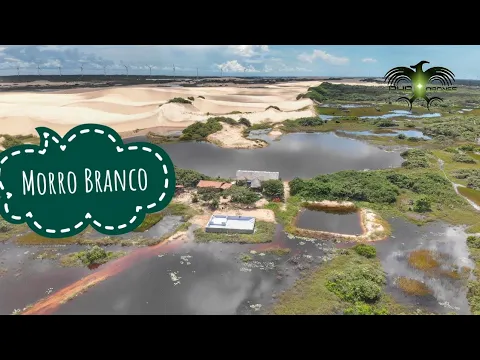
Among the points recorded by ICMBio is Caída do Morro, a section where the dunes known as Morro Branco meet the Rio dos Tatus and can be observed during boat trips and trails.
The Trail of Caída do Morro features dunes, lagoons formed after the rainy season, rivers, and forests. The route also allows for activities such as hiking and sandboarding.
Nautical tours also head to areas like the bars of Igaraçu, Canárias, Caju, Melancieiras, and Tutoia, in addition to routes through igarapés and mangroves.
Communities of fishermen, artisans, crab catchers, and shellfish collectors are also part of this territory and maintain activities directly related to the environments found in the Delta.
Access to Ilha Grande passes through the Parnaíba region
Parnaíba serves as a practical reference for those looking to reach the area. The Ministry of Tourism states that Porto dos Tatus is approximately 15 kilometers from the city.
ICMBio identifies BR-343 as one of the main roads accessing the Parnaíba region. From Ilha Grande, visitors can find larger vessels and speedboats dedicated to various routes through the Delta.
The routes vary depending on the vessel and the chosen destination. Therefore, schedules, boarding locations, and itineraries should be confirmed with licensed operators, especially since the routes pass through sensitive environments.
In Ilha Grande, then, the dunes appear in two documented dimensions: they represent both an environmental and a tourist element of the Parnaíba Delta, but their encroachment on occupied areas also necessitates public works aimed at protecting residences and commercial establishments.
This article was prepared based on information from the Ministry of National Integration, the State Department of Environment and Water Resources of Piauí, the Official Gazette of the State of Piauí, ICMBio, and the Ministry of Tourism, with data, numbers, and statements preserved as per the consulted material.


