





 Portuguese
  English
  Spanish
  5 min of reading
  0 comments


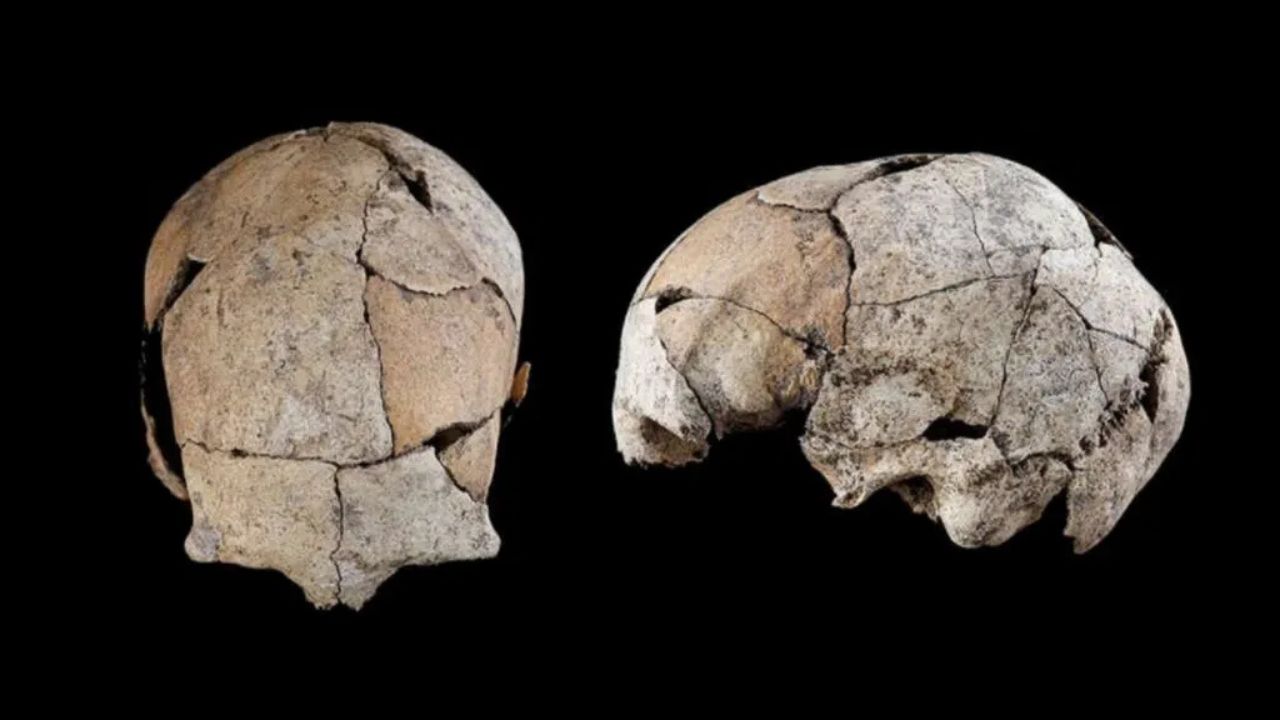
5,300-Year-Old Skull Found in Spain Reveals the Oldest Recorded Ear Surgery, with Clear Signs of Survival After Two Interventions.
In 2022, researchers described in Scientific Reports, a journal of the Nature group a human skull found at the archaeological site of El Pendón, in Reinoso, Burgos, Spain, with evidence of what the authors classified as the oldest documented otological surgical intervention. The study analyzed a specimen with two bilateral perforations in the mastoid bones, behind the ears, associated with a procedure compatible with mastoidectomy. The skull belonged to a woman who lived about 5,300 years ago, during the Neolithic, and caught the attention of scientists precisely because of the location and characteristics of these openings in the mastoid region of the temporal bone. According to the authors, the observed marks indicate an intervention performed to relieve complications related to ear infection, possibly associated with otitis media and mastoiditis.
The discovery not only identifies the oldest recorded ear surgery but also indicates that the patient survived both interventions, something exceptional for the period, as the study found clear signs of bone remodeling and regeneration at the operated sites.
Perforations Behind the Ears Indicate Mastoidectomy Performed with Precision
The detailed analysis of the skull revealed two symmetrical openings located behind each ear, exactly in the area where surgeries are currently performed to treat middle ear infections that spread to the mastoid bone.
-
All mammals on the planet were born from eggs 250 million years ago, and scientists have just found the first evidence of this hidden inside a skull smaller than a coin in South Africa.
-
Created in silence in the middle of the ocean, a Brazilian startup developed technology that predicts failures in oil platforms before they occur, and now ExxonMobil and Equinor are competing for its contracts.

-
Big techs plan US$ 635 billion in AI data centers by 2026, but the crisis in the Middle East threatens investments, and Brazil is betting on natural gas to attract megacomplexes of up to 1,500 MW in Rio de Janeiro, Rio Grande do Sul, and Paraná.

-
FPSO P-78 begins operations in the pre-salt of Búzios with 180,000 barrels/day, ROTA 3 pipeline, 13 smart wells, and CO₂ reinjection, while the field already produces 1 million barrels per day and generated R$ 81 billion in royalties in 2025.

The researchers identified that these perforations were not caused by trauma or natural processes, but rather by deliberate human intervention.

The edges of the openings exhibit typical characteristics of controlled bone scraping, indicating the use of specific tools and techniques. This type of procedure requires practical knowledge of cranial anatomy and precise control to avoid fatal damage to the brain and adjacent structures.
Signs of Healing Confirm That the Patient Survived Both Surgeries
One of the most impressive aspects of the discovery is the presence of bony healing around the two perforations. This detail is crucial as it demonstrates that the woman not only survived the first procedure but also the second.
The observed bone regeneration indicates that there was sufficient time for the body to initiate the recovery process, something that would not occur in the event of immediate death.
The evidence of survival after two cranial surgeries in such an ancient period directly challenges the idea that interventions of this type would be impossible without modern medicine.
Procedure Likely Treated Severe Infection That Could Be Fatal
Scientists believe that the surgery was performed to treat a condition known as mastoiditis, a middle ear infection that can spread to the mastoid bone.
Without treatment, this infection can evolve into severe complications, including sepsis and death. The location and shape of the perforations are consistent with the removal of infected bone tissue to relieve pressure and drain the infection.
This suggests that the procedure was not experimental but rather a deliberate attempt to treat a potentially fatal condition.
Techniques Used Indicate Advanced Empirical Knowledge
Although there were no modern surgical instruments, those responsible for the operation demonstrated significant technical mastery.
The scraping of the bone, rather than a blunt perforation, indicates a more controlled approach, reducing the risk of fractures and internal damage.
Furthermore, the symmetry of the interventions suggests that the procedure was repeated based on prior experience. This level of execution points to accumulated empirical knowledge, possibly transmitted within the community over time.
Case Challenges Traditional View of Prehistoric Medicine
For a long time, it was believed that medical practices in the Neolithic period were limited to simple and ineffective interventions.
However, discoveries like that of El Pendón show that some communities were already performing complex procedures with positive outcomes.

The ability to perform cranial surgery and ensure the patient’s survival indicates a level of organization and knowledge much more advanced. This type of evidence compels a reevaluation of how ancient medicine is understood.
Comparison with Other Ancient Surgeries Reinforces the Exceptional Nature of the Find
Although there are records of trepanation in different regions of the world, most of these cases involve perforations at the top of the skull.
The Spanish case stands out for specifically involving the mastoid region, associated with the auditory system. Additionally, the presence of two successful interventions on the same individual makes the find even rarer. This places the discovery in a unique position within the history of ancient surgery.
Researchers suggest that the procedure was performed with polished stone tools, common in the Neolithic period.
Despite the simplicity of the materials, the final result indicates extremely precise use. The absence of irregular fractures and the presence of relatively smooth surfaces reinforce this hypothesis.
The controlled execution with rudimentary tools demonstrates that technological limitations did not prevent sophisticated results.
Survival Indicates Post-Operative Care and Social Support
The recovery of the patient after two cranial surgeries suggests that there was some form of post-operative care. This may include wound protection, assisted feeding, and monitoring of the overall condition. Additionally, survival indicates that the patient was not abandoned after the procedure.
This aspect reveals not only technical advancement but also social organization and collective care within the community.

The identification of the oldest recorded ear surgery contributes to expanding knowledge about the evolution of medical practices.
It demonstrates that the search for solutions to complex diseases existed thousands of years ago. Furthermore, it shows that medical innovation is not exclusive to recent periods but rather the result of a continuous process throughout history.
This type of discovery reinforces that modern medicine is built on a much older foundation than is commonly believed.
To What Extent Does Medical Knowledge That Already Existed Thousands of Years Ago Extend?
The case of El Pendón raises an important question: how many other advanced medical practices may have existed in the past and have yet to be discovered? The limitation of written records and reliance on archaeological evidence make it difficult to fully reconstruct this knowledge.
However, each new discovery suggests that the level of technical sophistication of ancient societies may have been much greater than traditional views allow us to see.
In light of this, an inevitable debate arises: to what extent did prehistoric medicine already master techniques that we now consider modern, but which simply have been lost over time?








Seja o primeiro a reagir!