





 Portuguese
  English
  Spanish
  5 min of reading
  0 comments


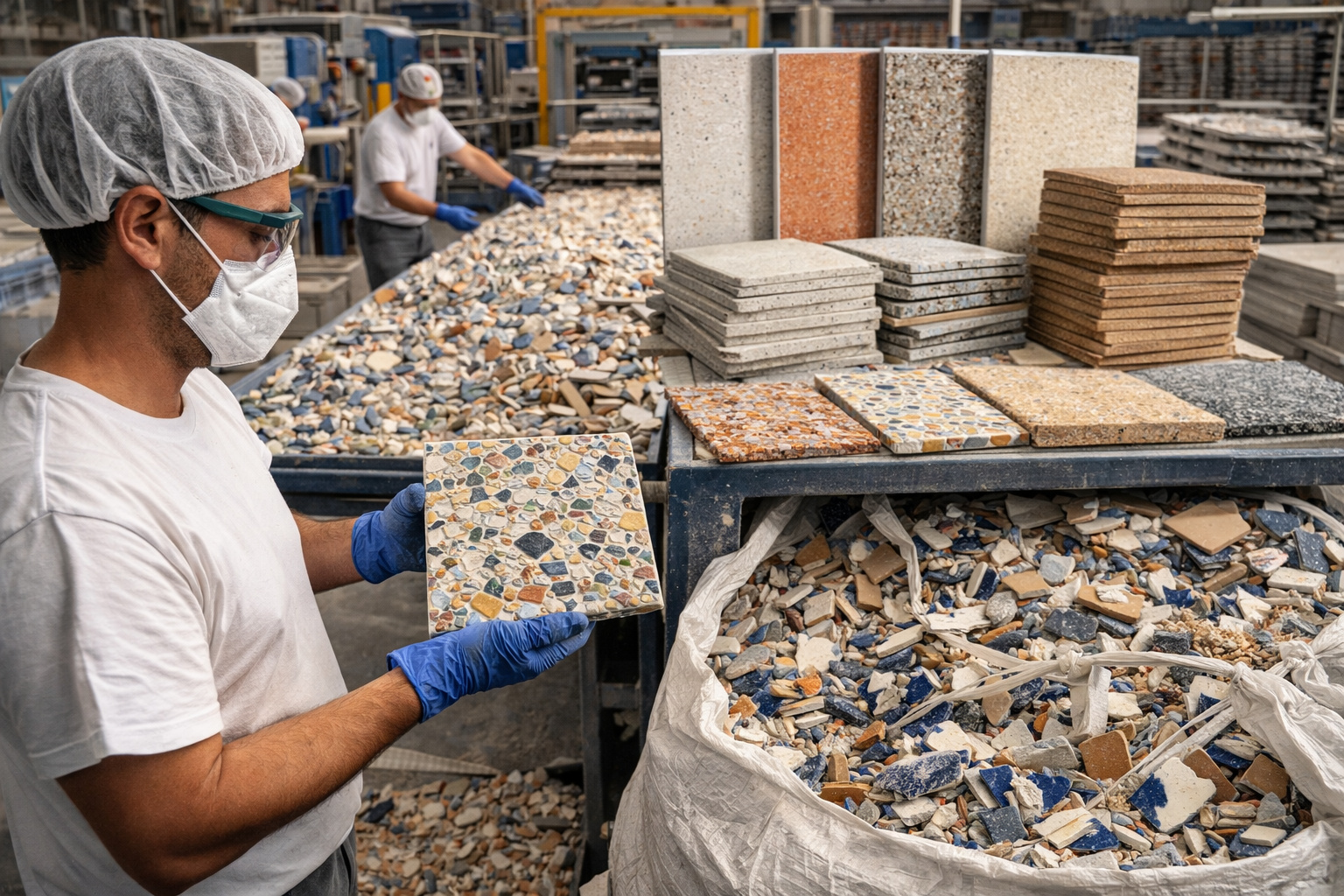
Company in Portugal transforms ceramic waste into new coatings with up to 94% recycled material and drastically reduces the use of virgin raw material.
In 2024, the Portuguese company Costa Nova Indústria, through the Ecogres project, achieved a significant milestone by producing over 1,400 tons of ceramic materials using primarily repurposed industrial waste. The initiative, which gained prominence in programs linked to the European Union and received mention in awards associated with European funds, demonstrates a concrete change in how the ceramic industry handles its own waste.
The most striking data is the composition of the material: the developed products can contain up to 94% recycled material, with only 6% virgin raw material being used for technical adjustments in production. This balance allows for maintaining industrial quality while significantly reducing the need for extracting new natural resources.
The Ecogres proposal is based on a straightforward principle: to transform waste generated within the factory itself into reusable raw material, closing a cycle that traditionally ended in disposal.
-
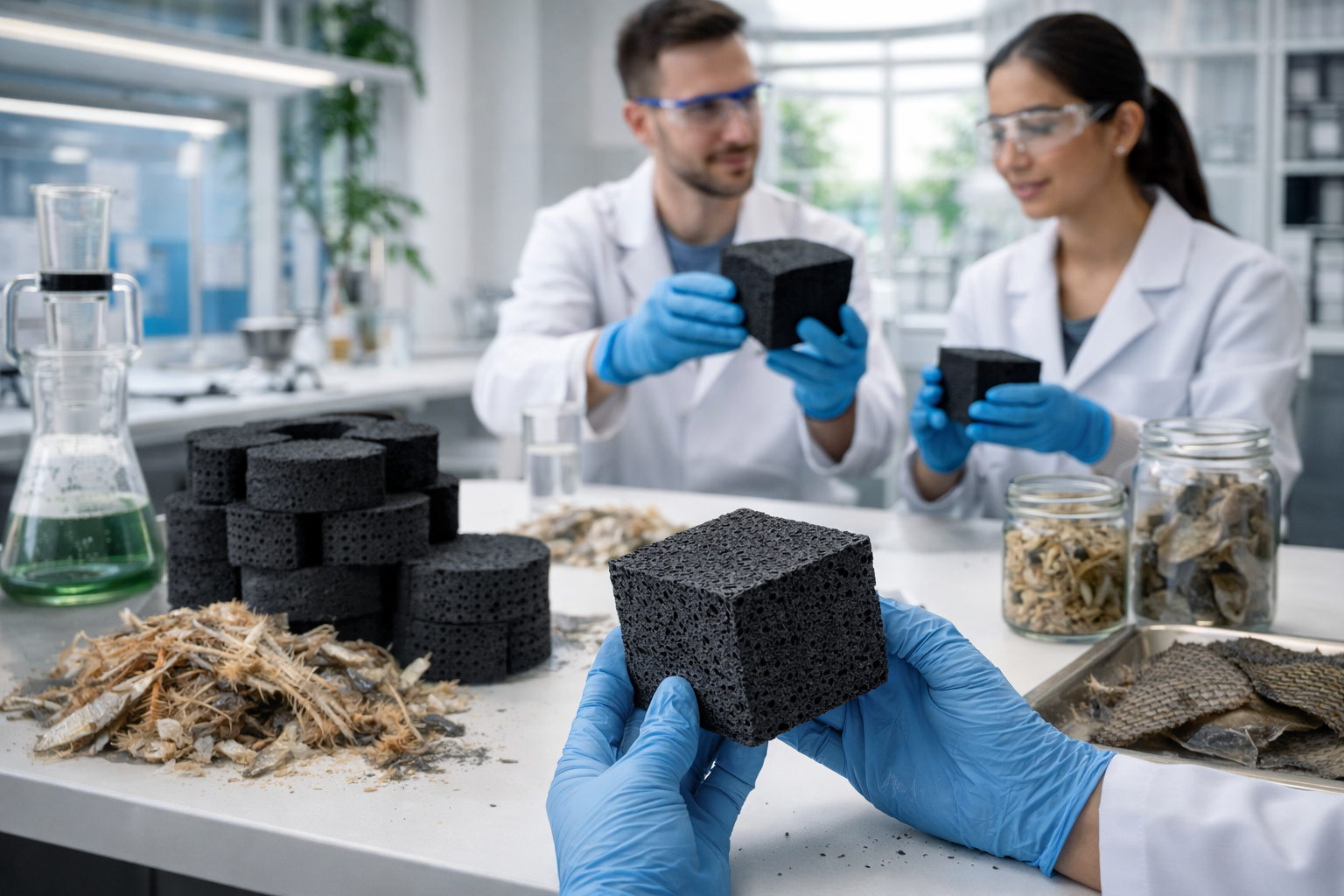
Researchers transform fish waste into ultralight material capable of capturing CO₂, technology reuses fishing waste and can help reduce pollution in the construction industry.
-
South America will have its fastest train in history: a billion-dollar project with Chinese capital will connect two capitals in two hours and create 20,000 jobs.

-
Naval reform transforms 40-year-old sailboat purchased for $5,000 into a residential yacht: structural repair of hull/keels, Awlgrip painting, engine replacement with Beta Marine, autopilot, sealing of chain plates, and complete interior retrofit for $25,479.

-
Firjan proposes to ANTT the acceleration of works on BR-101 in Northern Fluminense to improve logistics, urban mobility, and regional competitiveness.

Waste used does not come from construction sites, but from the ceramic industry itself
An essential point to understand the project is the origin of the recycled material. Contrary to what might seem at first glance, it is not construction debris collected from works or houses. The waste used mainly consists of broken tiles during production, pieces that did not pass quality control, and leftovers generated in the industrial process.
These materials already have controlled composition and are technically known, which facilitates repurposing. Instead of being discarded, they are reintegrated into the production process. This detail is important because it ensures standardization and quality, which is essential for any material used in construction.
Process transforms discarded pieces into new ready-to-use raw material
The repurposing does not happen directly. The waste goes through an industrial process that involves well-defined stages to ensure that the final material maintains adequate performance. First, the ceramic fragments are crushed until they become fine particles. Then, this material is mixed again with the ceramic mass used in the manufacture of new products.
During the process, adjustments are made to the composition to ensure stability, strength, and finish. It is at this point that the small percentage of virgin raw material comes in, responsible for balancing physical and chemical properties.
The result is a new product that maintains characteristics similar to traditional ceramics but with a much more sustainable composition.
Use of up to 94% recycled material drastically reduces clay extraction
The traditional ceramic industry heavily relies on clay extraction, a natural resource that requires mining and generates direct environmental impact. The model adopted by Ecogres significantly reduces this dependence.
By using up to 94% recycled material, the need to extract new resources is drastically diminished. This represents not only savings on raw materials but also a reduction in impacts associated with extractive activities.
This change has a direct effect on the entire production chain, reducing pressure on the environment and aligning production with increasingly demanded sustainability goals in the European market.
Reduction of industrial waste prevents disposal in landfills and increases productive efficiency
Another relevant impact of the project is in waste management. The ceramic industry generates large volumes of waste throughout the production process, especially pieces that have defects or do not meet quality standards.
Traditionally, these materials would be discarded, often sent to landfills. With the Ecogres model, this waste ceases to be a problem and becomes part of the solution. By reinserting this material into the production cycle, the company:
- Significantly reduces the volume of waste;
- Utilizes resources that have already been processed;
- Increases the efficiency of raw material use.
This type of approach represents a structural change in industrial logic.
Production maintains quality standard required by the construction market
One of the main challenges of recycled materials is maintaining technical performance. In the case of ceramics, this involves strength, durability, and proper finish. According to the data released, the products developed within the Ecogres project meet the requirements demanded by the market, allowing their application in coatings and other common uses in construction.
This is possible because the recycled material used has already undergone previous thermal processes, which contributes to its stability. Thus, the final product is not only sustainable but also functional and compatible with the sector’s requirements.
Project aligns with EU environmental goals for industry and construction
The European Union has established increasingly stringent goals for reducing waste and industrial emissions. Within this context, initiatives like Ecogres stand out for presenting practical and scalable solutions. The project is aligned with guidelines that encourage the circular economy, reduction of industrial waste, and efficient use of natural resources.
This alignment was one of the factors that led to the project’s recognition in programs and awards linked to European funds.
Construction is undergoing transformation driven by more sustainable materials
The adoption of materials with lower environmental impact is a growing trend in the construction sector. Companies and governments are seeking alternatives that reduce emissions and resource consumption.
In this scenario, ceramics with a high recycled content emerge as a viable solution, especially as they are already part of the existing production chain. The case of Ecogres shows that it is not necessary to completely replace traditional materials, but rather adapt processes to make them more efficient and sustainable.
Model can be replicated by other ceramic industries around the world
The logic applied by the Portuguese project does not depend on inaccessible technology. The repurposing of industrial waste can be implemented by other companies in the sector, as long as there is investment in process adaptation.
This means that the potential impact of this approach goes beyond a single company. If adopted on a large scale, the model can:
- Significantly reduce the volume of global ceramic industry waste;
- Decrease the need for clay extraction;
- Contribute to international environmental goals.
This possibility enhances the project’s relevance in the global scenario.
Production of 1,400 tons shows that solution has left the paper and entered practice
The volume produced in 2024 demonstrates that the project is not just in the experimental phase. The production of more than 1,400 tons indicates practical application and capacity for operation on a relevant scale.
Although it still represents a part of the total production of the industry, this number shows that the technology is already integrated into the production process and is not limited to laboratory tests. This type of advancement is essential to validate sustainable solutions within the industry.
In light of this scenario, a relevant question arises: can materials made from waste, such as repurposed tiles, become standard in construction in the coming years? Share your opinion in the comments.








Seja o primeiro a reagir!