





 Portuguese
  English
  Spanish
  5 min of reading
  0 comments


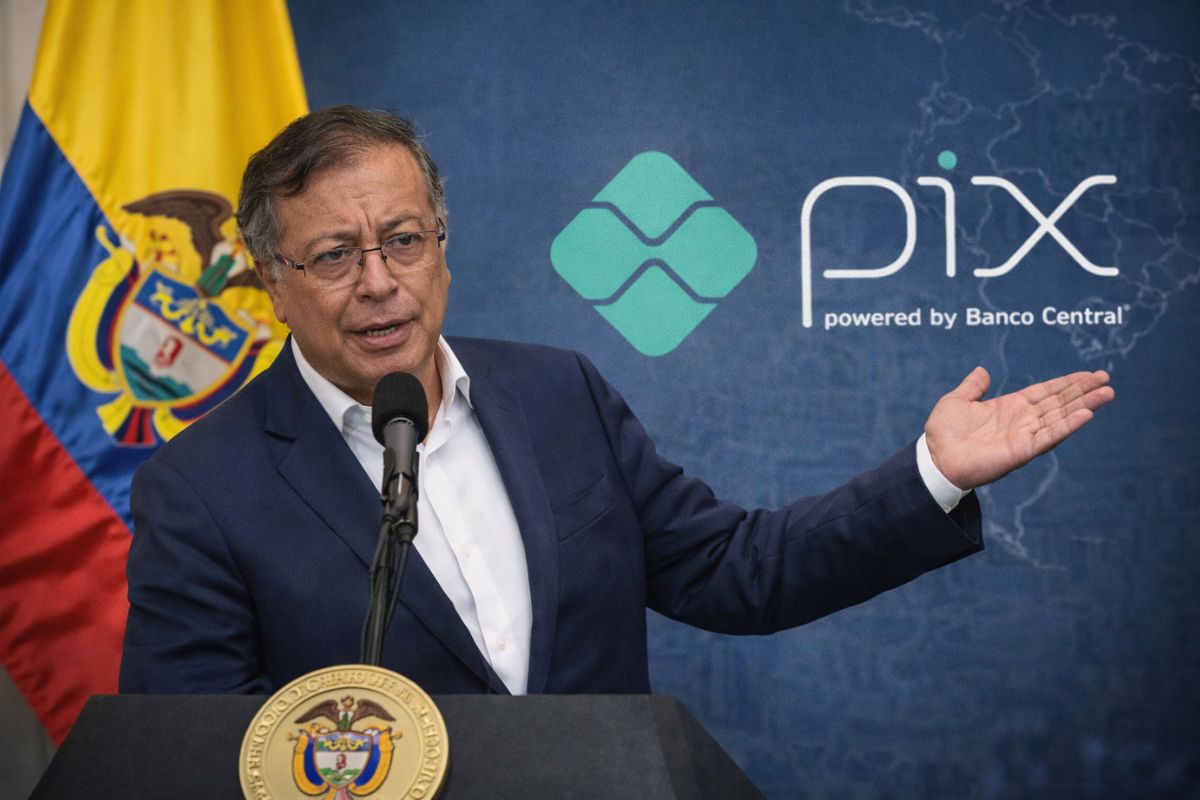
The President of Colombia, Gustavo Petro, defended the Brazilian Pix in a publication on social networks, called for the system to be adopted in his country, and criticized the United States for using financial mechanisms as an instrument of political pressure amid the debate over the White House report.
The Brazilian Pix has gained an unexpected defender on the international stage. The President of Colombia, Gustavo Petro, made a direct request to Brazil on social media: that the instant transfer system be extended to Colombia. The statement came in response to claims attributing to U.S. President Donald Trump the threat of imposing sanctions on Brazil if the Pix was not terminated, arguing that the system harms credit card companies like Visa and Mastercard.
Petro’s defense of the Brazilian Pix comes at a time of increasing tension regarding the system’s role in the global financial landscape. Last week, a report released by the White House highlighted the Pix as a system that would harm American electronic payment service providers. President Lula reacted firmly, stating that “the Pix is from Brazil, and no one will make us change the Pix for the service it is providing to Brazilian society.” Colombia’s entry into this debate raises the discussion to a new diplomatic level.
What Gustavo Petro said about the Brazilian Pix and why he requested the system for Colombia
La lista OFAC ya no es un arma contra el narcotráfico, el narcotráfico se burla de ella, y se hospedan en Dubai, allí compran residencia pot unos 4.000 dólares y viven en medio del lujo.
La OFAC solo sirve para perseguir oposiciones políticas y domesticarlas en el mundo. Es un… https://t.co/gzpzWU5pIEARTICLE CONTINUES BELOW— Gustavo Petro (@petrogustavo) April 4, 2026See also
INSS reveals when it will make payments in April; find out when the benefit will be deposited into your account.

The geopolitical dispute over the minerals that drive the global energy transition has reached Brazil: the United States wants direct access to the reserves, India has already struck a deal, and Lula is racing to centralize decisions before the states negotiate on their own.
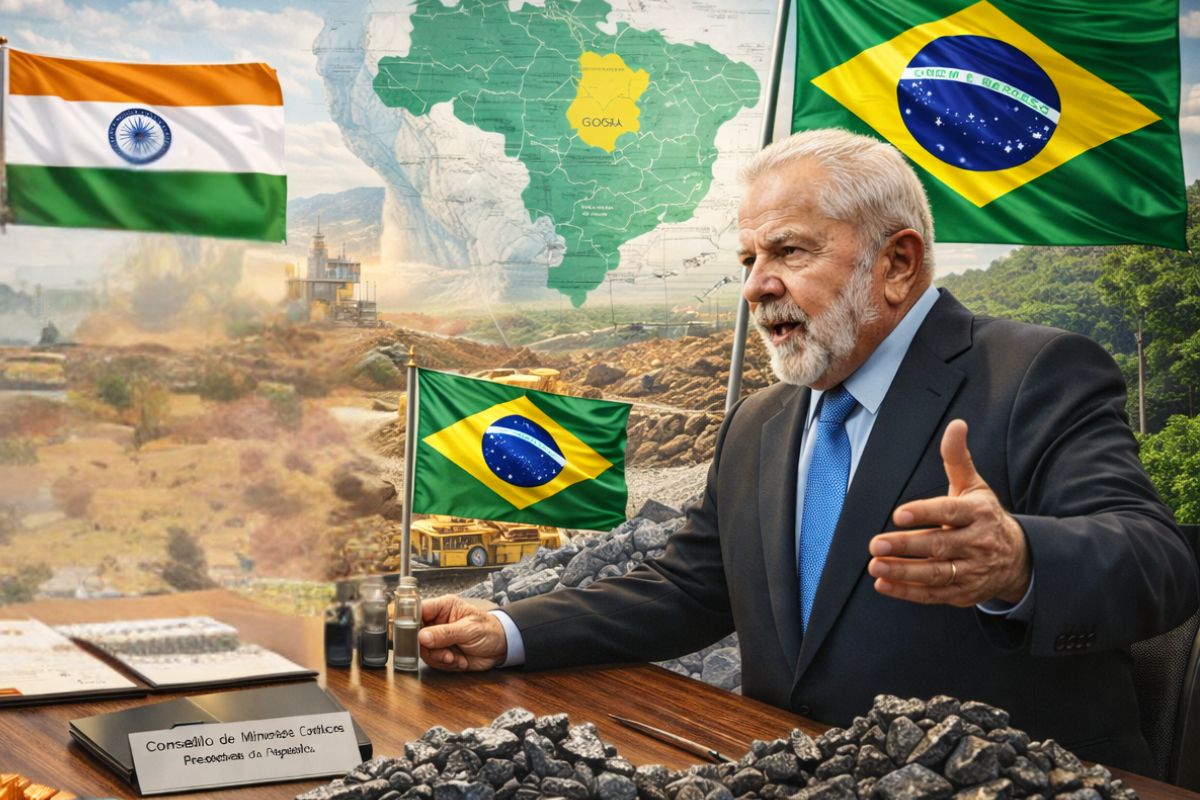
Brazil could become a key player in the “electrification metal”: global demand for copper is expected to soar with electric cars and AI, the IEA projects a deficit of up to 30% by 2035, and Carajás drives the bet for the country to move from just 1% of global production.

China surpasses the United States and becomes the largest trading partner of São Paulo with about US$ 31 billion in transactions, accelerated growth redefines the economic axis of the richest state in Brazil.

According to g1, in his post on social media X, Petro was direct. He wrote in Spanish: “Le pido a Brasil extender el sistema PIX a Colombia”, meaning he formally requested that Brazil extend the Brazilian Pix to his country.
The statement leaves no room for interpretation: the Colombian president sees the instant payment system as a viable and more efficient alternative to traditional financial mechanisms dominated by American companies.
Petro did not limit himself to praising the Brazilian Pix. In the same post, he made harsh criticisms of the sanctions list from the Office of Foreign Assets Control (OFAC), a U.S. Treasury agency. According to the Colombian president, the mechanism “is no longer a weapon against drug trafficking” and is being used as a tool of political control.
He further stated that major leaders of international trafficking manage to evade the system and live luxuriously outside their countries, while the tool is used to pressure political opponents around the world.
The White House report that put the Brazilian Pix in the crosshairs of the United States
Tension between Brazil and the United States regarding the Brazilian Pix has been growing since a White House report included the system among practices that, in the American view, distort digital commerce.
The document stated that the Central Bank of Brazil would give preferential treatment to the Pix, harming American electronic payment service providers. The text highlights that the use of the Pix is mandatory for institutions with more than 500,000 active accounts.
The Office of the U.S. Trade Representative went further, stating that “Brazil appears to be engaging in a series of unfair practices regarding electronic payment services, including favoring its government-developed services.”
The criticism directly targets the model in which the Central Bank created and regulates the Brazilian Pix, establishing a public system that competes with American private companies like Visa and Mastercard. For the United States, this represents a trade barrier. For Brazil and now for Colombia, it represents financial sovereignty.
Lula’s reaction in defense of the Brazilian Pix in the face of American pressure
President Lula did not leave the criticism unanswered. “The United States made a report this week about the Pix, saying that the Pix distorts international trade because the Pix creates problems for their currency”, he declared in a public statement.
He then added categorically: “The Pix is from Brazil, and no one will make us change the Pix for the service it is providing to Brazilian society.”
Lula also stated that the government can, on its own initiative, improve the Brazilian Pix so that it better meets the needs of the population, but that any change will be a sovereign decision of Brazil, not a result of external pressure.
The Central Bank, for its part, is working on expanding the tool, including the possibility of integration between countries in the future. Petro’s defense in Colombia may accelerate this process of internationalization that was already in the plans.
What the request from Colombia means for the future of the Brazilian Pix in the world
Petro’s request transforms the Brazilian Pix from a domestic issue into a geopolitical debate. If Colombia adopts the system or integrates with it, it will be the first time the Brazilian Pix crosses borders as an instant payment model adopted by another country.
The Central Bank is already studying international operations with the Pix, and Colombian interest could serve as a catalyst for other Latin American countries to follow the same path.
The Brazilian Pix moves trillions of reais a year and has established itself as the main means of payment in the country since its creation in 2020. For the United States, this growth represents the rise of a public system that reduces dependence on American private companies in the payments market.
For Latin America, it represents the possibility of building its own financial infrastructure, without the intermediation of foreign corporations. Petro’s request is not just a diplomatic gesture. It is a signal that the Brazilian Pix may be on the verge of becoming a continental reference.
Why the United States are bothered by the Brazilian Pix
The underlying issue is economic. Companies like Visa and Mastercard profit from fees on financial transactions, and the Brazilian Pix has eliminated much of these charges by offering instant and free transfers for individuals.
When the Central Bank made the Pix mandatory for institutions with more than 500,000 accounts, it created an ecosystem in which the public system became practically unavoidable in the Brazilian payments market.
For the United States, the problem is not just Brazil. If the model spreads to other countries, as Colombia is now seeking, American payment companies lose market share on a continental scale.
This perspective explains the insistence on classifying the Brazilian Pix as an unfair practice. For Brazil and for Colombia, the reading is different: a public, efficient, and sovereign system is not an unfair practice. It is technological development at the service of the population.
What do you think of the Colombian president’s request to adopt the Brazilian Pix? Do you believe the system should expand to other countries, or could this increase pressure from the United States? Leave your opinion in the comments. Few times has a payment system generated as much geopolitical discussion as the Pix is generating now.







Seja o primeiro a reagir!