






 Portuguese
  Spanish


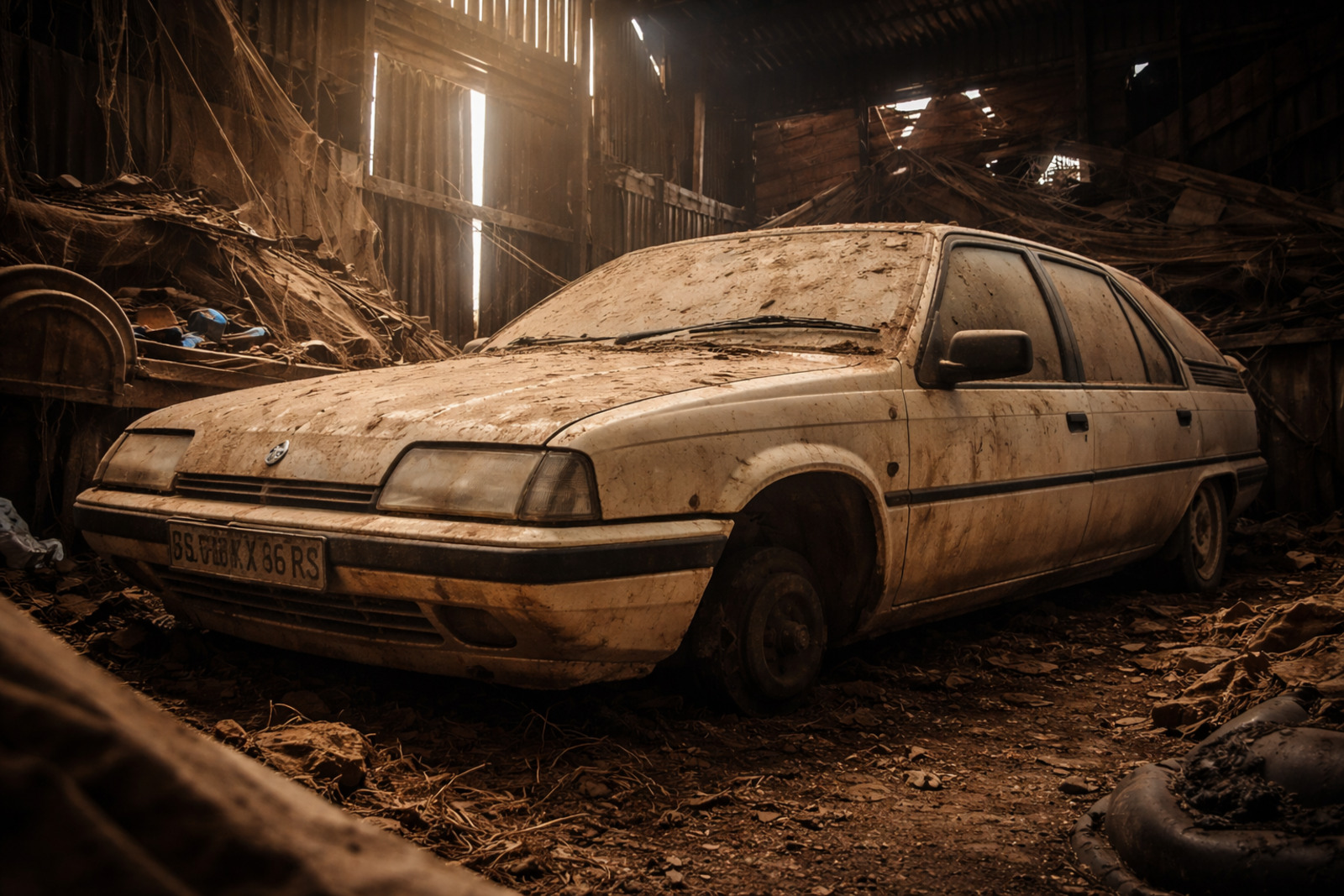
Stored since 1988 in a barn in Lincolnshire, England, the Citroën BX 16RS of John Watkins reappeared in January 2026 with dust, rust, preserved original parts, and a story directly linked to the Thrust 2, the car that entered the world record for land speed in 1983
In Lincolnshire, England, John Watkins’ family opened a barn and rediscovered, in January 2026, a Citroën BX 16RS that had been parked since 1988, covered in dust, rust, and directly linked to a world speed record.
Link to the world record
John Watkins worked in the Royal Air Force and participated in the Thrust 2, a jet vehicle that entered the Guinness World Records by setting the world land speed record in October 1983.
Driven by Richard Noble in the Black Rock Desert in Nevada, the Thrust 2 officially reached 633.468 mph, about 1,019 km/h, and recorded peaks of up to 650.88 mph in the fastest runs.
-
Architect Transforms Tiny 4m² Home in São Paulo Favela into 11m² Living Space with Modern Amenities

-
Single mother of four swaps £3,000 London rent for life on a 60-foot solar-powered boat with Starlink and a washing machine, reducing monthly costs by 75%

-
22-Year-Old Transforms Old Farm Trailer into Two-Story Tiny Home Using Recycled Materials

-
Doctor Revives Ancient Crescent-Shaped Dams in Drought-Stricken Indian Region, Restoring Water to Over 1,000 Villages and Reviving Rivers Dormant for 60 Years


In the same month, Watkins purchased a Citroën BX 16RS, a family hatchback with a 1.6-liter engine and a top speed of 109 km/h.
The difference between the two vehicles was nearly tenfold. The engineer linked to the fastest car on Earth chose a modest model from the European market for his daily use.
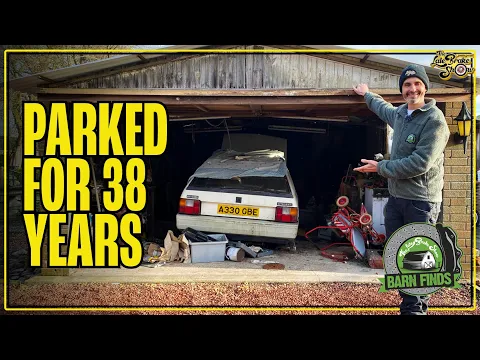

The Citroën BX in the barn
Watkins used the Citroën BX for five years. In 1988, he stored the car in the barn intending to carry out a restoration, but the door was never opened again, and the vehicle remained forgotten for 38 years.
Over time, the Citroën BX became part of the barn’s landscape. Tools, boxes, and objects accumulated around it, while dust, rust, and neglect transformed the car into a relic of another era.
The story only came to light in January 2026, when the family called Jonny Smith, host of the British channel The Late Brake Show, specializing in barn finds, to inspect the vehicle.
During the inspection, the team found thick dust on the bodywork, rust, rodent damage to the upholstery and wiring, one wheel missing, and the engine refusing to start.
What has been preserved
Even deteriorated, the Citroën BX preserved elements. The basic structure of the body remained intact, the windows were whole, and several original factory components were still present after nearly four decades of immobility.
Among the preserved items were the Citroën hydropneumatic suspension, an exclusive system of the brand with gas spheres for impact absorption, the original dashboard with all instruments in place, and original mechanical components.
The fabrics of the seats, although deteriorated, remained recognizable as typical pieces from the 1980s. This reinforced the documentary character of the find and showed that the Citroën BX retained central traits of the original set.
In the garden of the property, the team also found a classic Triumph 2000 that had been parked since 1983. The car had a tree growing through the seat and ended up transformed into a sculptural piece by nature.
How it became a rarity
Produced between 1982 and 1994, the Citroën BX totaled over 2.3 million units manufactured. Nevertheless, many examples disappeared in scrap yards before achieving classic status, as they were too useful and affordable.
Data from the British vehicle registry shows that only 194 units of the BX are still in circulation in the UK, while another 1,083 have been declared out of circulation, increasing the rarity of the example found in Lincolnshire.
Barn find with verifiable history
The term barn find describes the discovery of a classic vehicle forgotten in barns, garages, or sheds for decades.
The case of the Citroën BX stands out less for its market value and more for the verifiable history that accompanies the car.
This example combines intact original parts and provenance linked to one of the most significant episodes in automotive engineering of the 20th century.
The Late Brake Show, with over 787,000 subscribers, documented the inspection and the attempt to reactivate the engine.
With information from Revista Oeste.


Be the first to react!