





 Portuguese
  English
  Spanish
  6 min of reading
  0 comments



Radish leaves have more polyphenols, flavonoids, and fiber than the root, reveals 2025 study with intestinal benefits and potential anticancer properties
The radish is a common, inexpensive vegetable widely consumed in salads around the world. However, almost no one consumes its leaves, which are typically discarded. According to a study published in October 2025 in the Journal of Agricultural and Food Chemistry by researchers from the Korea Food Research Institute and Jeonbuk National University in South Korea, the discarded radish leaves concentrate higher levels of polyphenols, flavonoids, polysaccharides, and dietary fiber than the root itself, and also exhibit properties associated with intestinal health, control of metabolic diseases, and anticancer activity demonstrated in in vitro and in vivo studies.
Radish consumption around the world: popular vegetable, but used incompletely
The radish (Raphanus sativus) has been cultivated for millennia and is part of various culinary traditions around the world. It is consumed raw in salads in Brazil, pickled in Japan as daikon, grated in Korean dishes, and as a side dish in various European countries.


Despite this widespread global presence, consumption is practically limited to the root, which has a crunchy texture and a slightly spicy flavor. The leaves, on the other hand, are treated as agricultural byproducts and systematically discarded at markets, supermarkets, and in home kitchens. This consumption pattern reveals significant nutritional waste, as most historical research has focused solely on the root, ignoring the biochemical potential of the leaves.
-
A planet that seemed to defy the laws of physics has intrigued scientists for decades, until the James Webb revealed what is really affecting Saturn’s rotation.

-
For the first time in history, the Brazilian Air Force conducted a highly complex inspection on the C-99 jet independently, without relying on foreign companies, marking a new level of logistical autonomy and operational sovereignty.

-
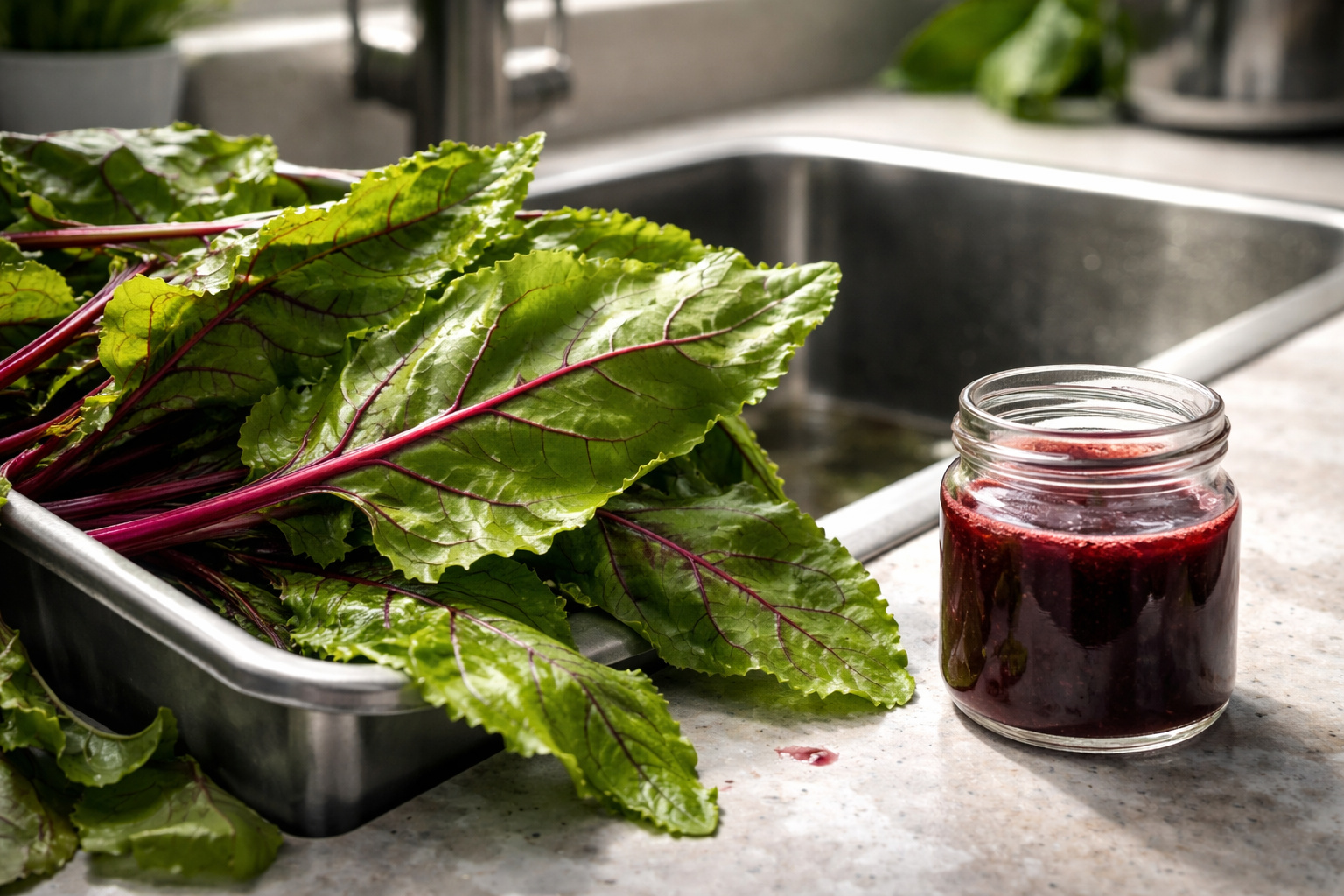
Beet greens that end up in the trash in many kitchens contain a high concentration of antioxidants, and a 2025 study shows that extracts may have even more potent activity when transformed into microparticles.
-
Something was orbiting Earth before any human launched a satellite into space: scientists have found thousands of unexplained flashes in old photos of the sky, and a NASA researcher says the evidence points to non-human intelligence.


The 2025 Korean study represents one of the first comprehensive reviews focused exclusively on radish leaves.
Radish leaves have more nutrients than the root: data on polyphenols, flavonoids, and fiber
The main conclusion of recent studies is counterintuitive: the discarded part has a higher nutritional density than the consumed part.
Radish leaves have higher levels of protein, dietary fiber, minerals, and vitamin C compared to the root. A survey published by MDPI in September 2025, analyzing six academic databases, confirmed this pattern.
The total phenolic content in the leaves reached 695 mg per 100 grams, while flavonoids reached 1,042 mg per 100 grams. The American Center for Public Science ranks radish leaves among the top three vegetables with the highest nutritional value.
These numbers place radish leaves on par with foods considered functional, often associated with high-quality nutritional diets.
Polyphenols and flavonoids in radish leaves: antioxidant and anti-inflammatory compounds
Polyphenols are compounds produced by plants as a defense mechanism against environmental stress, radiation, and biological attacks. When consumed by humans, they act as antioxidants, neutralizing free radicals associated with cellular aging, chronic inflammation, and degenerative diseases.
In radish leaves, compounds such as gallic acid, caffeic acid, chlorogenic acid, ferulic acid, and p-coumaric acid have been identified. This chemical profile is comparable to that of vegetables such as kale and broccoli.
The flavonoids present also exhibit documented anti-inflammatory and antioxidant activity. The concentration of these compounds transforms radish leaves into a food with significant functional potential, especially in diets aimed at disease prevention.
Benefits of radish leaves for the intestine: microbiota and inflammation
The polysaccharides extracted from the leaves, including rhamnogalacturonan, have demonstrated positive effects on intestinal microbiota in laboratory studies.
In vitro and in vivo tests indicated that these compounds stimulate the growth of beneficial bacteria and reduce inflammatory markers in the intestine. The dietary fiber present in the leaves also contributes to the regulation of intestinal transit.
This set of effects positions radish leaves as a potential functional food for digestive health, especially in populations with a high incidence of gastrointestinal disorders.
Antibacterial activity of radish leaves against resistant bacteria
Research has shown that extracts from the leaves have significant antibacterial activity. Daikon leaves were able to reduce the biofilm formation of Klebsiella pneumoniae by 74.2%. Meanwhile, icicle radish leaves inhibited the production of pyocyanin in Pseudomonas aeruginosa by 76.8%.
These bacteria are associated with hospital infections and antibiotic resistance. The antibacterial action has been attributed to phenolic compounds and sulfur-containing compounds present in the leaves.
This result increases scientific interest in the use of the leaves in pharmacological and food applications.
Anticancer potential of radish leaves in laboratory studies
The Korean study also analyzed evidence of anticancer activity. Extracts from the leaves demonstrated the ability to reduce the proliferation of tumor cells in in vitro colon cancer studies.
Research with radish microgreens indicated similar results in different cell lines. However, these studies were conducted in the laboratory, not in humans.
Despite this, the presence of compounds with documented antiproliferative activity reinforces the functional value of radish leaves, although it does not replace medical treatments.
Radish leaves against diabetes and obesity: experimental studies
In addition to digestive and antioxidant effects, research has identified compounds in the leaves with potential to act on metabolic diseases.
A study with rabbits compared ethanolic extracts of the leaves with atorvastatin, a medication used for cholesterol control. The results indicated similar effects on some metabolic parameters, without the side effects associated with the drug.
These data suggest significant metabolic potential, albeit limited to experimental studies. The consumption of radish leaves is already common in some cultures. In northern Portugal, they are used in traditional recipes. In Korea, they are part of soups and kimchi. In Japan, they are consumed sautéed or pickled.
Modern science is validating traditional dietary practices, now based on laboratory evidence and detailed chemical analyses.
Food waste in Brazil and potential of radish leaves
Brazil wastes about 27 million tons of food per year, according to UN data. Part of this waste occurs in the elimination of edible parts of vegetables.
Radish leaves, beet greens, stems, and peels that are often discarded have proven nutritional value. Programs like Mesa Brasil and initiatives from Sesi already promote the full utilization of food.
The advancement of science reinforces that these discards are not only edible but nutritionally relevant.
How to consume radish leaves: preparation methods and full utilization
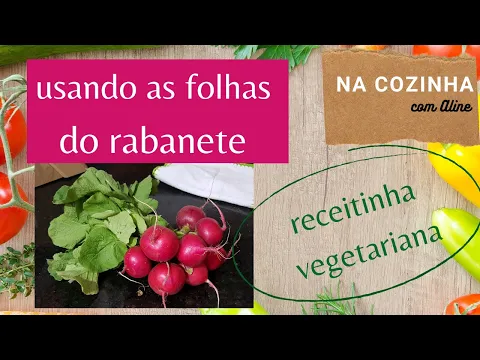
The leaves can be consumed raw, sautéed, in soups, green juices, or dehydrated as seasoning. The flavor is slightly bitter and spicy, similar to arugula.
The recommendation is to wash them well before consumption. Sautéing reduces bitterness but may decrease some vitamin C.
Radish sprouts, harvested between 7 and 10 days, have even higher levels of chlorophyll, carotenoids, and antioxidant activity.
A study published in Frontiers in Plant Science in 2025 demonstrated that microgreens have a higher density of bioactive compounds than seeds.
Even so, the adult leaf remains an accessible and rich source of these compounds, often discarded without utilization.
Radish leaves go from waste to functional food
The researchers’ conclusion is straightforward: radish leaves are an agricultural byproduct with potential for the development of functional foods and supplements.
They recommend the use of advanced techniques such as metabolomics and proteomics to deepen the identification of compounds and their effects on the human body.
As new research progresses, the evidence already available indicates that a complete functional food is being discarded daily, without utilization.









Seja o primeiro a reagir!