





 Portuguese
  English
  Spanish
  5 min of reading
  0 comments



The sea temperature in the marine farms of Santa Catarina jumped from an average of 28 to 34 degrees last summer and caused a mortality of up to 90% in cultivated oysters, a loss that affected producers with decades of experience, destroyed entire crops of oysters, and threatens the national supply of mollusks, since the state accounts for 98% of Brazil’s production.
According to information from the portal ndmais, the oysters of Santa Catarina are dying on an unprecedented scale. Last summer, the sea water temperature in the marine farms along the coast of Santa Catarina rose from an average of 28 to 34 degrees, an extreme jump that caused mortality of up to 90% in cultivated oysters. Producers who planted more than 1.5 million oyster seeds lost practically everything. Entire crops that were supposed to supply the market between summer and the end of March were destroyed in a matter of weeks.
The impact goes beyond the marine farms. According to the Ministry of Fisheries, Santa Catarina is responsible for 98% of the national production of mollusks, and the eight companies that are part of the sector federation in the state lost a total of 72 million oysters this year. At least 2,000 workers from coastal communities of the Santa Catarina coast depend on this activity for their livelihood, and producers who sent 80% of the oysters to São Paulo and Rio de Janeiro warn that in a matter of days there will be nothing left available in the market.
From 28 to 34 degrees: the warming that is killing oysters in Santa Catarina
The explanation for the mass death of oysters lies in the sea water temperature. The warming, combined with pollution, disrupted the environment and caused the temperature in the marine farms to jump from 28 to 34 degrees. Producers with decades of experience say that summers have been gradually getting warmer, but nothing compares to what happened; the event was “extremely out of the ordinary” and has no precedent in the history of oyster farming in the state.
-
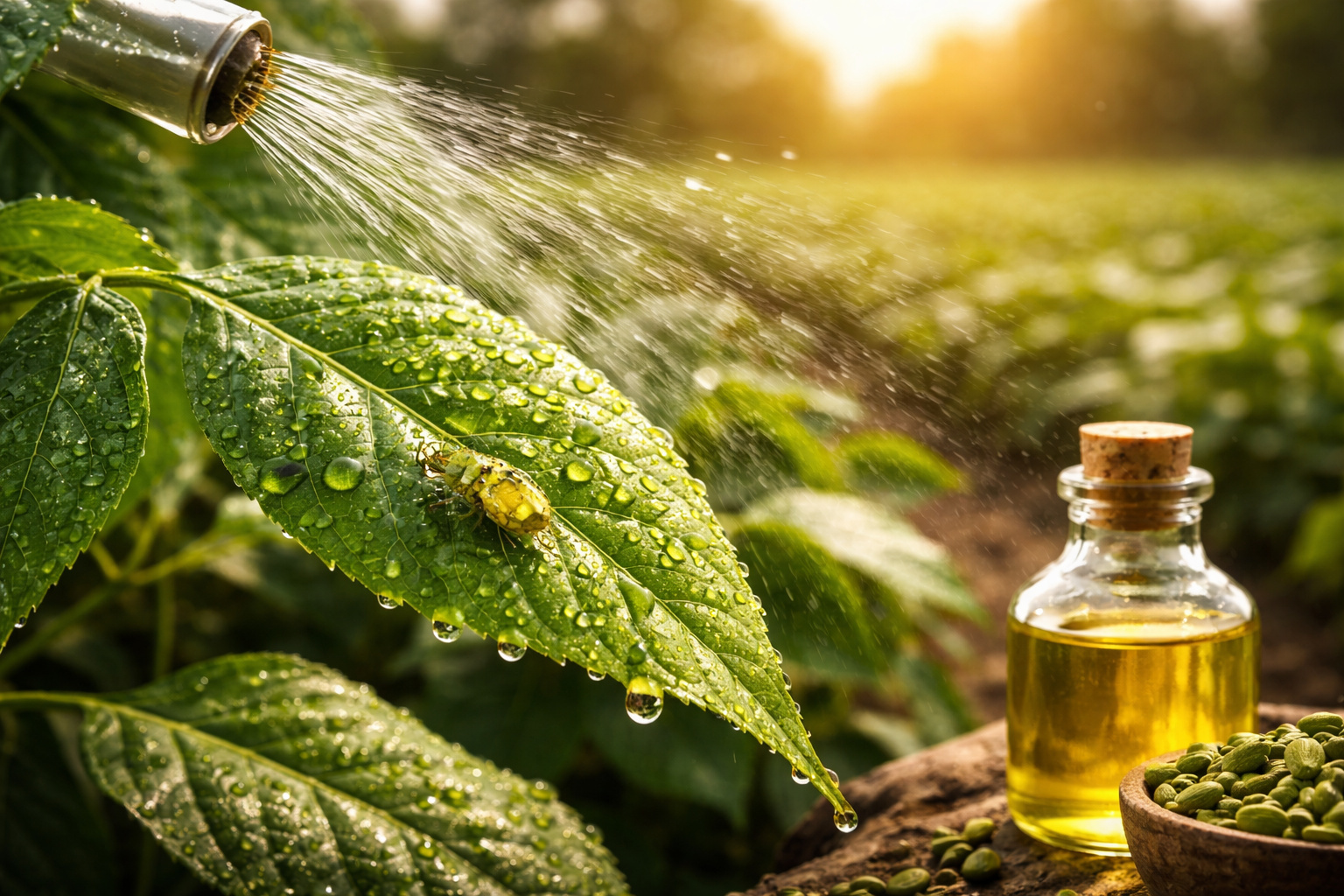
An Indian tree that grows in the Brazilian Northeast produces an oil capable of acting against more than 200 species of pests and interrupting the insect cycle, gaining ground as a natural alternative in soybean, cotton, and vegetable crops.
-
The rise in oil prices in the Middle East is already affecting Brazilian sugar: mills in the Central-South are seeing their margins shrink just as ethanol gains strength.

-
Rain gains strength in April, potentially exceeding 150 mm, placing the North, Northeast, and the coasts of the South and Southeast at the center of the heaviest forecast of the week.

-
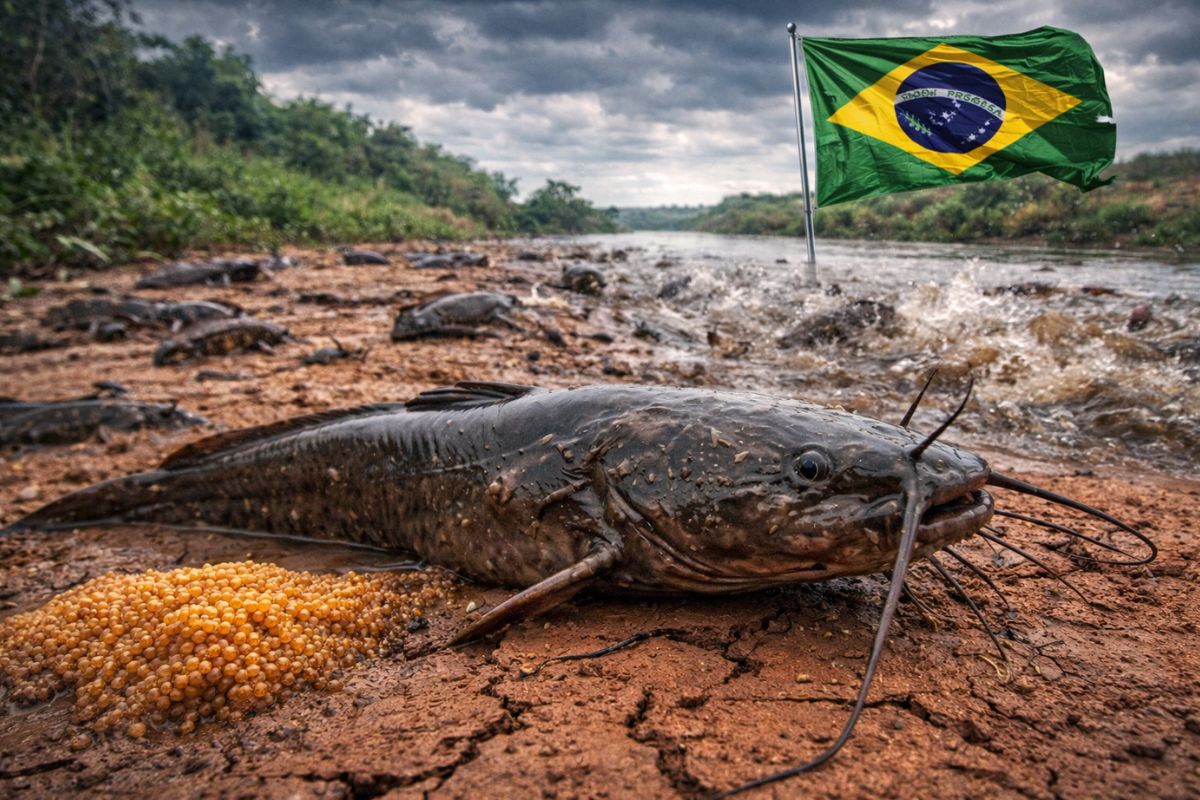
A fish that survives out of water, crawls on land until it finds another river, and whose female lays 80,000 eggs at once is infesting rivers and lakes in Brazil, and no one can stop this invasion.

Warmer water not only kills oysters directly but also reduces the solubility of oxygen in the water and decreases the ability of algae to produce oxygen, according to researchers from the Federal University of Santa Catarina. The result is a lethal combination: oysters are exposed to temperatures they cannot tolerate, in increasingly oxygen-poor water. It is the kind of scenario where no production can survive.
1.5 million seeds planted and almost everything lost: the drama of oyster producers
Lincoln has been an oyster producer in Ribeirão da Ilha, Florianópolis, for 30 years. The whole family relies on the income that comes from the sea. This year, he planted more than 1.5 million oyster seeds, seeds that took about 8 months to develop and that were supposed to be sold between summer and the end of March. The mortality reached 80% at once and continued to rise: the expectation is that it will reach 90% of the total planted oysters.
“I feel a sadness because this is our work; we depend on this activity to support the family,” reported Lincoln, who was building a house and had to stop the construction for the second consecutive year due to the losses in oysters. Another producer, Paulo, who sent 80% of the oysters to São Paulo and Rio de Janeiro, stated that his production is at zero; “we have absolutely nothing left”. According to him, some companies still had a remnant of stock purchased from third parties, but in a maximum of 15 days, no one would have anything left.
72 million oysters lost and a mountain of shells 8 meters high
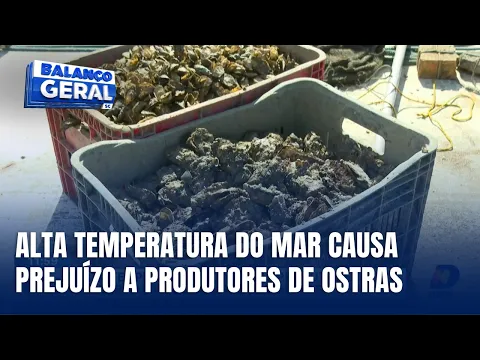

The numbers of the oyster catastrophe are impressive. The eight companies affiliated with the federation representing the sector in Santa Catarina lost a total of 72 million oysters this year. In some farms, the losses exceeded 90%. One single oyster farm accumulated a mountain of discarded shells that occupies 100 square meters of area and is 8 meters high, remnants of what should have been the most profitable harvest of the year.
The scale of the impact is exacerbated by geographical concentration. Santa Catarina produces 98% of Brazil’s mollusks, which means that when oysters die in Santa Catarina, the entire country feels the absence. At least 2,000 workers from coastal communities directly depend on mariculture for their survival.
The lack of oysters in the national market will pressure prices and may make the product inaccessible for the final consumer; one producer estimated that the price would have to rise by 90% to compensate for the losses, which would make sales unfeasible.
What science is trying to do to save the oysters of Santa Catarina
The Federal University of Santa Catarina is studying alternatives to mitigate the losses in oysters. One of the solutions under investigation is the use of algae associated with oyster farming to increase oxygen production within marine farms, a nature-based approach that seeks to compensate for the loss of oxygenation caused by water warming.
The logic is straightforward: if higher temperatures reduce both the solubility of oxygen and the natural ability of algae to produce it, it is necessary to intervene in the system and artificially increase this capacity.
But even with the efforts of science, producers with 30 years of experience in oyster farming say they have never gone through anything like this and that if an event like this happens again, oyster production in Santa Catarina could simply end. “We cannot sustain a mortality rate of 90%,” summarized one of the producers.
The future of oysters in Santa Catarina depends on what the sea decides
What happened to the oysters of Santa Catarina this summer is a warning that goes beyond the mariculture sector.
A jump of 6 degrees in sea water temperature destroyed up to 90% of a production that supplies practically all of Brazil, left 2,000 workers without income, and generated a literal mountain of losses. Producers who dedicated their entire lives to oyster farming now depend on the next summer being milder, with no guarantee that it will be.
Science is investigating solutions, but time is running out. If the warming pattern repeats, Santa Catarina’s oysters may cease to exist as an economic activity, and one of the country’s most valued seafood products could become rare, expensive, or simply unavailable.
Do you consume oysters? Have you noticed a difference in price or availability in recent months? And what do you think: should the situation of producers receive more attention from the government? Leave your opinion in the comments.






Seja o primeiro a reagir!