





 Portuguese
  English
  Spanish
  5 min of reading
  0 comments


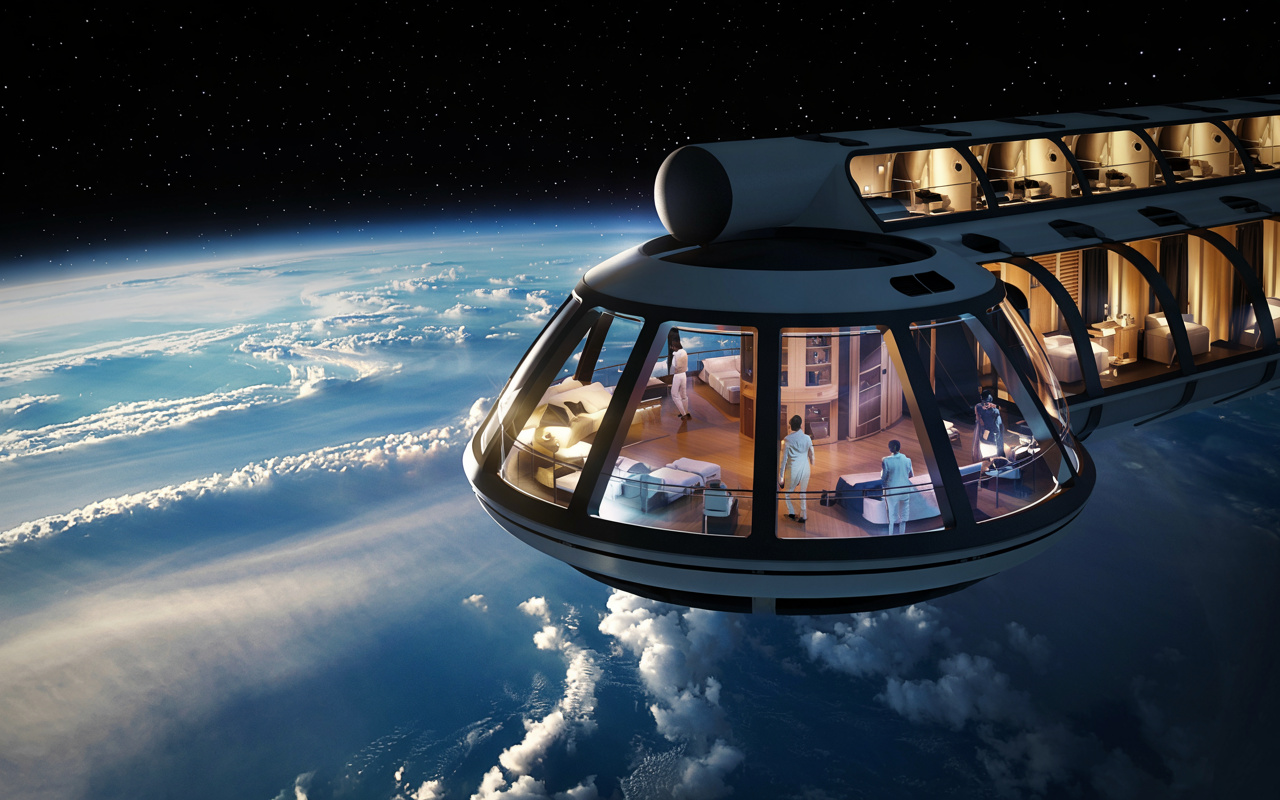
First Space Hotel, The Voyager Station Will Have Artificial Gravity, Luxury Suites, and Space for 400 Guests in Orbit by 2030
Imagine waking up, opening the window, and seeing Earth spinning beneath your feet, like a blue globe suspended in the void. This is the scenario that the Voyager Station, an ambitious project by an American company, promises to make a reality in the next decade. Expected to begin operations around 2030, the space station will be the first luxury hotel in orbit around Earth, with the capacity to accommodate 400 guests and facilities that include bars, restaurants, gyms, and even shows in microgravity.
The idea seems like it’s straight out of a science fiction movie, but it is very real—and engineering companies, space tourism firms, and even travel agencies are already eyeing the billion-dollar market that could emerge with off-planet tourism.
What Is The Voyager Station and Who Is Behind the Project
The hotel is a project of Orbital Assembly Corporation (OAC), an American startup formed by former NASA engineers and aerospace entrepreneurs. The proposal is clear: transform space into an accessible tourist destination for millionaires and, in the future, for a broader audience as the costs of space travel decrease.
-
With a cost per shot close to zero, the DragonFire laser could change naval warfare in 2027 and provide British ships with nearly unlimited defense against drones.

-
A British startup creates tires that generate electricity in electric vehicles when passing over potholes, speed bumps, and cracks.

-
Scientists have created robots made with living cells that have their own nervous system, swim on their own, explore the environment, and self-organize without any genetic engineering, and now they want to do the same with human cells.

-
Students create a solar-powered ambulance that operates without a plug, without fuel, and still keeps medical equipment running in remote areas.

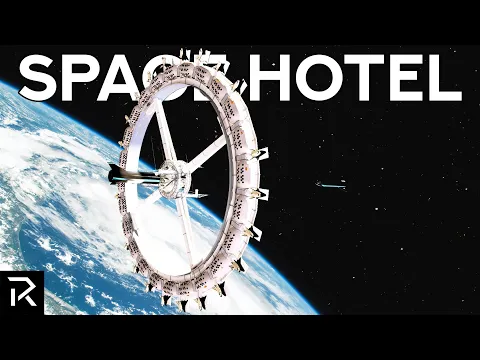
The station will have a circular shape with 200 meters in diameter and will be located at an altitude of about 500 to 600 km, practically in the same orbital range where the International Space Station (ISS) is currently located. However, unlike the ISS, which is a scientific laboratory, the Voyager Station will be designed with a focus on guest comfort and experience.
Artificial Gravity: How the Hotel Will Simulate Human Body Weight in Space
One of the biggest challenges of living in space is the absence of gravity. In the long term, the lack of weight causes serious problems for the human body—loss of bone mass, muscle atrophy, and changes in the circulatory system.
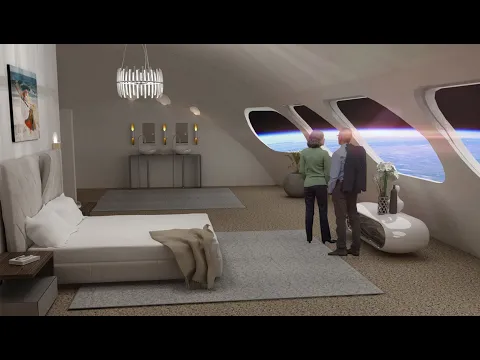

To overcome this, the Voyager Station will use a classic science fiction concept: artificial gravity. The structure will rotate in orbit, creating a centrifugal force that will push guests against the floor, simulating something between 20% and 40% of Earth’s gravity.
This means that visitors will be able to walk, sleep in beds, and even play sports, but with a feeling of lightness—a “halfway” environment between Earth and the Moon.
What It Will Be Like to Stay in Space: Suites, Bars, and Even Orbital Gyms
The plan is to offer different types of accommodations:
- Standard Rooms, smaller and more affordable (as much as possible);
- Luxury Suites, with panoramic windows made of reinforced glass;
- Common Areas with bars, restaurants, cinemas, performance rooms, spas, and even courts for games in reduced gravity.
According to the OAC, the design will be futuristic but with touches of “boutique hotel.” No cold, metallic cabins like the ISS—the goal is for guests to feel like they are in a five-star resort… in space.
How Much Will a Night Cost at the First Space Hotel?
Initially, only the super-rich will be able to afford the experience. It is estimated that a stay will cost millions of dollars—not just for the hotel but for transportation to get there. The complete package will include:
- Astronaut Training (something like a “mini-course” for adaptation);
- Rocket Ticket (probably aboard the SpaceX Starship);
- Accommodation and activities.
But the OAC’s plan is that, over time, the cost will drop dramatically. With the popularization of 100% reusable rockets (like those from SpaceX), the price could fall to “hundreds of thousands of dollars” in the long term—still out of reach for most, but much cheaper than today’s space tourism, which can cost as much as US$ 50 million per person.
Who Will Take Guests to Orbit?
No space station functions alone—getting there is necessary. The transportation of guests and cargo will be done by private rockets, with the strongest bet being the SpaceX Starship, the giant 120-meter-tall rocket that Elon Musk designs to take humans to the Moon and Mars.
The Starship can carry up to 100 people at once and, according to the OAC, will transfer guests to the hotel. Other companies may also participate in the future, like Blue Origin, from Jeff Bezos.
Challenges and Criticism: Does Luxury Off Earth Make Sense?
Not everything is applause. The project faces huge criticism and challenges.
- Astronomical Cost: construction could exceed US$ 200 billion.
- Safety: radiation, space debris, and micrometeorites are real threats.
- Ethical Issues: critics say spending billions to create a “resort for billionaires” is a waste in a world with such deep inequalities.
The OAC responds by saying that the hotel is not “just a resort,” but the first step toward a space economy that could, in the future, benefit all of humanity.
Why The Voyager Station Could Change the Future of Space Exploration
Despite the criticism, the Voyager Station has historic potential:
- Creates the Concept of “Orbit Economy”—with tourism, services, and even the possibility of factories in space.
- May Help Test Technologies for lunar and Martian bases, such as artificial gravity systems and resource recycling.
- Marks a Transition: for the first time, space is being thought of not only for astronauts and scientists but for ordinary people (who can pay).
From Science Fiction to Reality
When films like “2001: A Space Odyssey” showcased orbital hotels in the 1960s, it seemed impossible. Today, with reusable rockets, private companies investing billions, and projects like the Voyager Station underway, the scenario has changed.
Perhaps in 2030 it will still be for the few. But by 2050, who knows, spending holidays “off Earth” could be as common as going on a cruise. And when that happens, it will be thanks to pioneering projects like this one, which are pushing the boundaries between engineering, tourism, and human dreams.







-

-

-

5 pessoas reagiram a isso.