





 Portuguese
  English
  Spanish
  7 min of reading
  0 comments


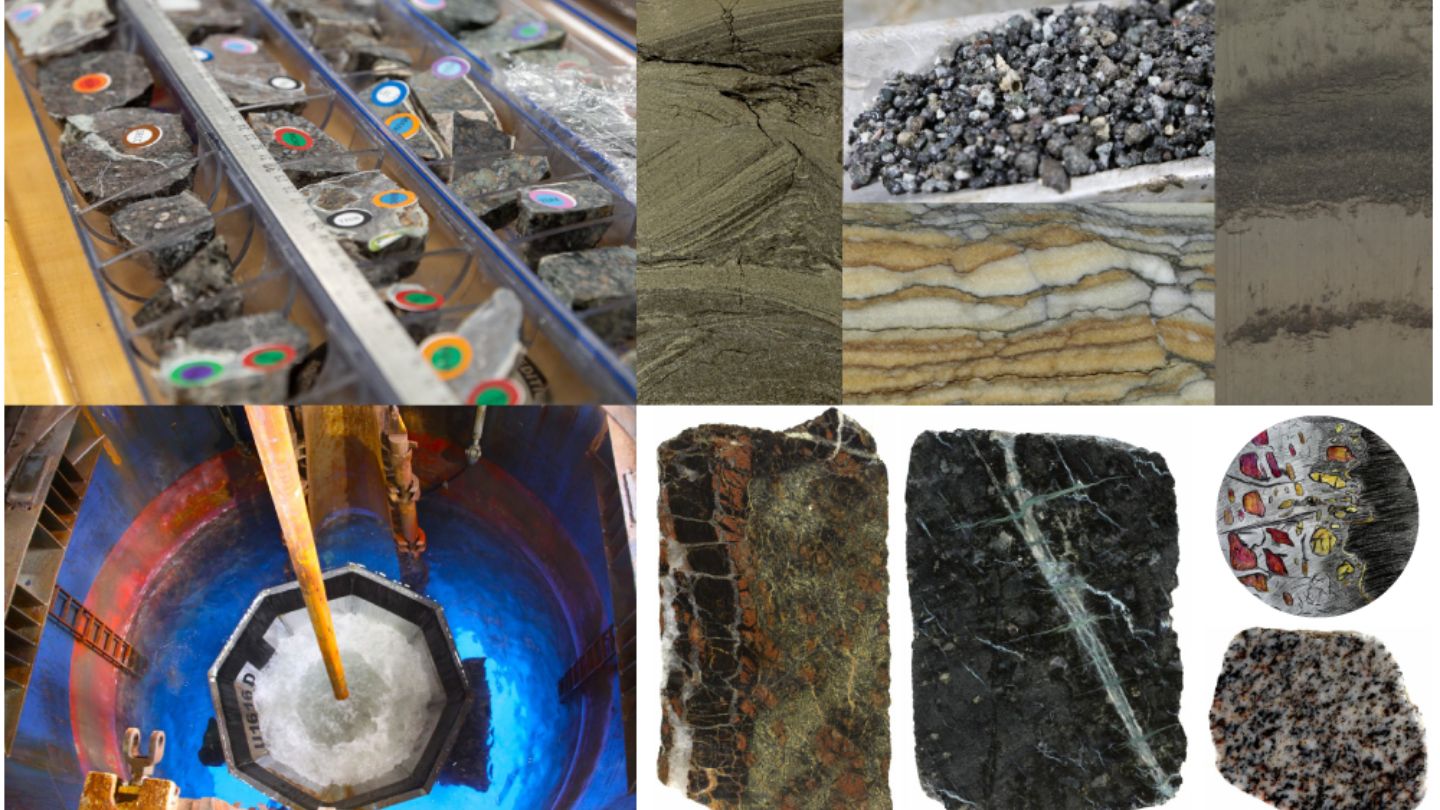
IODP Expedition drills the Tyrrhenian Sea, recovers mantle rocks at more than 1,200 m and reveals unexpected behavior that challenges geological models.
In 2024, the Expedition 402 of the International Ocean Discovery Program (IODP) drilled the seafloor of the Tyrrhenian Sea in the central Mediterranean, between Italy and Corsica, and recovered one of the largest continuous sequences of mantle rocks ever obtained by ocean drilling. The initial results, published in 2025 in scientific journals and technical reports of the IODP itself, were widely distributed by institutions such as the Louisiana State University (LSU), which participated directly in the research.
The data that immediately caught the attention of the scientific community was the depth and quality of the recovered material. In an environment where normally only oceanic crust is accessed, researchers managed to reach more than 1,200 meters below the seafloor, crossing geological layers until reaching upper mantle rocks. This achievement places the expedition among the most relevant in the recent history of marine geology.
In addition to the depth, the volume and integrity of the recovered samples led to the material being classified as the second largest mantle section ever obtained by scientific drilling, second only to a previous mission also conducted by the international program. This type of record is extremely rare and valuable, as the Earth’s mantle can normally only be studied indirectly, through seismic waves or fragments brought to the surface by volcanoes.
-
Meteorologists warn that the polar vortex is behaving in an unprecedented manner, and the speed of this anomaly could cause frost and droughts outside the norm in major agricultural production areas.

-
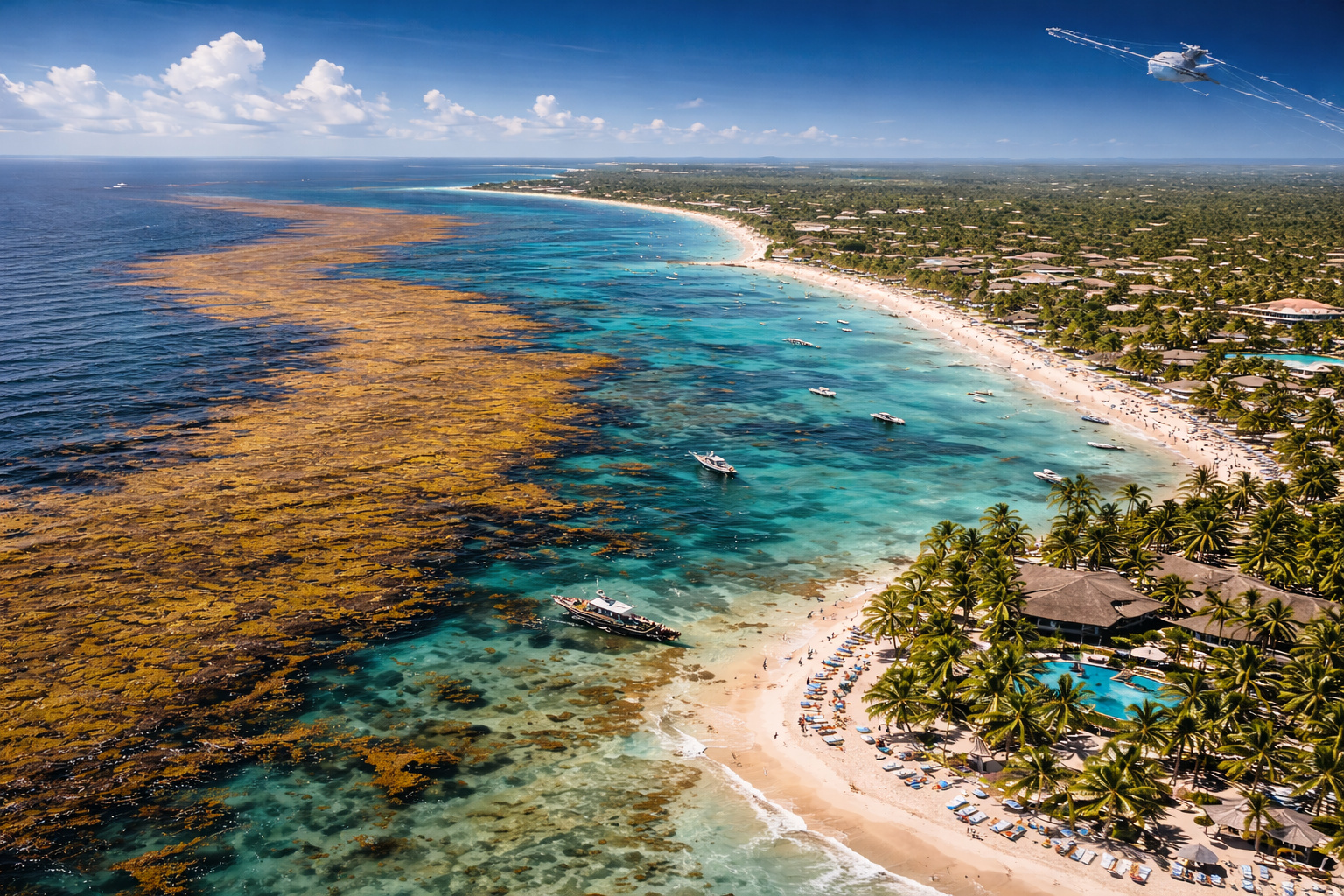
The phenomenon of the “brown ribbon” of sargassum is advancing across the Atlantic Ocean on a gigantic scale, becoming visible from space and directly impacting tourist beaches, maritime activities, diving, and the environmental balance in tropical regions.
-
Young person dismantles 500 vapes, removes their lithium-ion batteries, and makes an electric car run for almost 29 km, exposing the amount of energy that is still being wasted in electronic waste.

-
Damage caused by zero-calorie sweeteners can affect up to 2 generations, alter genes related to inflammation, provoke glucose intolerance, and raise blood sugar levels, reveals a study with sucralose and stevia.

“Fertile” mantle found in tectonically active region intrigues scientists
When analyzing the collected samples, researchers identified that the mantle present in the Tyrrhenian region exhibits characteristics considered “fertile” in geological terms, meaning it contains mineralogical composition capable of generating magma when subjected to the appropriate conditions of pressure and temperature.
This type of mantle is generally associated with regions where there is intense magmatic activity, such as mid-ocean ridges or expanding rift zones. However, the behavior observed in the Tyrrhenian Sea did not follow this expected pattern.

Petrographic and geochemical analyses revealed the presence of rocks such as lherzolites and partially refertilized harzburgites, indicating a complex history of melting and reprocessing of mantle material. In technical terms, this means that the mantle there is not completely “depleted” by previous melting events but still retains the potential to generate magma.
This is one of the most relevant points of the discovery: the material found has a composition compatible with significant magmatic generation but did not produce magma on the expected scale.
Magma production below expectations challenges classical geological models
In traditional models of oceanic crust formation, when tectonic plates move apart, the mantle rises due to reduced pressure, a process known as decompression melting. This mechanism usually generates large volumes of magma that form new oceanic crust.
In the case of the Tyrrhenian Sea, which is a relatively young basin in geological terms, it was expected that this process would be active or had occurred more intensely in the recent past.
However, the data from Expedition 402 indicate that the region behaves like a rift with low magmatic production, also called a magma-poor rift. This means that despite the tectonic opening and stretching of the crust, the amount of magma generated was limited or occurred late.
This discrepancy between geological potential and observed outcome is what makes the discovery particularly relevant.
Researchers emphasize that the mantle of the Tyrrhenian does not follow a simple pattern of behavior. Instead, it exhibits a combination of characteristics typical of both magma-rich and magma-poor environments, suggesting that the processes of crust formation there are more complex than conventional models predict.
Formation of the Tyrrhenian Sea involves complex tectonic dynamics
The Tyrrhenian Sea is considered a back-arc basin, formed from the subduction of the African plate beneath the Eurasian plate. This type of geological environment is known for exhibiting highly complex dynamics, involving processes such as plate rollback, crustal extension, and variations in mantle flow.

The opening of the basin began about 10 to 12 million years ago, during the Miocene, and continues to evolve to this day. During this period, the region underwent different phases of tectonic and magmatic activity, which contributed to the heterogeneity observed in the samples.
The data obtained from drilling indicate that the mantle there has been affected by multiple events over time, including episodes of partial melting, refertilization by fluids, and interaction with materials from subduction.
This complex geological history helps explain why the behavior of the mantle in the Tyrrhenian does not follow a single or predictable pattern.
Mantle heterogeneity suggests new pathways to understand crust formation
One of the main scientific results of the expedition was the confirmation that the Earth’s mantle can be significantly more heterogeneous than previously thought. Instead of being a relatively uniform layer, it exhibits important compositional variations on regional scales.
In the case of the Tyrrhenian, this heterogeneity manifests in the coexistence of different types of mantle rocks, each with a distinct geological history. This suggests that the process of oceanic crust formation can vary significantly depending on local conditions.
This point is central to the revision of geological models: the idea that the mantle responds uniformly to tectonic extension may not be valid in all contexts.
The researchers involved in the expedition emphasize that the data obtained require a more integrated approach, taking into account not only the composition of the mantle but also factors such as heat flow, presence of fluids, and regional tectonic dynamics.
Importance of the discovery for geology and understanding the planet
The recovery of such an extensive section of the Earth’s mantle represents a significant advance for science. This type of material allows for direct analyses that help validate or refine theoretical models developed over decades.
Moreover, the study of the mantle is fundamental to understanding processes that directly affect the planet’s surface, such as the formation of continents, volcanic activity, and the dynamics of tectonic plates.
By revealing that the mantle can behave differently than expected, the discovery in the Tyrrhenian opens new lines of investigation into how the Earth evolves internally.
Another relevant aspect is the impact of this research on understanding geological risks. Tectonically active regions, such as the Mediterranean, are subject to earthquakes and volcanic activity, and better understanding the processes of the mantle can contribute to more accurate predictive models.
What this discovery changes in the way we understand the Earth
Although classical geological models are not discarded, the results of Expedition 402 show that they need to be adjusted to incorporate greater complexity. The behavior of the mantle depends not only on its composition but also on a series of interconnected factors that vary from region to region.
In the case of the Tyrrhenian Sea, the combination of a fertile mantle with low magmatic production suggests that the presence of suitable material does not necessarily guarantee the formation of magma on a large scale.
This raises new questions about the mechanisms that control mantle melting and crust formation, including the role of fluids from subduction and the influence of local tectonic dynamics.
This type of discovery reinforces the idea that the Earth is a highly dynamic and complex system, where seemingly simple processes can have multiple hidden variables.
Does this discovery change everything or just refine what we already knew?
The discovery in the Tyrrhenian Sea does not represent a complete break with existing geological knowledge but rather an important refinement. It shows that current models are, in many cases, necessary simplifications of a much more complex system.
By providing direct data from the mantle, Expedition 402 offers a rare opportunity to test hypotheses and adjust theories based on concrete evidence. This type of advance is essential for scientific progress, especially in areas where direct access to the object of study is extremely limited.
The real impact of this discovery will be felt in the coming years as new studies deepen the analysis of the samples and integrate this data into global models of Earth’s dynamics.
Now, the inevitable question remains: if a region with a fertile mantle can exhibit low magma production, how many other points on the planet may be behaving similarly without us knowing yet? and human behavior continues to be redrawn, showing that even simple objects like data can carry profound implications about the origin of society.








Seja o primeiro a reagir!