Portuguese
  Spanish


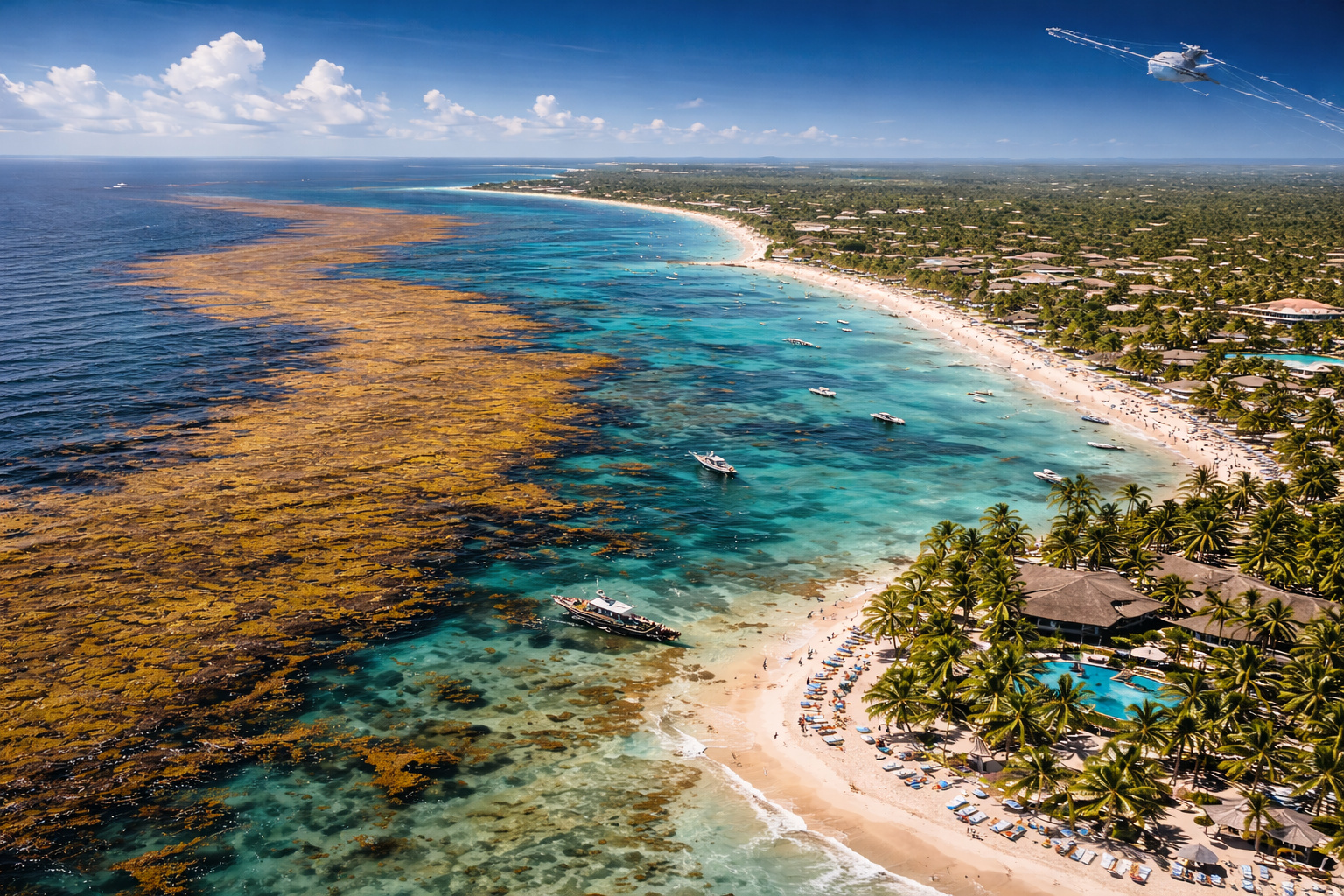


Expansion of the “brown ribbon” alters the coastline, affects travel, and requires constant monitoring of ocean conditions
A large-scale biological formation has been rapidly advancing across the Atlantic Ocean, drawing the attention of scientists and environmental authorities.
The so-called “brown ribbon” of sargassum can already be seen by satellites and continues to expand, according to recent monitoring conducted since 2011 by institutions such as NASA and NOAA.
This phenomenon, although natural, has begun to exhibit unusual dimensions, which has generated direct impacts on coastal areas that depend on tourism and environmental preservation.
-
A nearly 70-year-old Chinese inventor has registered 90 patents and created a device that stores water in the roots, helping seedlings survive drought while trying to transform the arid slopes of the Loess Plateau into green areas without relying on heavy irrigation.

-
Researchers want to change the way of producing rare earth magnets, reducing purification steps and making better use of the elements found in Swedish deposits.
-
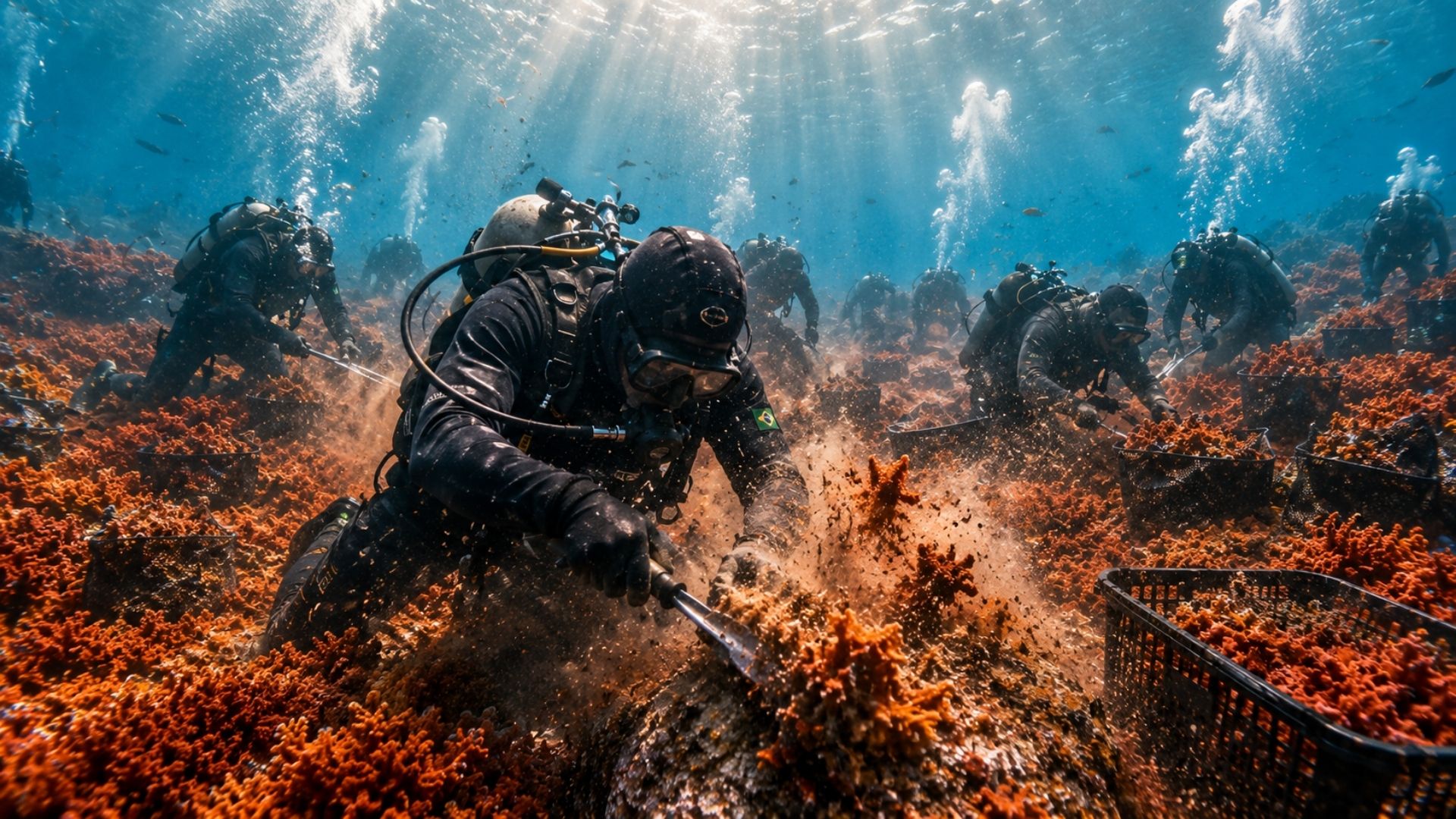
5.5 tons pulled from the seabed: a ‘living carpet’ of invasive coral was suffocating the Baía de Todos-os-Santos until the Brazilian Navy descended with divers, steel brushes, and acid salt to carry out the largest eradication operation of the species ever conducted in the country.

-
A Brazilian project dumped 5,500 concrete blocks and 2 barges into the ocean to block trawling in Paraná, and 25 years later what seemed like a risky intervention turned into an underwater nursery, a diving spot, and a refuge for endangered species.


Furthermore, understanding the behavior of this biomass has become essential for planning activities on the coast and avoiding damage to the visitor experience.
Scientific investigation explains the growth of the brown patch
The phenomenon consists of large quantities of sargassum algae, which multiply with the increase in water temperature and the presence of nutrients.
According to studies from the University of South Florida released in 2023, these conditions have favored an accelerated expansion of the biomass in recent years.
This floating mass reaches gigantic proportions and can be tracked by satellite images, allowing for the observation of its continuous movement.
Currently, this “natural barrier” is moving towards the coastal regions of North and Central America, altering the maritime landscape.
Thus, the phenomenon highlights the intensity of environmental changes on a global scale and reinforces the need for constant monitoring.
Impacts on beaches transform the tourist experience
The arrival of sargassum on the beaches completely modifies the coastal environment and directly interferes with the visitor experience.
When it accumulates on the sand, the algae decomposes and generates strong odor, difficulty in circulation, and loss of water quality.
Additionally, areas previously used for leisure and water sports may be temporarily closed, altering the local tourist dynamics.

To reduce these impacts, several regions have begun to adopt specific control and cleaning strategies.
Among the main measures implemented, the following stand out:
- Daily monitoring of the conditions of affected beaches
- Alteration of routes for vessels and recreational diving
- Installation of floating barriers to contain the advance of the algae
Thus, access to updated information has become essential for those intending to visit these regions.
Environmental risks affect marine biodiversity
In addition to visual impacts, the excessive accumulation of sargassum brings direct consequences for the marine ecosystem.
According to NOAA, the decomposition of organic matter reduces oxygen levels in the water.
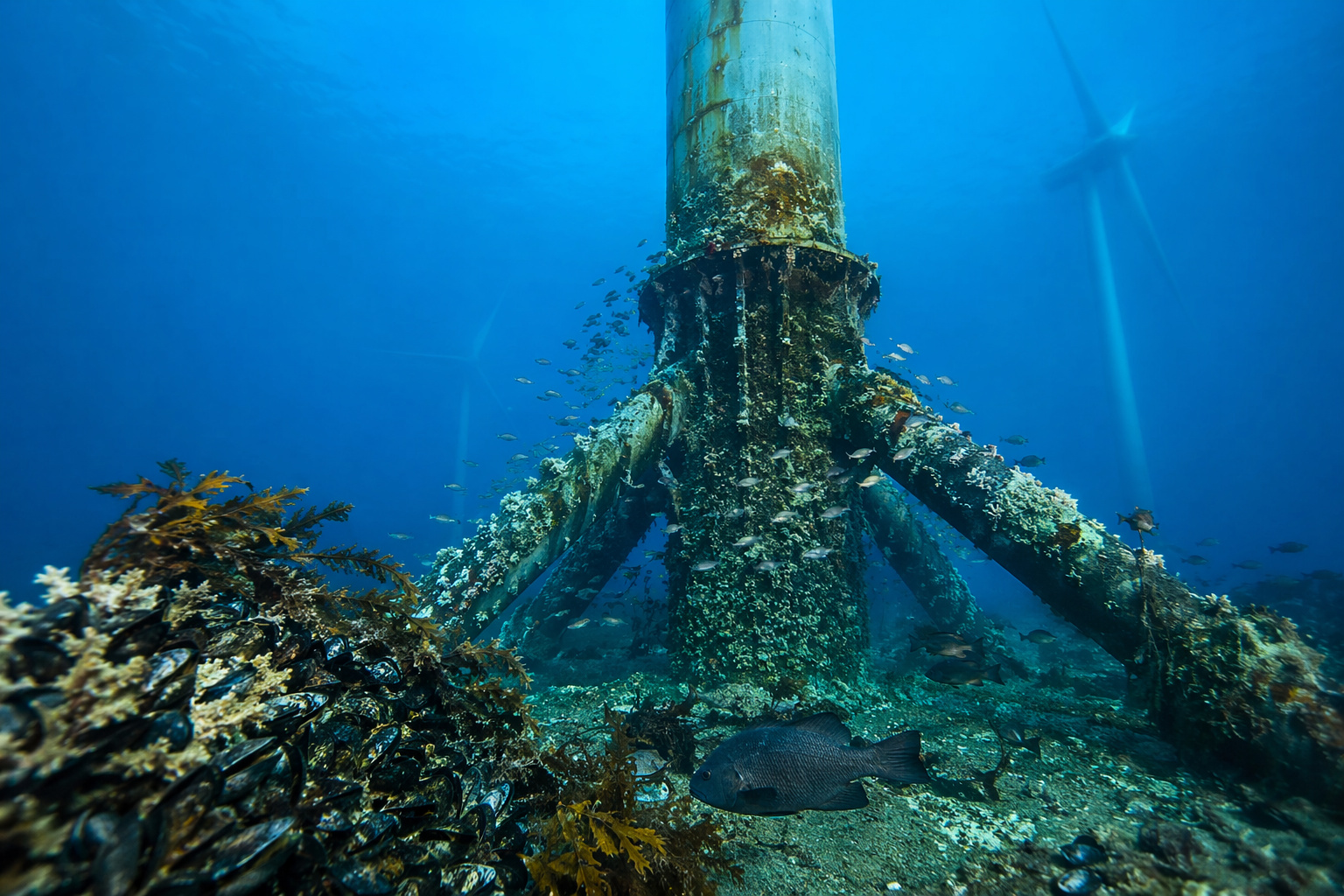
As a result, fish may die and coral reefs may suffer significant damage.
This imbalance also compromises essential habitats and affects local fauna and flora.
Among the main environmental risks are:
- Suffocation of sea turtle nests in nesting areas
- Alteration of water pH, reducing visibility
- Blocking of sunlight necessary for seagrass
Thus, the phenomenon represents a direct threat to biodiversity and the ecological balance of the affected regions.
Technology allows predicting the arrival of algae
Currently, scientists use advanced systems to track and predict the movement of the brown patch.
Thermal images and satellite data allow estimating its movement weeks in advance.
According to the University of South Florida, in updated analyses from 2024, the accuracy of these predictions has significantly increased.
As a result, coastal managers can prepare cleaning teams and guide the public on the best visitation periods.
Additionally, this information helps reduce impacts and improve the visitor experience.
In light of this scenario, data-driven planning has become essential to safely enjoy the coastline.
After all, will it be possible to balance tourism, environmental preservation, and the continuous advance of this enormous patch of sargassum in the Atlantic?